



A Paradox of Scarcity
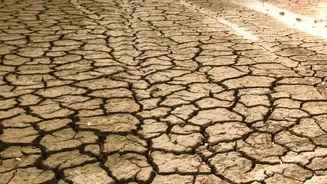
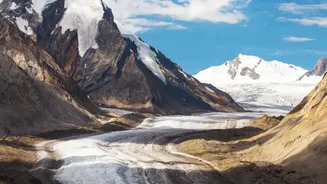
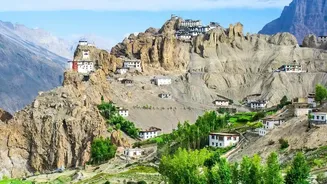
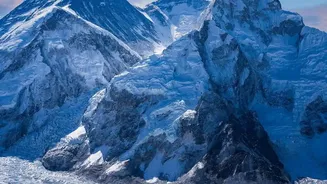
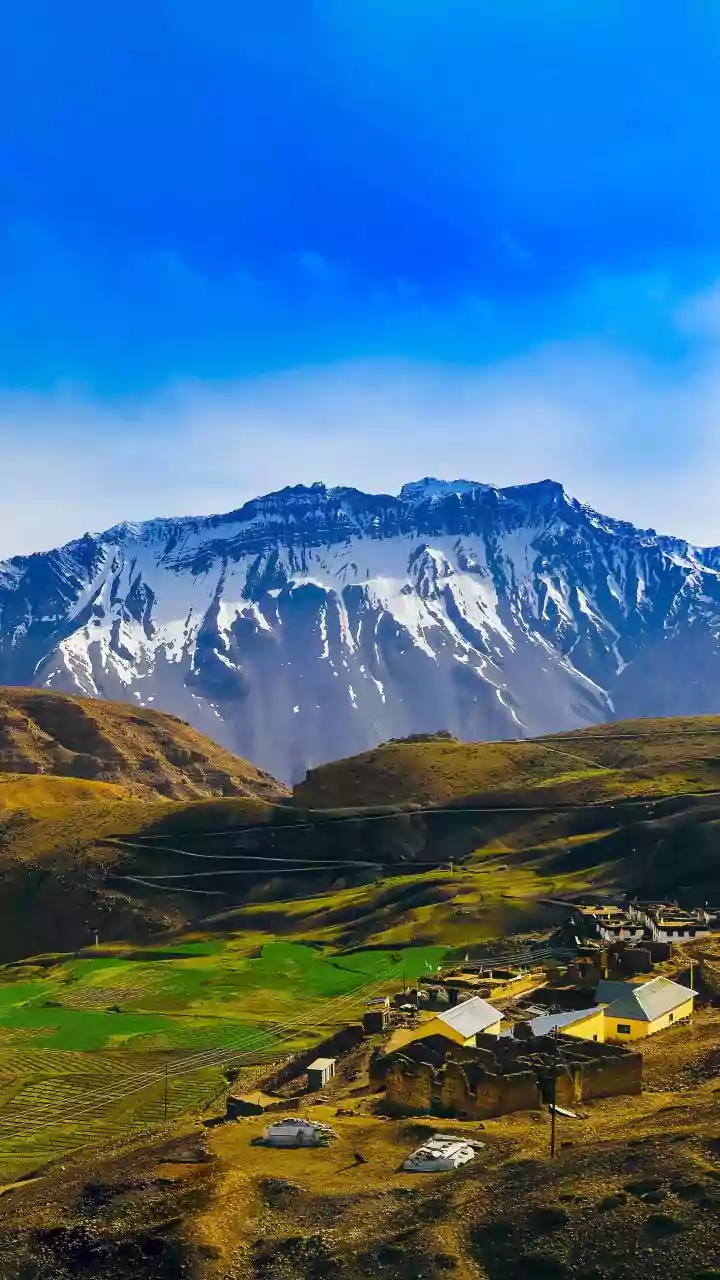
Ladakh is a land of contradictions. Surrounded by the snow-capped Himalayas, it is a cold desert that receives less than 50 millimetres of rain annually. For generations, its agricultural communities have depended almost entirely on the seasonal meltwater
from glaciers to irrigate their crops of barley and apples. But this vital water source is becoming dangerously unpredictable. Rising global temperatures are causing glaciers to recede at an alarming rate. This creates a critical mismatch: the winter water from streams flows away unused, and when farmers need it most in the crucial spring sowing season, the distant glaciers are still frozen solid. By the time the glacial melt begins in late spring or early summer, it is often too late, threatening livelihoods and food security.
An Idea Inspired by Nature
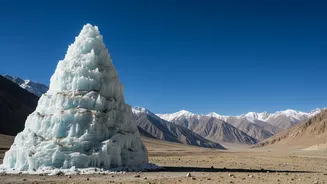
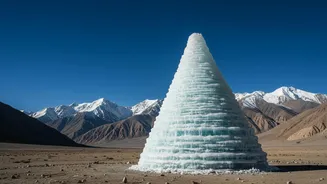
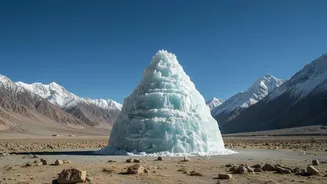
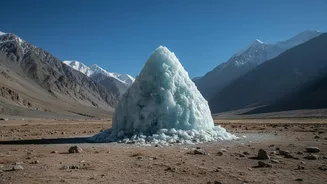
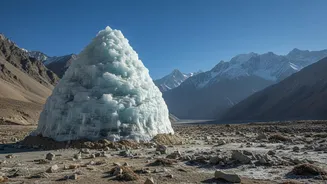
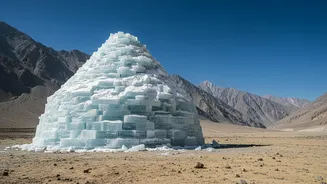
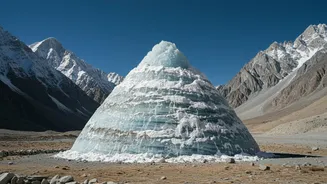
The solution came from a simple observation. Ladakhi engineer and innovator Sonam Wangchuk noticed that a patch of ice under a bridge had survived well into the spring, long after sun-exposed ice had vanished. This sparked an idea: what if you could 'grow' a glacier in the middle of a village, shaping it to minimise sun exposure and maximise its lifespan? He imagined a vertical cone of ice that, like the region's traditional Buddhist stupas, would have a small surface area relative to its volume, thus slowing the melting process. In 2013, Wangchuk and his team from the Students' Educational and Cultural Movement of Ladakh (SECMOL) built a prototype. The experiment was a resounding success.
How to Build a Glacier
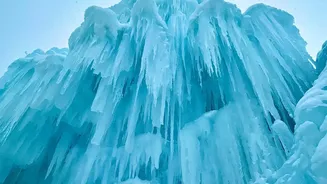
The genius of the ice stupa lies in its simplicity. The system uses no electricity and no pumps, relying entirely on gravity. A pipe is laid from a stream at a higher altitude, channelling the abundant, unused water flow of the winter months down to a village. The difference in elevation creates natural water pressure. At the stupa site, the pipe runs vertically, and water is sprayed out from a sprinkler-like nozzle into the freezing winter air. The droplets freeze almost instantly as they fall, gradually building up a massive, conical mountain of ice. The first prototype, standing six metres tall, successfully stored 150,000 litres of water and lasted until mid-May, releasing its precious resource just as farmers needed it for their newly planted trees.
From Local Solution to Global Symbol
Since that first successful trial, the Ice Stupa project has scaled dramatically, driven by community participation and global recognition, including a Rolex Award for Enterprise for Wangchuk. Dozens of stupas have now been built across Ladakh, with some reaching heights of over 60 feet and storing millions of litres of water. These structures are often built through community competitions, fostering a sense of ownership and shared purpose. The idea has proven so effective that it has crossed international borders. Ice stupas have been built in other Himalayan regions like Nepal and Sikkim, and even as far away as Switzerland and Chile, where engineers are adapting the technology to their local mountain conditions. It has become a celebrated example of a grassroots solution to a global problem.
Hope, with a Dose of Realism
Ice stupas are a powerful tool for climate adaptation, but they are not a cure for climate change itself. Experts note that these artificial glaciers don't add new water to the ecosystem; they simply store existing water that would otherwise be lost. They are an ingenious way to buy time and build resilience for communities on the front lines of the climate crisis. The projects also require significant community labour for construction and maintenance, a potential challenge as rural populations change. Yet, their greatest strength may be symbolic. They are a visible, tangible demonstration of human ingenuity in the face of environmental adversity, showing that local communities can develop their own solutions.