






The Case for Morning Yoga
Starting your day with yoga can set a positive and energetic tone for everything that follows. A morning practice works in harmony with your body's natural circadian rhythm, aligning with the natural rise in cortisol that helps you wake up. This can boost
your metabolism, improve digestion, and enhance mental clarity for the day ahead. Studies have shown that a morning routine can improve focus and reduce mental fog, helping you tackle tasks with greater alertness. Furthermore, establishing a morning practice can be easier to stick to; there are often fewer distractions or last-minute plans to derail your commitment. Research from institutions like NIMHANS in Bengaluru suggests morning yoga can lead to greater reductions in sleep disturbances and a shift towards healthier lifestyle choices.
Energising Asanas to Start Your Day
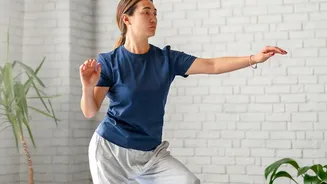
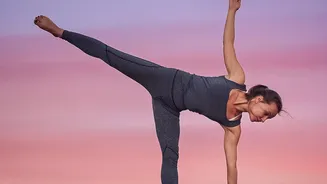
A morning practice should focus on awakening the body and building energy. Dynamic sequences are ideal. Sun Salutations (Surya Namaskar) are a classic choice, designed to warm up muscles and get the blood flowing. Poses that create gentle backbends, like Cobra Pose (Bhujangasana), can be invigorating. Standing and balancing poses like Mountain Pose (Tadasana), Chair Pose (Utkatasana), and Warrior poses help to ground you while firing up your muscles and sharpening your focus. A few rounds of Cat-Cow (Marjaryasana-Bitilasana) are also excellent for waking up the spine and preparing it for the day.
The Argument for an Evening Practice
For many, the end of the day is the perfect time to step onto the mat. An evening yoga session offers a powerful way to decompress, release the physical tension and mental stress accumulated throughout the day. Your muscles are warmer and more pliable in the evening, which can lead to deeper stretches and improved flexibility. If your primary goal is to unwind and prepare for a restful night, evening yoga is an excellent choice. The practice can help regulate your sleep cycles by increasing melatonin production, the hormone responsible for sleep. Calming the nervous system through gentle poses and breathwork can lower your heart rate and blood pressure, signalling to your body that it's time to rest.
Calming Asanas to End Your Day
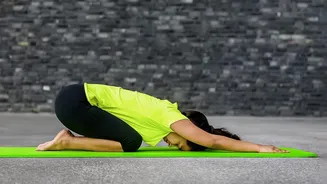
Evening asanas should be restorative and calming. The focus should be on forward folds and gentle twists, which activate the body's 'rest-and-digest' response. Poses like Seated Forward Bend (Paschimottanasana) and Child's Pose (Balasana) are fantastic for releasing tension in the back and calming the mind. Gentle spinal twists, such as the Reclined Spinal Twist, help to relieve stress in the spine and internal organs. Legs-Up-the-Wall Pose (Viparita Karani) is a deeply restorative posture that soothes the nervous system and is highly recommended before bed. Finishing your practice with Savasana (Corpse Pose) allows your body to fully integrate the benefits of the practice, promoting deep relaxation.
How to Choose: Listen to Your Body and Goals
Ultimately, the best time to practice yoga is personal. Your decision should be guided by your lifestyle, daily rhythms, and what you hope to achieve. If you need an energy boost and a structured routine to start your day, morning yoga is your answer. If you seek stress relief, better sleep, and a way to physically and mentally unwind, an evening session will serve you better. Don't be afraid to experiment. Try both morning and evening sessions for a week each and observe how your body and mind respond. You might even find that a hybrid approach works best—a short, energising flow in the morning and a gentle, restorative practice before bed.