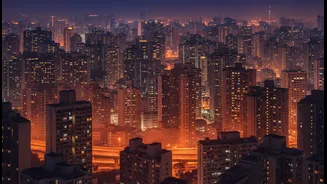







The Urban Oven Explained
This phenomenon is known as the Urban Heat Island (UHI) effect, where cities are significantly warmer than their surrounding rural areas. Studies across multiple Indian cities, including Delhi, Mumbai, and Chennai, confirm this trend. The core of the issue
lies in the very materials we use to build our modern world. While rural landscapes have vegetation and soil that absorb and transpire moisture to cool the air, cities are dominated by non-reflective and water-resistant surfaces like asphalt, brick, and concrete. These materials create a vast 'thermal mass' that fundamentally changes the local environment.
Why Concrete is the Main Culprit
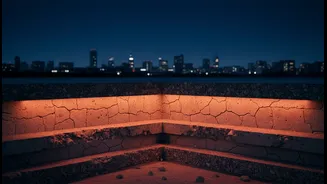
Concrete and asphalt are like thermal sponges. Throughout the day, they absorb huge amounts of solar radiation. Unlike natural surfaces, which use some of the sun's energy for processes like photosynthesis or evaporation, concrete simply gets hotter. Due to its high thermal mass, it stores this heat deep within. When the sun sets and the ambient air temperature begins to drop, these materials start a slow process of releasing all the energy they've stored. This effectively turns our buildings, roads, and pavements into giant, slow-release heaters that continue to radiate warmth for hours.
The Danger of No Nightly Relief
The most dangerous aspect of the UHI effect is what happens after dark. In natural environments, nighttime provides a crucial period for cooling down. In cities, however, the continuous release of stored heat from concrete clusters means temperatures often fail to drop to safe levels. Research shows that the temperature difference between urban and rural areas can be most pronounced at night. This lack of nocturnal cooling is a serious health hazard. The human body relies on cooler nighttime temperatures to recover from daytime heat exposure. When there is no relief, the body remains under constant stress.
The Hidden Health Crisis
Persistently high nighttime temperatures are linked to a host of health problems. The inability to cool down can lead to sleep disturbances, heat exhaustion, dehydration, and life-threatening heatstroke. It puts a significant strain on the cardiovascular system and can worsen respiratory conditions. This risk is not distributed equally. Vulnerable populations, including the elderly, children, outdoor workers, and those in low-income housing with poor ventilation and no air conditioning, are disproportionately affected. In India, where heatwaves are becoming more frequent and intense, the UHI effect exacerbates an already deadly public health challenge.
Can We Cool Our Cities?
While the problem is embedded in our infrastructure, it is not insurmountable. Solutions focus on mitigating heat absorption and reintroducing cooling elements into the urban fabric. 'Cool roofs' using reflective paints or materials can reduce roof temperatures significantly. Increasing green cover by planting more trees, creating parks, and installing green roofs provides shade and natural cooling through evapotranspiration. Other strategies include using more permeable materials for pavements that allow water to cool surfaces and designing cities to promote better airflow. These nature-based solutions are seen as critical for building climate resilience in Indian cities.