




The First Milestone: What Opens in 2027?
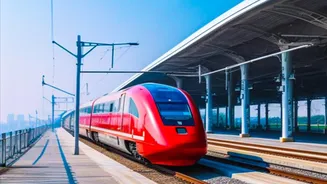
The entire 508-kilometre Mumbai-Ahmedabad High-Speed Rail (MAHSR) corridor won't open all at once. Instead, the first passenger services are slated to begin in the final quarter of 2027 on a section within Gujarat, connecting the commercial hubs of Surat
and Vapi. This phased approach allows the National High Speed Rail Corporation Limited (NHSRCL), the body executing the project, to operationalise completed segments while construction continues elsewhere. Recent progress includes the successful energisation of the overhead electrical systems on the 50-kilometre Surat-Bilimora stretch in November 2026, a critical step preparing the line for trial runs. Railway Minister Ashwini Vaishnaw has indicated that these crucial trials are expected to begin around May 2027.
Japanese Technology, Indian Execution
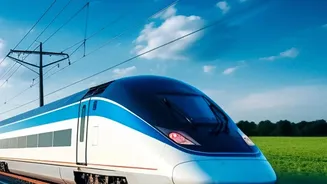
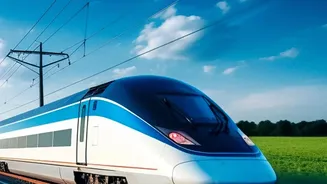
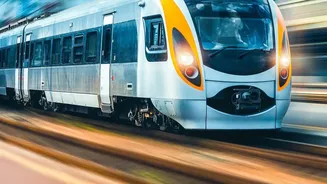
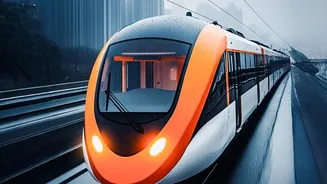
The backbone of India's bullet train is Japan's renowned Shinkansen technology, known for its exceptional safety record and punctuality. The project involves building viaducts, bridges, stations, and even India's first undersea rail tunnel, a 7-kilometre stretch under Thane Creek in Maharashtra. While the technology is Japanese, the project is a massive 'Make in India' undertaking. Key components for the advanced electrification system are being manufactured domestically. Furthermore, India is developing its own high-speed trainsets. While the initial Japanese trains are expected later, the first services are planned to use an indigenous train, currently being developed by BEML and Integral Coach Factory (ICF), capable of speeds up to 280 kmph.
More Than Just Speed
The bullet train promises to slash travel time between Mumbai and Ahmedabad from over seven hours to just under two hours once fully operational. But its impact goes far beyond speed. Economists and urban planners anticipate significant regional development, with cities along the corridor like Surat, Vadodara, and Vapi potentially transforming into major economic hubs. The project is a massive employment generator and is expected to boost industrial growth and tourism. Proponents also highlight the environmental benefits, arguing that a fast, reliable electric train network offers a sustainable alternative to road and air travel, helping to reduce the region's carbon footprint.
Navigating the Challenges
A megaproject of this scale is not without its hurdles. The journey since its foundation was laid in 2017 has involved complex challenges, including land acquisition delays, intricate construction in dense urban areas, and significant cost escalations. The construction itself is an engineering marvel, involving the erection of thousands of piers and viaducts, and the deployment of massive tunnel boring machines for the underground sections. Despite these difficulties, construction has advanced steadily, especially in the Gujarat portion of the corridor. As of late 2026, a significant portion of the pier and viaduct work has been completed, and track-linking is progressing rapidly, signalling that the project has overcome many of its initial obstacles.
A Blueprint for a National Network
The Mumbai-Ahmedabad line is envisioned as just the beginning. It serves as a blueprint for a much larger 'Diamond Quadrilateral' network aiming to connect India's major metro cities: Delhi, Mumbai, Kolkata, and Chennai. The government has already identified seven new potential high-speed corridors, including routes like Delhi-Varanasi and Chennai-Bengaluru. The lessons learned and the domestic manufacturing ecosystem developed during the construction of this first corridor are intended to make future projects more efficient and cost-effective. The standardisation of designs for viaducts, stations, and systems will create a replicable model, paving the way for a truly national high-speed rail grid that could transform intercity travel across India.