




The Most Beautiful Fruit You're Not Using
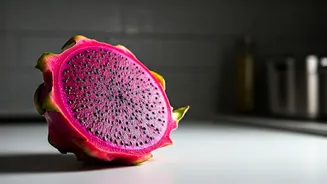
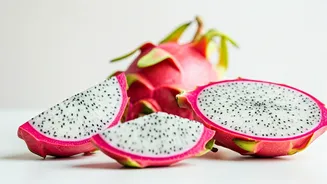
Dragon fruit, also known as pitaya or Kamalam in parts of India, is a tropical fruit that looks as magical as it sounds. With its brilliant pink or yellow skin and flame-like green scales, it’s a showstopper even before you cut it. Inside, you’ll find
either white or a vivid magenta flesh speckled with tiny, edible black seeds. This dramatic appearance is its superpower. The contrast between the bright flesh and the dark seeds creates a visual texture that instantly upgrades anything it touches, from a simple scoop of ice cream to an elaborate cake.
A Mild Flavour That Plays Well with Others
Despite its loud appearance, dragon fruit has a surprisingly subtle flavour. Many describe it as a mild cross between a kiwi and a pear, with a refreshing, clean taste. This delicacy is actually a huge advantage in desserts. It won’t overpower other ingredients, allowing it to pair beautifully with a wide range of flavours. It complements other tropical fruits like mango and pineapple, cuts through the richness of coconut, and gets a lovely lift from a bit of lime or lemon. This makes it incredibly versatile, whether you're aiming for a complex flavour profile or just want to add a pop of colour without altering your favourite recipe.
Simple Ways to Add Instant Glamour
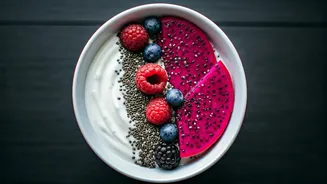
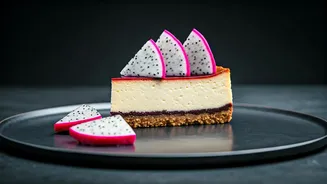
You don't need to be a pastry chef to work with dragon fruit. The easiest way to use it is as a finishing touch. Imagine a slice of plain cheesecake or a bowl of kheer suddenly adorned with jewel-like cubes of magenta dragon fruit. The effect is immediate. Try topping a creamy panna cotta, a simple yogurt bowl, or even a basic vanilla ice cream with a few pieces. The colour and pattern do all the work, transforming a humble dessert into something that looks thoughtful and sophisticated.
Mastering the Cut for Maximum 'Wow'
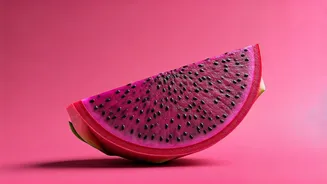
How you cut the fruit can amplify its visual appeal. The skin, while inedible, is soft and easy to slice through. For a clean, modern look, peel the fruit and dice it into neat cubes. For something more rustic, slice it in half and use a spoon to scoop out the flesh. A melon baller is your best friend for creating perfect, elegant spheres that look stunning scattered over a dessert. You can also cut thin, half-moon slices to fan out across the top of a tart. For a truly dramatic presentation, you can even use the empty skin halves as natural, vibrant serving bowls.
Beyond the Garnish: Infusing Desserts with Colour
Ready to go a step further? The red-fleshed variety of dragon fruit can be pureed to create a natural, intensely coloured base for desserts. Its vibrant hue holds up beautifully in smoothies, cheesecakes, and puddings. Imagine a no-bake cheesecake with a brilliant pink swirl, or a layered chia pudding with an ombre effect. It can even be incorporated into traditional Indian sweets; a dragon fruit peda or payasam would not only taste unique but also look absolutely spectacular, making it perfect for festive occasions. As the fruit is increasingly cultivated across India, from Maharashtra to West Bengal, it's becoming easier than ever to find this exotic ingredient locally.