



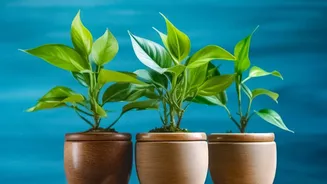
The Golden Rules of Low-Care Gardening
Before you buy your first plant, it's helpful to understand the basic principles of indoor gardening. The biggest mistake beginners make is often overcaring, especially with watering. Most low-care plants prefer their soil to dry out between waterings.
The second key is light. Observe your space: do you have bright, indirect sunlight, or is it a lower-light corner? Choose plants that match the conditions you can offer. Lastly, start small. Begin with one or two plants to build your confidence. A stylish pot with drainage holes is non-negotiable; it prevents water from pooling at the bottom and causing root rot, one of the most common ways a houseplant dies.
The Architectural Wonder: Snake Plant
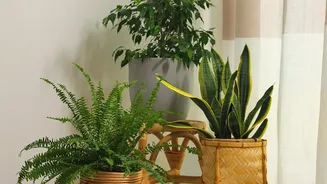
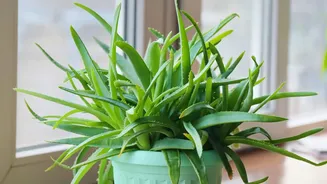
If you are looking for a plant that makes a statement and is nearly indestructible, the Snake Plant (Dracaena trifasciata) is your answer. Known for its upright, sword-like leaves, it has a modern, architectural feel that suits any decor. Snake plants are famously adaptable, thriving in everything from bright, indirect light to low-light corners of your home. Their watering needs are minimal. Because they store water in their leaves, they are extremely drought-tolerant. A good rule of thumb is to water them only when the soil is completely dry, which might be as infrequently as every two to four weeks. Overwatering is their main enemy, so when in doubt, it is always better to wait a few more days.
The Trailing Classic: Pothos
The Pothos (Epipremnum aureum) is a versatile and fast-growing favourite for good reason. With its heart-shaped leaves and trailing vines, it looks beautiful cascading from a hanging basket, climbing a bookshelf, or sitting on a desk. Pothos is exceptionally forgiving. It prefers bright, indirect light but can easily tolerate low-light conditions, though its variegation might fade in dimmer spots. When it comes to water, let the top inch or two of soil dry out before you give it another drink, typically every one to two weeks. The plant will often give you a visual cue; its leaves may start to droop slightly when it's thirsty. Pruning the ends of the vines will encourage a fuller, bushier plant.
The Ultimate Survivor: ZZ Plant
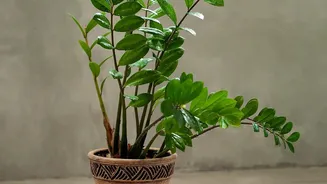
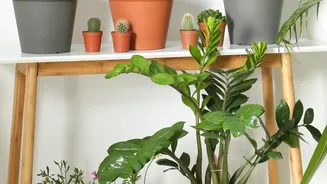
The ZZ Plant (Zamioculcas zamiifolia) is perhaps the most foolproof houseplant you can own. It is built for survival, with underground rhizomes that store water, making it exceptionally resilient to neglect and drought. Its wide, dark green, glossy leaves bring a touch of the tropics indoors. The ZZ Plant is happy in low to medium indirect light and should be kept out of harsh, direct sun, which can scorch its leaves. The most important care tip is to water sparingly. You should allow the soil to dry out completely between waterings, which could mean watering only once every three to four weeks. Yellowing leaves are a common sign of overwatering. It's a plant that truly thrives when you almost forget about it.
The Cheerful Giver: Spider Plant
The Spider Plant (Chlorophytum comosum) is a cheerful and easy-to-grow plant recognized for its arching leaves and the tiny 'spiderettes' or baby plants that dangle from the mother plant. These plants are great for beginners as they are not fussy. They prefer bright, indirect light but are known to adapt well to lower-light areas. Water them about once a week, or when the soil is mostly dry. One of the biggest benefits of the Spider Plant is its air-purifying quality, as it can help filter common indoor pollutants. It is also non-toxic to pets, making it a safe choice for households with cats and dogs. The little plantlets it produces can be easily propagated to create new plants for yourself or to share with friends.