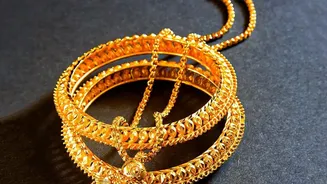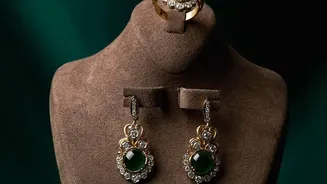







Understand the Basics of Making Charges
Making charges are the fees jewellers levy for the cost of labour and craftsmanship involved in converting raw gold into a piece of jewellery. This is the premium you pay for the design and the artisan's skill. These charges are not standardised and can
range from 5% to over 25% of the gold's value. They are typically calculated in one of two ways: as a percentage of the gold's value or as a flat rate per gram of gold. For example, a 10% making charge on a piece with ₹50,000 worth of gold would be ₹5,000. Alternatively, a flat charge of ₹500 per gram on a 10-gram item would also result in a ₹5,000 fee. Always ask the jeweller to clarify which method they are using.
Distinguish Between Making and Wastage Charges
You will often hear the term 'wastage' or 'VA' (Value Addition) used alongside making charges. Wastage accounts for the small amount of gold that is lost during the manufacturing process—when it's cut, shaped, and polished. Some jewellers combine making and wastage charges into a single figure, while others list them separately. It's crucial to ask for an itemised bill that clearly separates the cost of gold, making charges, wastage charges, and GST. This transparency prevents costs from being hidden and allows you to see exactly what you're paying for. Wastage is often less negotiable than the making charge, which has a profit component.
Know How Design Complexity Affects the Price
The intricacy of a design is one of the biggest factors influencing making charges. Handmade jewellery, which requires significant time and skill from an artisan, will naturally have higher making charges than simpler, machine-made pieces. Mass-produced items like basic chains or bands can be manufactured efficiently, keeping labour costs low. If your priority is to minimise costs, opting for a simpler, elegant design can be a smart way to save money on making charges without compromising on the quality of gold.
Always Compare and Negotiate
Making charges are often the most negotiable part of a gold jewellery bill. The price of gold itself is based on daily market rates and is rarely negotiable, but the making charge includes the jeweller's margin. Don't hesitate to negotiate, especially on high-value purchases or during festive seasons when jewellers often run promotions and offer discounts on these fees. Before settling, visit at least two or three different jewellers, including both large branded showrooms and trusted local shops, to compare their charging structures. This will give you a clear idea of the market rate and strengthen your negotiating position.
Insist on BIS Hallmarking
A low making charge is worthless if the purity of the gold is compromised. In India, it is mandatory for jewellers to sell hallmarked gold jewellery. The Bureau of Indian Standards (BIS) Hallmark is a certification that guarantees the purity of the gold. A hallmarked piece will have the BIS logo, the karat purity (e.g., 22K916 for 22-karat gold), and a six-digit alphanumeric Hallmark Unique Identification (HUID) number. This HUID allows you to verify the item's details on the BIS CARE app. Always look for these marks to ensure you are getting the quality you paid for.
Scrutinise the Final Bill
Before you make the payment, carefully review the final invoice. A transparent bill should provide a complete breakdown of all costs. This includes the gold rate for the day, the net weight of the gold in your piece, the making charges (specifying if it's a percentage or flat rate), any wastage charges, the value of any gemstones, and the applicable GST. The Goods and Services Tax (GST) of 3% is levied on the total value of the gold plus the making charges. Ensuring every component is listed separately protects you from hidden fees and confirms you are getting a fair deal.