





From Tibetan Hills to Indian Streets
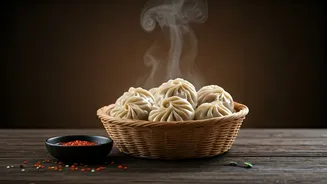
The story of the momo in India is a tale of migration and delicious adaptation. Originally a staple from Tibet, these delicate dumplings journeyed to India with the Tibetan diaspora in the mid-20th century. They first found a home in the hills of Darjeeling,
Sikkim, and Ladakh, as well as in Tibetan settlements like Majnu-ka-Tilla in Delhi. For years, they were a regional speciality, a comforting taste of home for a displaced community. But their universal appeal was too strong to be contained. Slowly but surely, the humble momo began its conquest of Indian palates, moving from niche corners to bustling street-side stalls, eventually becoming the undisputed king of street food in many cities.
More Than Just a Snack
Why do we love momos so much? The answer goes far beyond their taste. A plate of momos is an experience. It's the default plan when friends meet up with little time and even less money. It’s the go-to comfort food on a rainy day, the steam from the basket feeling like a warm hug. It’s the quick, satisfying bite after a long day of work or college. Momos are social food. They are rarely eaten alone. They are passed around, dipped into a shared bowl of chutney, and debated over – steamed or fried? Chicken or veg? That extra spicy chutney or the milder one? This shared ritual transforms a simple snack into a medium for connection, a catalyst for conversation and laughter. It’s a small, affordable luxury that brings people together, creating pockets of happiness on busy street corners.
The Anatomy of a Perfect Bite
The magic of a momo lies in its perfect balance of textures and flavours. It starts with the wrapper – a thin, delicate layer of dough that should be soft and slightly chewy, never thick or pasty. It acts as the perfect vessel for the treasure within: the filling. Whether it's juicy minced chicken, finely chopped vegetables with a hint of ginger and garlic, or the more recent innovations like paneer and soy, the filling needs to be flavourful and moist. But the experience is incomplete without its soulmate: the chutney. The fiery red dip, a potent blend of red chillies, garlic, and tomato, provides a sharp, spicy kick that cuts through the subtlety of the dumpling. It’s this explosive combination – the soft wrapper, the savoury filling, and the fiery sauce – that creates a flavour bomb in every single bite.
An All-India Phenomenon
What’s remarkable is how the momo has transcended its origins to become a pan-Indian obsession. In Delhi, you can't walk a kilometre without spotting a momo stall. In Kolkata, they are an integral part of the city's street food tapestry, sitting comfortably alongside puchkas and kathi rolls. Bangalore and Mumbai have embraced them in trendy cafes and food trucks, offering everything from classic steamed versions to creative 'tandoori' and 'afghani' momos. It has become a great culinary unifier, loved by students, office-goers, and families alike, regardless of region or background. This simple dumpling has woven itself into the fabric of modern Indian life, proving that sometimes the most profound connections are forged over the simplest of pleasures.