


A Partnership Decades in the Making
The space collaboration between India and the United States is not a recent development. It traces its roots back to the very beginning of India’s space journey. In 1962, just a few years after NASA was formed, India became one of its first international
partners. This early relationship saw the establishment of the Thumba Equatorial Rocket Launching Station. A significant early project was the Satellite Instructional Television Experiment (SITE) in 1975-76, where a NASA satellite beamed educational programs to thousands of remote Indian villages. However, the relationship faced headwinds, particularly after India's nuclear tests, which led to a period of distance. The partnership reinvented itself in the 21st century, notably with the 2005 US–India Civil Nuclear Deal paving the way for high-technology cooperation. This set the stage for more ambitious joint projects, including two NASA-funded instruments on India's first lunar mission, Chandrayaan-1, which famously contributed to the discovery of water on the Moon.
NISAR: An Eye on Planet Earth
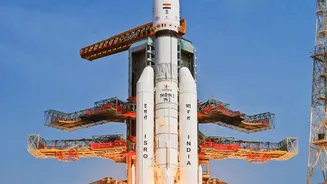
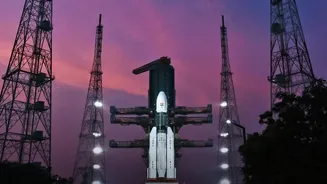
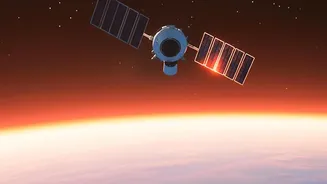
The crown jewel of the India-US Earth observation partnership is the NISAR mission (NASA-ISRO Synthetic Aperture Radar). Launched successfully on July 30, 2025, aboard an ISRO GSLV rocket, it is the world's most expensive Earth-imaging satellite. NISAR is a true joint effort: NASA provided the L-band radar, while ISRO contributed the S-band radar and the spacecraft itself. This dual-frequency capability makes it the first radar imaging satellite of its kind, allowing it to observe and measure changes on Earth's land and ice surfaces with unprecedented detail. The satellite orbits the Earth every 12 days, monitoring everything from glacier melt and deforestation to volcanic activity and groundwater supplies. By early 2026, the mission was declared fully operational, and ISRO began releasing S-band data products, providing crucial information for managing natural hazards, climate change, and agriculture.
Joining the Artemis Accords: A Leap to the Moon
A landmark moment in the partnership came in June 2023, when India became the 27th signatory of the Artemis Accords. These accords are a set of non-binding principles, led by the US, to guide civil space exploration and ensure peaceful, transparent, and sustainable activity on the Moon and beyond. For India, which has a strong history of independent space exploration, signing the Accords marked a strategic shift towards global collaboration. This move helps India avoid technological isolation and ensures its systems are compatible with international standards, which is vital for future joint missions. The decision was also tied to practical benefits, including a joint NASA-ISRO mission to the International Space Station (ISS) and advanced training for Indian astronauts at NASA's Johnson Space Center.
Beyond Satellites and the Moon
The cooperation extends far beyond specific missions. A key framework is the U.S.-India initiative on Critical and Emerging Technology (iCET), launched in 2023, which includes civil, commercial, and defence space cooperation. This has been instrumental in fostering collaboration between the private space sectors of both countries. The partnership aims to facilitate everything from human spaceflight and planetary defence to expanding commercial opportunities for startups. Indian astronauts are training with NASA, which will provide invaluable experience for ISRO's own ambitious Gaganyaan human spaceflight programme. Looking further ahead, the collaboration opens doors for India's participation in long-term exploration goals, including potential involvement in the NASA Gateway Program, a planned space station in lunar orbit.
Strategic and Commercial Imperatives
This deepening alliance is not just about science; it's also about strategy and commerce. For the US, partnering with a major space power like India reinforces the rule-based approach to outer space laid out in the Artemis Accords. For India, it cements its status as a major global player in space, moving from a regional leader to an indispensable international partner. The partnership also aims to unleash commercial potential. Following India's space sector reforms, which opened the door to private companies, there is a concerted effort to link the vibrant startup ecosystems of both countries. Joint initiatives are focused on creating pathways for Indian and U.S. firms to collaborate on everything from satellite manufacturing to data applications, fuelling economic growth and innovation on both sides.