





The Unseen Danger of Saturated Slopes
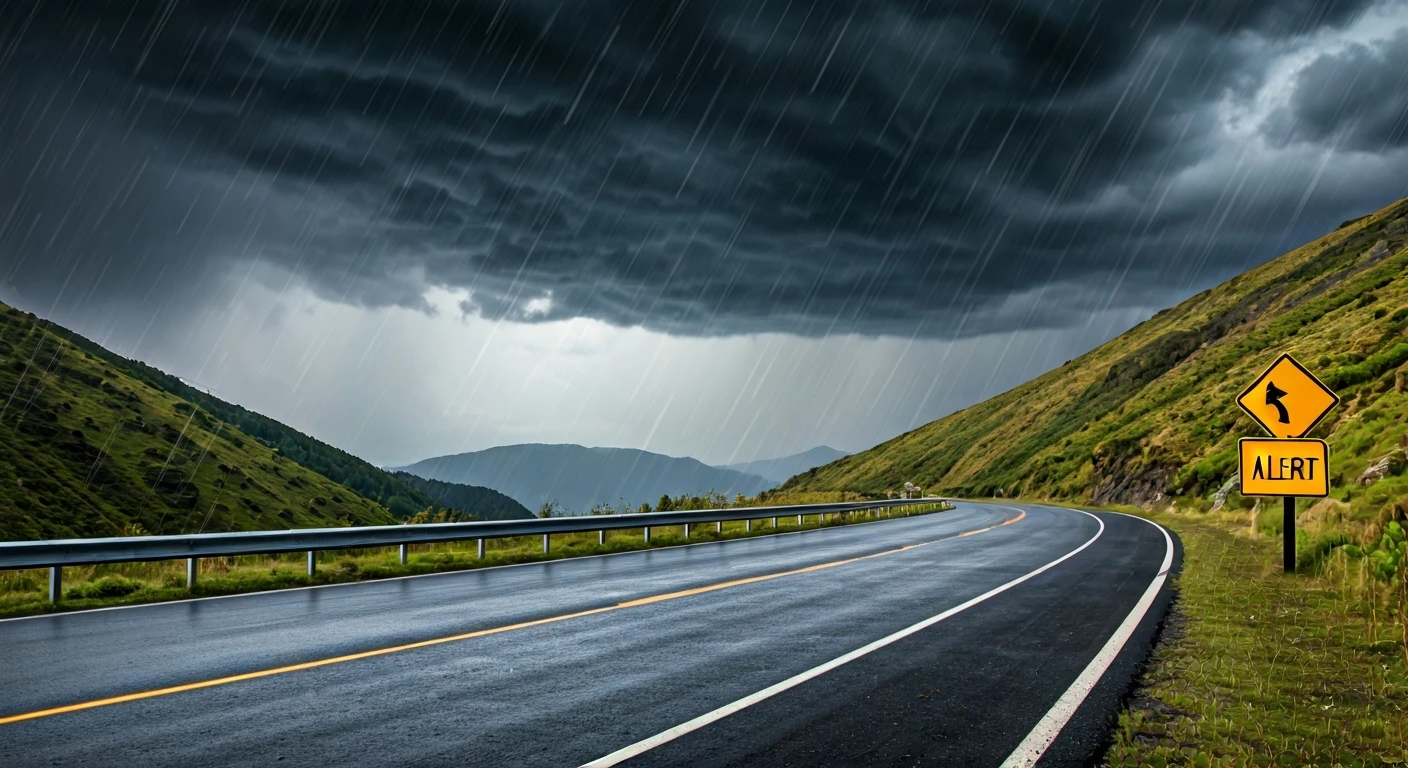
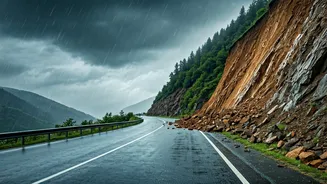
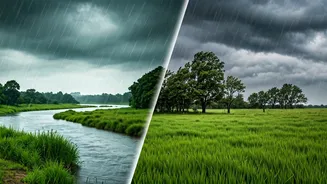
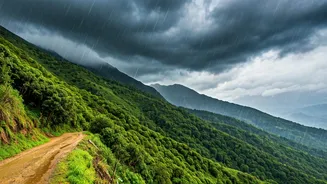
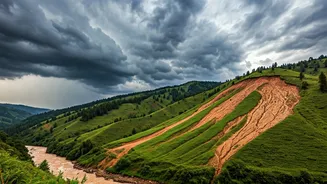
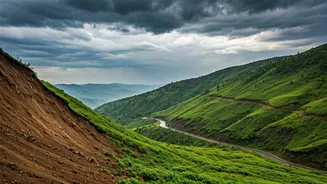
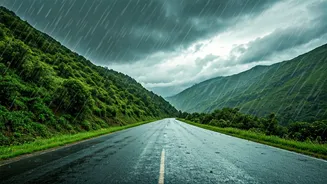
The most significant danger on hill roads after heavy rain is not the water on the tarmac, but the water soaked into the hillsides themselves. Prolonged or intense rainfall saturates the soil and rock, dramatically increasing the risk of landslides. This
is a recurring and deadly issue in regions like Himachal Pradesh, Uttarakhand, and the Western Ghats. Recent events in June 2026 across India's northeast, particularly in Arunachal Pradesh, serve as a stark reminder, where incessant rains triggered numerous landslides, washing away roads, bridges, and homes, and tragically resulting in fatalities. These incidents highlight how quickly a stable-looking slope can give way, sending tonnes of rock, mud, and debris crashing onto the road with little to no warning. For drivers, this means a familiar route can become impassable or deadly in an instant.
Losing Grip: When Tyres Meet Wet Roads
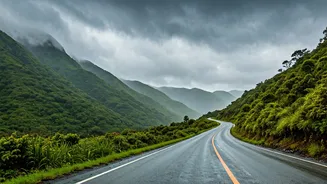
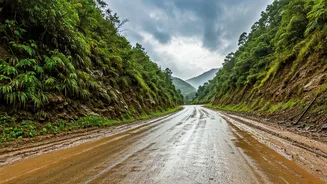
On a wet surface, the friction between your tyres and the road is significantly reduced. This problem is magnified on winding hill roads with steep gradients and sharp turns. The layer of water can lead to hydroplaning, where your vehicle essentially skates on top of the water, causing a complete loss of steering and braking control. Adding to the risk is the mud and debris that rain washes onto the road, further compromising traction. Braking distances increase dramatically on wet surfaces, meaning you need to be far more gentle and anticipatory with your inputs. Sudden braking or sharp steering manoeuvres that would be normal on a dry road can easily initiate a skid on a wet, winding ghat road.
The Veil of Fog and Reduced Visibility
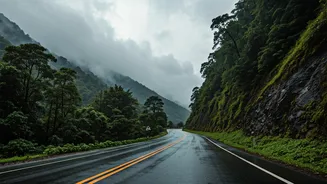
Heavy showers are often accompanied by thick fog, drastically reducing visibility to just a few metres. On narrow mountain roads, where you already have limited sightlines due to blind curves, this is exceptionally dangerous. It becomes nearly impossible to see oncoming traffic or hazards on the road ahead, such as fallen rocks or a stopped vehicle. This is why it is crucial to use your headlights (on low beam, to avoid glare) even during the day to make yourself more visible to others. Many drivers make the mistake of relying solely on their own ability to see, forgetting that it is equally important to be seen by others sharing the treacherous road.
Essential Pre-Drive Vehicle Checks
Before you even begin a journey into the hills during the monsoon, a thorough vehicle check is non-negotiable. First, inspect your tyres. They are your only connection to the road, and adequate tread depth is vital for channelling water away and maintaining grip. Worn-out tyres are a recipe for disaster on wet roads. Second, check your brakes. Ensure the brake pads have life and the brake fluid is at the correct level; braking performance is already compromised in the wet, so you need your system to be in top condition. Finally, test your windscreen wipers and lights. Worn wiper blades will smear water instead of clearing it, and functional headlights, taillights, and indicators are critical for visibility.
Safe Driving Techniques for the Hills
Once on the road, your driving style must adapt. The single most important rule is to reduce your speed significantly. This gives you more time to react and increases your tyres' ability to maintain grip. Maintain a much larger following distance from the vehicle in front of you. On steep descents, use a lower gear to engage engine braking, which helps control your speed without overheating your brakes. Avoid sudden acceleration and aggressive steering. At blind turns, which are common in the hills, it is a standard and life-saving practice to honk to alert any potential oncoming traffic of your presence. If visibility drops to near-zero, the safest option is to find a secure spot to pull over and wait for conditions to improve.