

The Challenge of Cosmic Dust
Imagine trying to watch a stage performance through a thick curtain of smoke. That's the challenge astronomers face when trying to observe early star formation. The universe is filled with vast clouds of gas and dust, the very ingredients from which stars
are made. While essential for star birth, these clouds act as a cosmic veil, blocking visible light. For decades, telescopes like Hubble, which primarily see in visible and ultraviolet light, have given us breathtaking views of the cosmos, but these cosmic nurseries remained largely hidden. The tight wavelengths of visible light simply can't penetrate the dense dust; they bounce off the particles, leaving the processes within obscured. This meant that the crucial, chaotic first steps of a star's life were happening behind a curtain we couldn't pull back.
Infrared: The Universe's Secret Passkey
The solution lies in a different kind of light: infrared. First discovered by astronomer William Herschel in 1800, infrared radiation is essentially heat. While invisible to the human eye, it makes up about half of the energy emitted by stars throughout cosmic history. Crucially, infrared light has longer wavelengths than visible light. This allows it to slip past the tiny dust particles that scatter visible light, much like how radio waves can pass through walls. By detecting this light, astronomers can effectively see through the obscuring dust clouds and witness the processes happening inside. It allows them to study cooler objects like protostars—infant stars that are not yet hot enough to shine brightly in visible light—and the glowing dust and gas heated by their formation.
Webb’s High-Tech Eyes
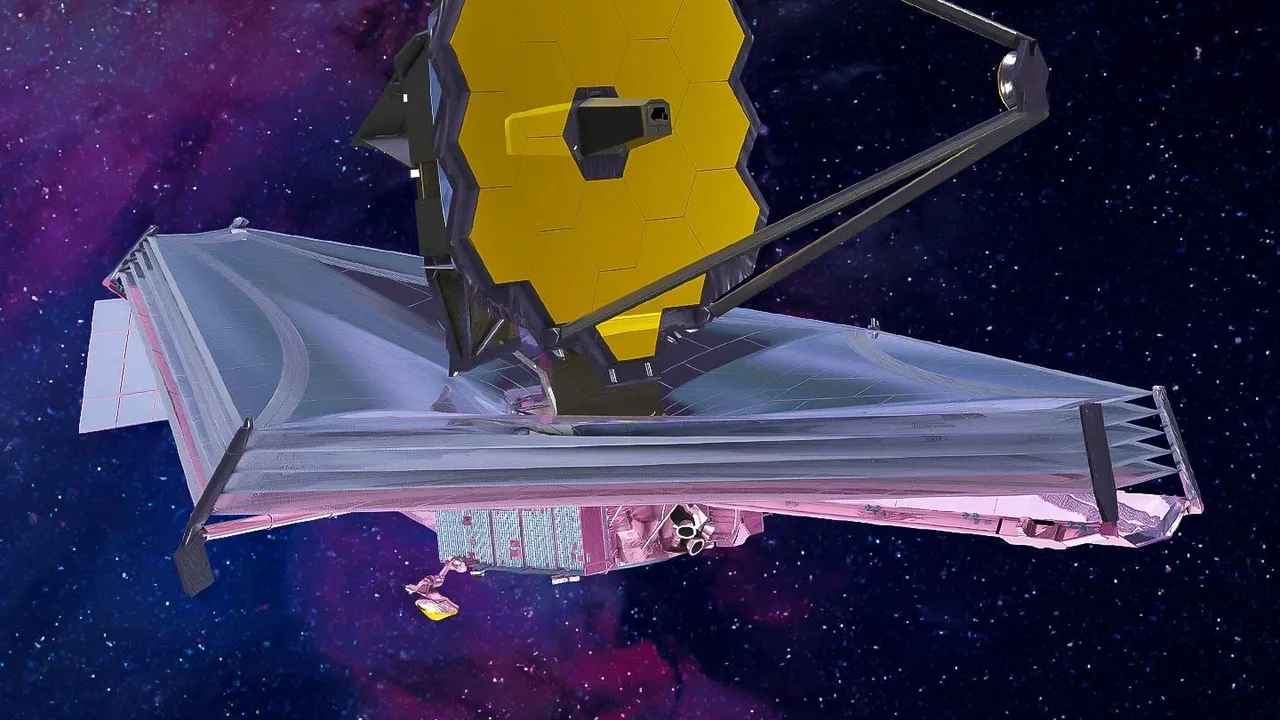
This is where the James Webb Space Telescope (JWST) excels. It was specifically designed to be the most powerful infrared observatory ever built. Its primary instruments for this task are the Near-Infrared Camera (NIRCam) and the Mid-Infrared Instrument (MIRI). These are not just cameras in the traditional sense; they are highly sophisticated sensor systems. NIRCam is Webb's primary imager, capturing light from the edge of the visible red spectrum out to the near-infrared (0.6 to 5 microns). MIRI takes over from there, observing the longer mid-infrared wavelengths (5 to 28 microns). Together, they provide a complete picture. NIRCam can pierce through dust to see the stars themselves, while MIRI is sensitive to the glow of the hydrocarbon-rich dust itself, revealing the structure of the cosmic clouds. This dual capability gives scientists an unprecedented look at both the newborn stars and their surrounding environment.
From Faint Light to Stunning Images
The process of detection is a marvel of engineering. Light from a distant star-forming region travels across billions of years, gets collected by Webb's massive, gold-coated mirror, and is directed into the instrument module. Inside NIRCam or MIRI, the light passes through a series of filters that isolate specific wavelengths. The filtered light then strikes a detector, which is essentially a highly advanced version of the sensor in a digital camera. This detector, made of materials like mercury-cadmium-telluride, converts the incoming infrared photons (particles of light) into a tiny electrical voltage. The strength of this signal corresponds to the brightness of the light. This raw data, a grid of intensity values, is transmitted back to Earth. Scientists then assign colors like blue, green, and red to different infrared filters, creating the breathtaking false-color images that reveal the universe in a new light.
Rewriting the Story of Starbirth
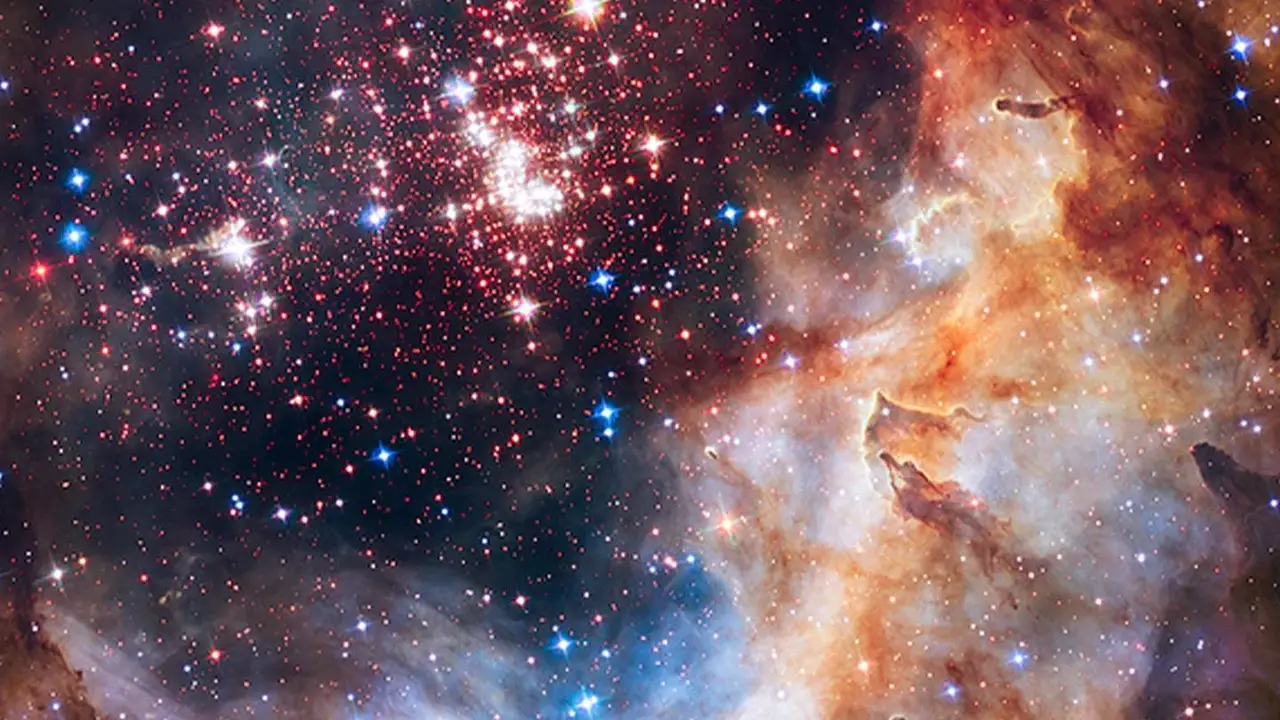
With this technology, Webb has already made groundbreaking discoveries. It has peered inside the iconic Pillars of Creation, revealing newly-formed stars that were hidden from Hubble. It has captured stunning details of protostars ejecting material in energetic jets, giving clues about how they gather mass. In regions like W51, Webb's infrared eyes have pierced through the dusty veil to show that the massive stars there are incredibly young, having formed within the last million years. These observations are not just producing pretty pictures; they are providing invaluable data that reshapes our understanding of how stars, including massive ones whose formation is poorly understood, come into being. For the first time, astronomers can accurately measure the properties of these hidden stellar nurseries, turning theoretical models into observational science.