


What is the 'No Insurance, No Fuel' Rule?
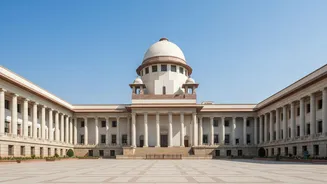
The 'No Insurance, No Fuel' rule is a proposal aimed at enforcing India's mandatory third-party insurance law. The concept, recently backed by a Supreme Court directive, suggests that petrol pumps should verify a vehicle's insurance status before dispensing
fuel. If a vehicle is found to be uninsured, fuel could be denied until the owner renews their policy. It is crucial to understand that this is currently a proposal for a pilot project, not a law in effect nationwide. The Supreme Court has asked the Insurance Regulatory and Development Authority of India (IRDAI) and the Ministry of Road Transport and Highways (MoRTH) to develop and test this system.
The Goal: Tackling a Massive Compliance Gap
The primary driver behind this proposal is the shocking number of uninsured vehicles on Indian roads. According to recent reports cited by the Supreme Court, nearly 56% of vehicles in the country—amounting to over 16.5 crore—are operating without valid insurance. This widespread non-compliance with the Motor Vehicles Act, which mandates third-party insurance, has severe consequences. When an uninsured vehicle is involved in an accident, victims and their families face immense difficulty and prolonged legal battles to receive financial compensation, often leaving them with no timely recourse. By linking a daily necessity like fuel to insurance compliance, authorities hope to make the roads safer and ensure a financial safety net for accident victims.
How Would It Work in Practice?
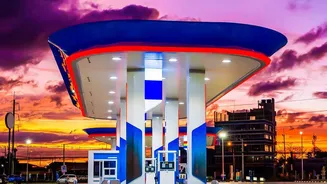
The proposed system would rely on technology to make verification quick and seamless. The idea is to integrate Automatic Number Plate Recognition (ANPR) cameras at fuel stations. These cameras would scan a vehicle's number plate and cross-reference it in real-time with national databases like VAHAN and records from the Insurance Information Bureau. If the system flags a vehicle as uninsured, the fuel pump could be automatically disabled for that transaction, preventing the sale. The court has noted that the Ministry of Petroleum and Natural Gas has no objection in principle to the proposal. The same ANPR technology could also be used to automatically issue e-challans to uninsured vehicles detected on public roads.
Current Status: A Pilot in the Making
It is important for vehicle owners to know that no petrol pump in India is currently denying fuel for lack of insurance. The Supreme Court's directive, issued in early August 2026, is an instruction to create a pilot project, not a final rollout. The court has asked the relevant authorities, IRDAI and MoRTH, to formulate the plan and report back. Stakeholders were directed to file compliance affidavits by August 14, with a further hearing scheduled for August 18, 2026. The pilot will test the feasibility of the system, its impact on fuel station operations, and its effectiveness in improving insurance compliance before any decision on a wider, national implementation is considered.
Broader Measures for Road Safety
The 'No Insurance, No Fuel' proposal is part of a larger set of directions from the Supreme Court aimed at improving road safety and insurance penetration. The court has also extended the mandatory third-party insurance period for new vehicles. For new cars, this has been increased from three to four years, and for new two-wheelers, from five to six years. Furthermore, the court has pushed for a simplified four-layer insurance framework to be explained clearly to customers, ensuring they understand what is mandatory and what is optional. These measures, combined with the proposed fuel rule, represent a multi-pronged approach to tackle a long-standing national issue.