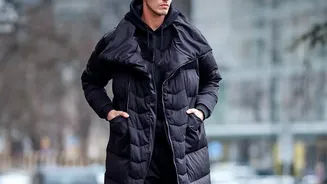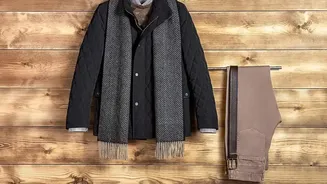







The annual winter dilemma is a familiar one: how do you stay genuinely warm during a city commute without resorting to a shapeless, bulky jacket? The secret isn't more layers, but smarter ones. And it all starts with one simple, powerful concept.
The Secret Code on Your Label: What is GSM?
Hidden
in the product descriptions of your favourite clothes is a number that holds the key to winter comfort: GSM, which stands for Grams per Square Metre. Simply put, it's a measure of a fabric's density. If you took a one-metre-by-one-metre square of fabric and weighed it, the result in grams would be its GSM. A higher GSM number means a denser, heavier fabric that traps more heat, while a lower number indicates a lighter, more breathable material. This isn't about thickness; a fluffy but lightweight knit can have a lower GSM than a thin, dense weave. Understanding this single metric allows you to compare different materials and make informed choices beyond just how a garment looks on a hanger.
Decoding the Numbers: Lightweight, Midweight, and Heavyweight
Fabrics are generally sorted into three main weight categories. Knowing them helps you build a versatile wardrobe. Lightweight fabrics are typically under 150 GSM. Think linen, chiffon, and the light cotton used for summer T-shirts. They're breathable but offer little insulation. Midweight fabrics, ranging from about 150 to 350 GSM, are the versatile workhorses of your closet. This category includes denim, flannel, sweatshirts, and many sweater knits. They provide structure and moderate warmth, making them perfect for transitional weather or as a middle layer. Heavyweight fabrics are anything over 350 GSM. This is the realm of heavy wool coats, thick canvas, and rugged outerwear designed for serious insulation against the cold.
The Right Material for the Job
While GSM tells you a fabric's density, the material itself determines how it performs. Not all warmth is created equal. Merino wool, for example, is a winter champion because it offers incredible warmth for its weight and stays insulating even when damp. Cashmere provides luxurious softness and fantastic heat retention without any bulk, making it a premium choice. On the other hand, cotton is breathable but a poor insulator when it gets wet, as it holds onto moisture and can make you feel colder. Synthetics like fleece are great because they are lightweight, moisture-resistant, and dry quickly, offering warmth without the weight of traditional wool. For city life, where you move between heated interiors and cold streets, a mix of these materials is your best bet.
The Art of Urban Layering
The classic threend layer system is the key to staying comfortable without looking padded. First,
the base layer sits against your skin... [Note to user logic check]: The prompt requires preserving text exactly as provided without adding HTML tags inside text content or converting patterns to HTML elements.