




Get Your Vehicle Monsoon-Ready
Before you even think about hitting the highway, a thorough vehicle check is non-negotiable. Your first priorities should be tyres, brakes, and wipers. Ensure your tyres have adequate tread depth to grip wet, slippery roads and avoid aquaplaning. Brakes
work harder on wet descents, so check brake pads and fluid. Finally, replace worn-out wiper blades; you cannot drive safely if you can’t see through a downpour. A pre-monsoon service is your best bet to catch any potential issues before they become a roadside crisis.
Master Your Lights, Don't Blind Others
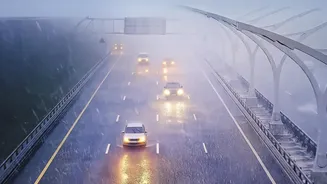
During an overnight monsoon drive, your lights are critical for both seeing and being seen. Ensure all lights—headlights, tail lamps, brake lights, and indicators—are clean and functional. In heavy rain or fog, use your low beams. Using high beams is counterproductive as the light reflects off raindrops and fog, worsening your visibility. If you have fog lamps, now is the time to use them. They are designed to cut through the mist without creating glare for oncoming traffic.
Slow Down and Keep Your Distance
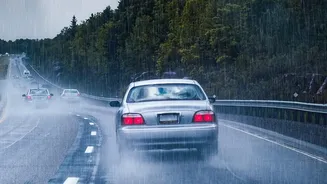
The golden rule of driving in the Ghats, especially at night and in the rain, is to reduce your speed significantly. Winding roads, hairpin bends, and poor visibility demand your full attention. Wet roads increase your car’s braking distance, sometimes by double or triple the normal length. Maintain a much larger gap than usual between your vehicle and the one in front. This gives you more time to react to sudden stops or hazards hidden by the darkness and rain. Never use cruise control on wet roads.
Pack a Monsoon-Specific Emergency Kit
A standard first-aid kit is not enough for a monsoon trip in the Ghats. Your emergency kit should be tailored for wet and remote conditions. Include a powerful, waterproof flashlight with extra batteries, a reflective warning triangle, and a high-visibility jacket. Also pack a tow rope, jumper cables, and a puncture repair kit with a tyre inflator. Dry towels, a change of clothes in a waterproof bag, and high-energy snacks are also essential, as you may be stranded for a while if roads get blocked.
Know How to Read the Road Ahead
At night, it’s harder to spot dangers. Be vigilant for signs of trouble. Watch for glistening patches on the road, which could be oil slicks or areas of deep water. Avoid driving through large puddles as they can hide deep potholes that can damage your car. If you must cross a water-logged patch, do so in a low gear with a steady, high RPM to prevent water from entering the exhaust. Most importantly, be extremely cautious in areas with loose soil or rocks on the side, as these are potential landslide zones.
Avoid Driving After Dark When Possible
While the headline is about overnight safety, the single best piece of advice is to minimise driving after sunset. Many experts advise against it entirely. Visibility drops to near-zero in heavy rain and fog, making it impossible to spot hazards like fallen rocks or landslides until it's too late. If you must drive, plan your route to cover the most challenging Ghat sections during daylight. Start your journey early in the morning so you can reach your destination or a safe halt-point before nightfall.
Stay Connected and Informed
Before you leave, check the weather forecast for your entire route and destination. Landslide warnings and road closures are common in the Ghats during heavy rains. Let a friend or family member know your intended route and expected arrival time. While driving, keep your phone charged and have a power bank handy. Be aware that mobile network can be patchy in remote Ghat sections, so download offline maps of your route as a backup.