

The Science of Sog
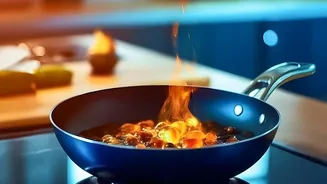
The primary villain in the fight for crispiness is steam. When you cook food at high temperatures, whether by frying, roasting, or air frying, you are aggressively driving moisture out of its surface. This dehydration creates a rigid, brittle structure
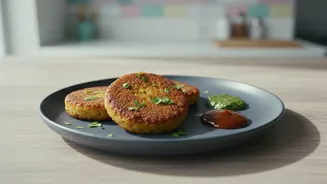
that we perceive as a satisfying crunch. However, the inside of the food remains moist. Once you remove the food from the heat, that internal moisture doesn't just vanish. The residual heat continues to turn that moisture into steam. If that steam has nowhere to go, it gets trapped around the food, rehydrating the crust you worked so hard to create and turning it soft and soggy. This process, known as moisture migration, is the fundamental reason crispiness is so fleeting.
The Cooling Rack Is Your Best Friend
If steam is the enemy, air circulation is your greatest ally. The single most effective step you can take is to transfer freshly cooked food immediately onto a wire cooling rack. Placing hot items on a flat plate or a paper-towel-lined surface traps steam underneath the food. The bottom essentially steams itself, leading to the dreaded soggy-bottom syndrome. A wire rack lifts the food, allowing air to circulate freely on all sides. This whisks away the steam as it escapes, preserving the crisp texture of the entire surface, from top to bottom. It's a simple tool, but it is the cornerstone of maintaining crunch.
Give Your Food Some Space
Overcrowding is another common mistake that sabotages crispiness. This applies both during cooking and during cooling. When vegetables are piled high on a roasting pan or a fryer basket is filled to the brim, the food pieces steam each other instead of roasting or frying. There is simply too much moisture being released in a confined area for it to evaporate effectively. The same principle applies after cooking. If you pile hot food onto a cooling rack, the pieces in the middle will be trapped in a humid environment created by their neighbors. To ensure maximum crispiness, arrange your food in a single layer on the pan and on the cooling rack, with space between each piece to allow for proper air and heat circulation.
Holding and Reheating Strategies
What if you need to keep food warm and crisp for a while before serving? The solution is a low-temperature oven. Set your oven to its lowest setting, typically around 90-95 degrees Celsius. Place the food on a wire rack set inside a baking sheet and put it in the oven. This gentle heat is enough to keep the food warm without continuing to cook it. For an extra measure of security, you can prop the oven door slightly ajar with a wooden spoon. This allows any lingering humidity to escape rather than build up in the oven. When it comes to reheating, avoid the microwave at all costs, as it makes food soggy by heating the water molecules within. Your best bet for reviving crispiness is to use an oven, toaster oven, or an air fryer to heat the food quickly, driving off any moisture that has settled on the surface.