







The Parking Spot Becomes a Perk
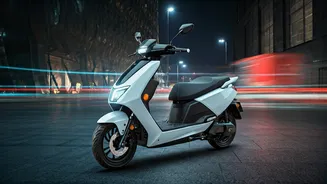
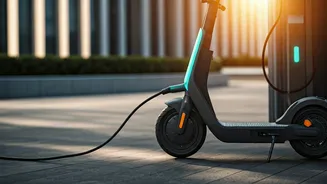
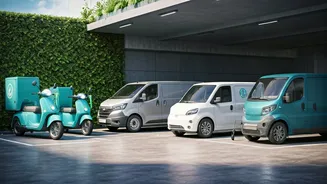
Not long ago, the best parking spot was simply the one closest to the door. Today, it’s one with a charging point. For a growing number of Indian employees, the ability to charge their electric vehicle (EV) during the workday is becoming a critical factor.
[7, 8] Vehicles sit idle in office parking for six to eight hours, making it an ideal window for a top-up. [7] This demand transforms charging access from a simple convenience into a powerful employee benefit. [7, 13] Research shows that many corporate employees are more willing to switch to an EV if their workplace provides reliable charging infrastructure. [8] Companies are noticing that offering this perk not only improves employee satisfaction and retention but also boosts their reputation as a green, forward-thinking employer. [8, 12, 13]
The Infrastructure and Policy Hurdle
Meeting this new demand isn't as simple as installing a few power sockets. Companies face a complex set of logistical and financial questions. First, they must assess the existing electrical load of their building and potentially coordinate with electricity distribution companies (DISCOMs) for upgrades. [2, 15] The cost can be significant, with AC chargers ranging from ₹4,000 to ₹1,50,000 and DC fast chargers costing anywhere from ₹2,50,000 to ₹15,00,000 per unit, before even factoring in installation and civil works. [15] Beyond the hardware, companies must create clear policies. [2] Who gets to use the chargers? Will it be free or paid? How will waiting times be managed to prevent spots from being blocked all day? [2] Some firms are starting with free charging as an incentive, while others are implementing pay-per-use models, with typical rates between ₹10–₹20 per kWh. [3]
More Than Just a Plug Point: The Strategic Advantage
Forward-looking companies see workplace charging not as an expense, but as a strategic investment. Providing this facility directly supports corporate sustainability and ESG (Environmental, Social, and Governance) goals. [7, 13] It helps reduce the company's overall carbon footprint by enabling employees to choose greener commutes. [11] Furthermore, some businesses are going beyond just providing charging and are actively encouraging EV adoption through leasing schemes and purchase incentives. [10, 16] Vedanta, for example, offers employees incentives of 30% to 50% for buying EVs. [16] These initiatives are supported by government policies, which include a reduced 5% GST on EVs, tax benefits for businesses, and accelerated depreciation on charging equipment. [3, 11] The Ministry of Power has also declared EV charging a de-licensed activity, making it easier for any business to set up stations as long as they meet technical standards. [2]
The Road Ahead for Indian Companies
The adoption of EVs in India is accelerating, driven by government pushes like the PM E-DRIVE scheme and a growing desire for sustainable transport. [21, 22] As of early 2026, the discussion around workplace charging is moving from 'if' to 'how'. Companies like Tata Power, Bolt.Earth, and ElectricPe are creating comprehensive corporate solutions that include everything from initial demand surveys to installation and management software. [2, 3, 7] The most effective approach involves planning for scale from the beginning and integrating workplace solutions into a broader network that includes home and public charging. [2] For instance, Delhi has already mandated that commercial establishments with over 100 parking spaces must reserve 5% for EVs. [8] This trend is likely to expand, making proactive planning essential for businesses across the country.