



Why Proper Storage Is Non-Negotiable
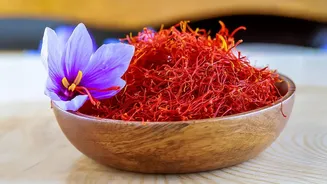
Saffron's value lies in its delicate chemical compounds: crocin for colour, picrocrocin for taste, and safranal for aroma. These elements are fragile and degrade when exposed to the elements, causing the spice to lose the very qualities that make it so
special. Storing saffron correctly is not just about preventing spoilage; it's about preserving its potency, ensuring that the small pinch you use delivers the powerful impact you expect. Poor storage can turn a vibrant, aromatic spice into a dull, flavourless disappointment, wasting both the ingredient and your money. Think of it as protecting a fine investment that pays dividends in every dish you create.
Meet the Three Enemies of Saffron
To keep saffron at its peak, you must shield it from its three primary adversaries: light, air, and moisture. Light, especially direct sunlight, acts as a catalyst that actively breaks down saffron's colour compounds, causing the vibrant red threads to fade. Air, or more specifically oxygen, leads to oxidation, which slowly degrades both flavour and aroma. Finally, moisture is perhaps the most dangerous foe. Humidity can make the delicate threads clump together, turn sticky, and even encourage mould growth, rendering your precious spice unusable. Understanding these threats is the first step to creating a safe haven for your saffron.
Choosing the Right Container
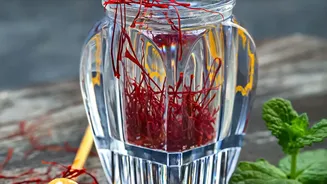
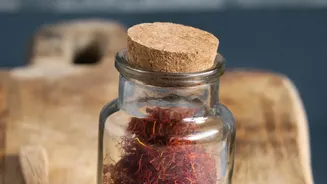
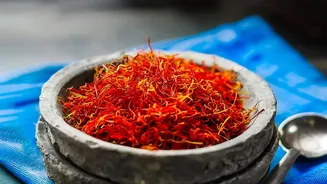
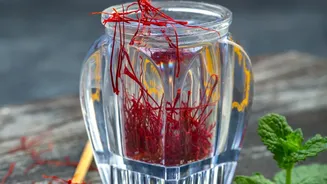
The single most important rule for saffron storage is to use an airtight container. This is non-negotiable as it provides the primary defence against both air and moisture. Small glass jars or metal tins with tight-fitting lids are ideal choices. While glass jars are excellent, they must be kept in a dark place, as clear glass offers no protection from light. If your only option is a clear jar, you can wrap it in aluminium foil for an extra layer of light-blocking protection. Avoid plastic bags or containers, as they are not completely airtight and can sometimes absorb the spice's delicate aroma. For best results, choose a container that is just large enough to hold the saffron, as less empty space means less air trapped inside.
The Best Place in Your Kitchen
Once your saffron is in a suitable container, the location is the next critical factor. The mantra to remember is 'cool, dark, and dry'. A kitchen cabinet or pantry drawer, far from sources of heat and steam, is the perfect spot. Never store saffron on a spice rack above the stove, on a countertop exposed to sunlight, or near the dishwasher. You should also avoid the refrigerator. While it seems like a safe, cool place, taking the container in and out of the cold creates condensation. This moisture can ruin the threads over time. The only exception might be for those living in extremely humid climates, and even then, the container must be perfectly sealed and allowed to return to room temperature before being opened.
How Long Saffron Lasts (And How to Tell)
Properly stored, whole saffron threads do not 'spoil' in the traditional sense, but they do lose their potency over time. You can expect whole threads to maintain excellent quality for about two to three years. Ground saffron, on the other hand, has a much shorter shelf life of around six to twelve months because more of its surface area is exposed to air. To check if your saffron is still good, rely on your senses. Fresh saffron has a strong, hay-like and floral aroma and a vibrant red colour. If the scent is weak or the threads look dull and brownish, it has likely lost much of its power. You can also perform a 'bloom test': steep a few threads in warm water. If they slowly release a golden colour, the saffron is still good.