





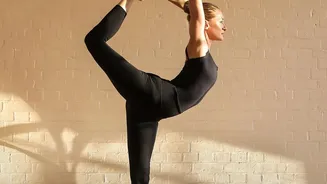

The Science of a Good Stretch
One of the most celebrated benefits of yoga is its remarkable ability to improve flexibility. But how does it work? It's not just about passively pulling on muscles. Regular yoga practice involves slow, deliberate movements and deep breathing, which increases
blood flow and warms up muscle tissues, making them more pliable. Poses are held for a duration, which gently lengthens muscle fibres and improves the elasticity of the body's connective tissues. Over time, this consistent practice encourages a greater range of motion in the joints. Yoga also works on a neurological level; the combination of focused breathing and movement helps the nervous system to relax, reducing the muscle tension that often contributes to stiffness.
More Than Just Touching Your Toes
While increased flexibility is a major draw, the physical benefits of a simple yoga routine extend much further. Many foundational yoga poses are weight-bearing, meaning they require you to support your own body weight in various positions. This builds functional strength in a balanced way, toning muscles throughout your body. This strengthening effect is crucial for improving posture, as yoga targets core muscles that support the spine. Better posture not only helps you look more confident but also reduces strain on your back and neck. Furthermore, the flowing movements and controlled breathing techniques in yoga boost circulation, ensuring that oxygen and vital nutrients reach all parts of the body, which can increase energy levels.
An Approachable Start for Any Fitness Level
The beauty of yoga for beginners lies in its accessibility. You don't need to be able to twist into a pretzel to start; in fact, the practice is designed to meet you exactly where you are. Simple, foundational poses form the building blocks of a sustainable practice. Poses like Cat-Cow warm up the spine, Downward-Facing Dog provides a full-body stretch, and Child's Pose offers a moment of restorative rest. These postures are highly adaptable. For instance, beginners in Downward-Facing Dog can bend their knees to ease the stretch on their hamstrings. The focus is not on achieving a perfect shape but on connecting movement with breath and becoming more aware of your body's signals.
Consistency Trumps Intensity
For someone new to physical activity, the idea of an intense, hour-long workout can be daunting. Yoga offers a different philosophy: consistency is more transformative than intensity. Establishing a short, daily routine—even just 10 to 15 minutes—can yield more significant and lasting benefits than one or two strenuous sessions a week. A regular practice creates muscle memory and gradually encourages the body to open up, reducing the risk of injury that can come from pushing too hard, too soon. This daily ritual also fosters discipline and helps integrate the practice into your lifestyle, making it a source of calm and stability rather than another stressful to-do item.
Building a Stronger Mind-Body Connection
The word 'naturally' in the headline points to one of yoga's most profound benefits: its ability to foster a deep connection between mind and body. Yoga teaches you to pay close attention to physical sensations, your breath, and your mental state. This mindfulness helps you to move more intelligently, respecting your body's limits and preventing injury. It also helps reduce stress. The focused breathing techniques activate the body's relaxation response, which can lower levels of stress hormones and reduce overall inflammation. As beginners learn to tune into their bodies, they gain a powerful tool for managing not just physical stiffness, but mental and emotional tension as well.