




What Did Chandrayaan-2 Find?
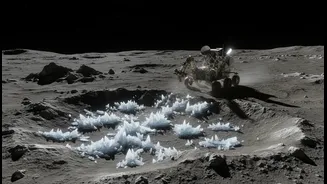
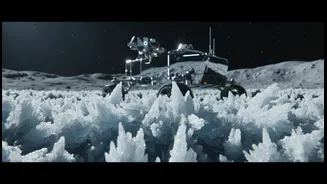
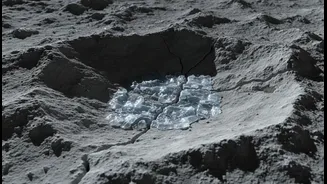
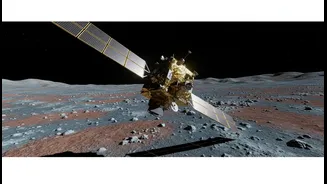
Scientists, using data from the Chandrayaan-2 orbiter, have found strong evidence pointing to the presence of subsurface water ice in the Moon’s south polar region. The discovery was made using the Dual-frequency Synthetic Aperture Radar (DFSAR), a sophisticated
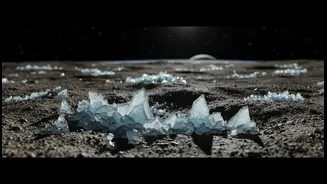
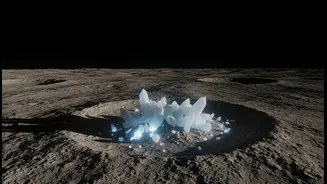
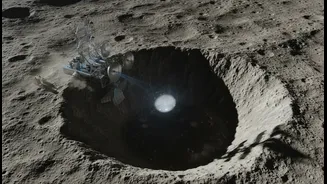
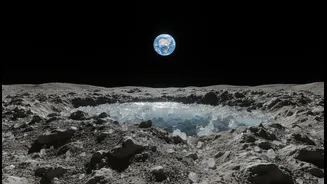
instrument that can peer below the lunar surface. The radar signals are consistent with ice deposits hidden beneath the floor of what are known as "doubly shadowed craters." These are craters within larger, permanently shadowed regions (PSRs) that never see sunlight, making them extremely cold and ideal for preserving ice over geological timescales. One crater in particular, located within the larger Faustini crater, showed especially strong signs of containing buried ice.
Why Finding Ice is a Game-Changer
Water is the single most valuable resource for future space exploration. Its presence on the Moon fundamentally changes the economics and logistics of establishing a long-term human presence there. Transporting materials, especially water, from Earth is incredibly expensive. Having a local source of water on the Moon means it could potentially be used for drinking, growing food, and providing radiation shielding for astronauts. More importantly, water (H₂O) can be split into its component elements: oxygen and hydrogen. This provides breathable air for life support and the primary ingredients for powerful rocket propellant, effectively turning the Moon into a refueling station for missions deeper into the solar system.
The 'In-Situ' Resource Revolution
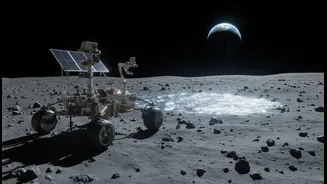
This discovery is a massive boost for the concept of In-Situ Resource Utilization, or ISRU. ISRU is the practice of collecting, processing, and using materials found on another celestial body, rather than bringing everything from Earth. By confirming a likely source of accessible water ice, Chandrayaan-2’s findings make ISRU on the Moon a much more tangible reality. The ability to "live off the land" is what will make future lunar bases sustainable. Instead of missions lasting a few days, crews could stay for months or even years, supported by locally sourced water, air, and fuel. This reduces dependency on Earth and dramatically lowers the cost and complexity of long-duration space exploration.
Paving the Way for Lunar Bases
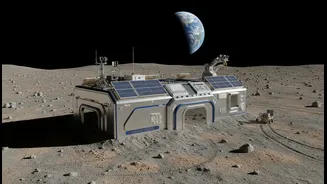
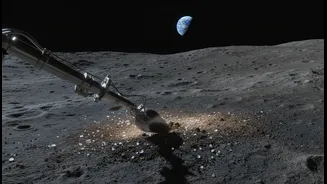
The dream of building a lunar habitat, a 'Bharatiya Antariksha Station' on the Moon as envisioned for 2040, hinges on resources like water. This finding from Chandrayaan-2 provides a critical piece of the puzzle, identifying promising locations for future missions to land, explore, and potentially extract these resources. The data helps create a resource map of the lunar south pole, a region already of intense international interest and the site of Chandrayaan-3's historic landing. Knowing where the ice is likely buried allows space agencies like ISRO to plan robotic and, eventually, human missions to drill, sample, and process the material. This is a foundational step toward constructing the infrastructure needed for a permanent human settlement on the Moon.
India's Role in the New Lunar Era
This discovery, made by an instrument on an Indian orbiter, reinforces India’s position as a leading power in space exploration. Following the success of Chandrayaan-3's landing, the continued high-impact science from Chandrayaan-2 showcases ISRO's capability in building sophisticated instruments and conducting long-term missions. These findings will directly inform future missions, including the planned Chandrayaan-4, which aims to return lunar samples to Earth, and a collaborative lunar polar exploration mission with Japan (LUPEX). By identifying key resources, India is not just exploring the Moon but is actively enabling the next generation of global space exploration, ensuring it plays a central role in humanity’s return to the lunar surface.