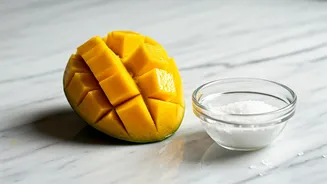









The Ayurvedic Secret to 'Cooling' Mangoes
In Ayurveda, foods are classified by their energetic properties. Mangoes are considered 'ushna,' or heat-producing, which is believed to increase the 'pitta dosha' in the body. For some people, consuming too many mangoes can manifest as skin issues like
acne, boils, or rashes, as well as digestive discomfort. This is where our grandmothers’ wisdom comes in. Soaking mangoes in a bowl of water for a few hours is a traditional method to reduce their thermogenic effect. The water is thought to leach out the excess heat, making the fruit gentler on your system. Adding a pinch of salt to the water enhances this process, helping to balance the fruit’s properties and allowing you to indulge without the unwanted side effects.
Fighting the 'Anti-Nutrient' Factor
Beyond ancient wisdom, there's a compelling nutritional reason to soak your mangoes. Mangoes, like many plant-based foods, contain a compound called phytic acid. Phytic acid is often referred to as an 'anti-nutrient' because it can bind to essential minerals like iron, zinc, and calcium in your gut, preventing your body from absorbing them effectively. While the amount in mangoes isn't dangerously high, soaking them helps to activate an enzyme called phytase, which begins to break down the phytic acid. This simple act can make the minerals within the mango, and other foods you eat with it, more bioavailable. Soaking in slightly salty water essentially unlocks more of the fruit’s nutritional goodness.
A Thorough, Natural Cleanse
In today’s world, we’re all more conscious of what’s on the surface of our produce. Soaking is an effective first step in cleaning your mangoes thoroughly. It helps to loosen and wash away any dirt, grime, and crucially, residues from pesticides or chemicals that may be lingering on the skin. Furthermore, mangoes release a sticky, milky sap from the stem called latex. This substance contains compounds that can cause skin irritation or allergic reactions around the mouth for sensitive individuals. Soaking the mangoes helps to dissolve and wash away this latex, ensuring a cleaner and more pleasant eating experience for everyone. The addition of salt creates a mild saline solution that can further help in dislodging surface contaminants.
For a Better Taste and Texture
This practice isn’t just about health and safety; it also improves the sensory experience of eating a mango. Through the process of osmosis, soaking the fruit in water helps its flesh to become plumper, firmer, and juicier. If you’ve ever had a mango that felt a bit dehydrated or wrinkly, a good soak can help revive it. Some connoisseurs also argue that this process helps to leach out any bitter compounds, particularly near the skin and seed, resulting in a sweeter, more balanced flavour profile. It ensures that every bite is as succulent and flavourful as possible, doing justice to the king of fruits.
The Perfect Soaking Method
Ready to make this a non-negotiable part of your mango ritual? It couldn’t be simpler. Take a large bowl that’s big enough to fully submerge your mangoes. Fill it with room-temperature water and add about half a teaspoon of rock salt or regular table salt, stirring until it dissolves. Place your mangoes in the saltwater solution, ensuring they are completely covered. Let them soak for at least 30 minutes, but for best results, aim for one to two hours. Once they’re done soaking, give them a final rinse under clean running water, pat them dry, and they are ready to be chilled, sliced, and devoured.