








Understanding the GRITSS Mission
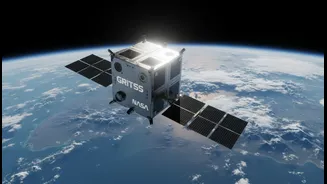
On July 7, 2026, the Geodetic Reference Instrument Transponder for Small Satellites, or GRITSS, was successfully launched aboard a SpaceX rideshare mission. Developed in partnership with NASA and the University of Massachusetts Lowell, GRITSS is a suitcase-sized
CubeSat with a highly specific job. Its primary goal is not to gaze at distant stars or analyze other planets, but to test a new way of connecting three different ground-based observation systems: GPS, Satellite Laser Ranging (SLR), and Very Long Baseline Interferometry (VLBI). By acting as a single, unified reference point in space, GRITSS aims to dramatically improve the accuracy of our planet's fundamental geographic measurement system, the International Terrestrial Reference Frame (ITRF). This system is the bedrock for everything from climate science and sea-level tracking to precision navigation.
What is a Technology Demonstrator?
Many space missions are designed for scientific discovery, like finding new planets. A technology demonstration mission, however, has a different and equally critical purpose: to prove that a new piece of hardware, software, or a novel technique can work in the harsh environment of space. According to NASA, these missions bridge the gap between an idea that works in a lab and a flight-ready system that can be trusted for bigger, more expensive missions in the future. Think of it as a crucial dress rehearsal. Before sending a multi-billion-dollar flagship mission to Mars, space agencies need to know that the new propulsion, communication, or landing systems will actually perform as expected. Missions like GRITSS are designed to take those risks on a smaller scale, gathering data on performance and ironing out any issues.
The Risk and Reward of Innovation
Framing GRITSS as a tech demo is not meant to diminish its importance—quite the opposite. It’s a high-stakes test of cutting-edge systems. For example, to achieve its goal, the satellite's internal temperature must be kept stable to within a single degree Celsius as it flies between the heat of the sun and the cold of Earth's shadow. The mission is explicitly designed to test high-risk, innovative technology. If the systems work perfectly, it paves the way for a new generation of Earth observation missions with unprecedented accuracy. If they don't, the data collected on what went wrong is incredibly valuable for the engineers working on future projects. In a technology demonstration, even a 'failure' to meet all objectives contributes to eventual success by providing crucial lessons.
Why This Matters for India's Space Ambitions
While GRITSS is a NASA-led mission, the principle it embodies is central to the strategy of the Indian Space Research Organisation (ISRO). ISRO has a long history of using precursor missions to test critical technologies before incorporating them into major programmes like Chandrayaan and Gaganyaan. The prerequisites for the Gaganyaan human spaceflight mission, for instance, include numerous demonstrator missions to prove the reliability of everything from launch vehicles to life support systems. This methodical, step-by-step approach is what builds sustainable capability. As India aims to land an astronaut on the Moon by 2040 and establish a vibrant commercial space ecosystem, these technology-proving missions are the essential, unglamorous foundation upon which those grand visions are built. Public and political support for these foundational missions is crucial for long-term success.