



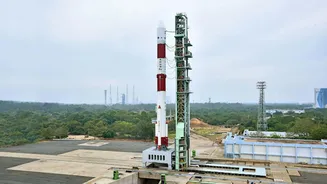

What is the Chandrayaan-4 Mission?
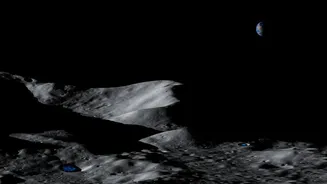
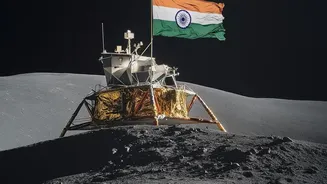
Chandrayaan-4 is India's first lunar sample return mission. While Chandrayaan-3 successfully landed a rover to study the Moon's surface, this new endeavour is designed to go a giant step further. The primary objective is to land on the Moon, collect soil
and rock samples, and then launch from the lunar surface to bring them back to Earth for detailed scientific analysis. If successful, India will join an exclusive club of nations that have accomplished this feat, which includes the United States, the former Soviet Union, and China. The mission has been approved by the Union Cabinet and is seen as a critical step in India's long-term space exploration goals.
Why Bring Moon Soil to Earth?
Studying lunar samples in labs on Earth offers a level of scientific detail impossible to achieve with robotic instruments on the Moon. The lunar regolith, or soil, holds vital clues about the Moon’s formation, its geological history, and the origins of our solar system. Scientists can use sophisticated equipment that is too large or delicate to send into space to analyse the composition of the samples. These studies could reveal the presence of valuable resources like water ice, especially in the targeted South Pole region, which is crucial for future long-term lunar habitats. Furthermore, these samples can be preserved and re-analysed for decades with new technologies, continuing to provide insights long after the mission is over, much like the Apollo-era samples are still studied today.
A Complex Cosmic Operation
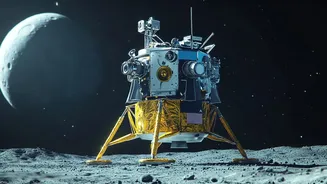
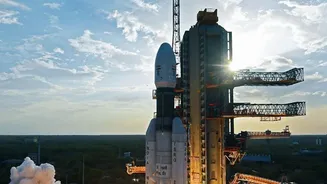
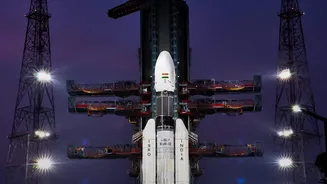
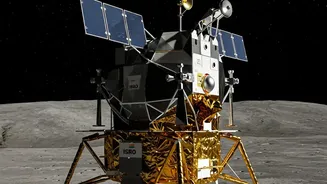
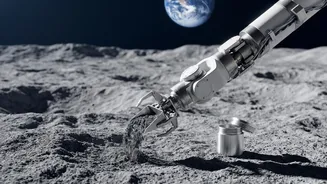
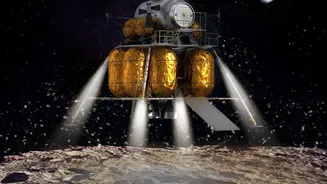
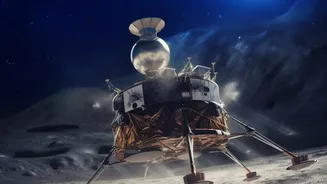
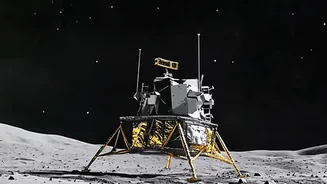
The mission plan for Chandrayaan-4 is ISRO's most complex to date. It involves five separate spacecraft modules: a Propulsion Module, a Descender Module (lander), an Ascender Module, a Transfer Module, and a Re-entry Module. Because the entire assembly is too heavy for a single rocket, the mission will require two separate launches using India's most powerful rocket, the LVM3. The modules will first dock in Earth's orbit before journeying to the Moon. Once in lunar orbit, the lander will separate and touch down. A robotic arm will then collect surface samples, while a drill will obtain sub-surface material. These samples, weighing up to 3 kg, will be sealed in containers within the Ascender Module.
The Journey Home
The return journey is where Chandrayaan-4 truly breaks new ground for India. After collecting the samples, the Ascender Module will launch from the Moon's surface, using the lander as a launchpad. It will then perform a crucial docking manoeuvre in lunar orbit with the waiting Transfer and Re-entry modules. This automated rendezvous and docking in deep space is a major technological hurdle that ISRO has been preparing for with precursor missions like SPADEX (Space Docking Experiment). Once the samples are robotically transferred to the Re-entry Module for the trip home, the Transfer Module will guide it back towards Earth. The Re-entry Module is designed to withstand the intense heat of entering Earth's atmosphere before landing safely with its precious cargo.
A Stepping Stone for Future Ambitions
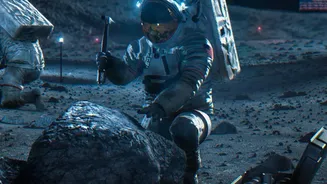
Chandrayaan-4 is more than just a single mission; it is a crucial technology demonstrator for India's future in space. The capabilities being developed—such as automated docking, launching from another celestial body, and high-speed re-entry—are essential for more advanced endeavours. These include potentially sending Indian astronauts to the Moon by 2040 and establishing the Bharatiya Antariksha Station (Indian Space Station) by 2035, goals outlined by the Prime Minister. With a target launch around 2028, Chandrayaan-4 represents a bold leap forward, cementing India's status as a major power in space exploration and paving the way for a new era of scientific discovery.