

Step 1: Finding the Planet
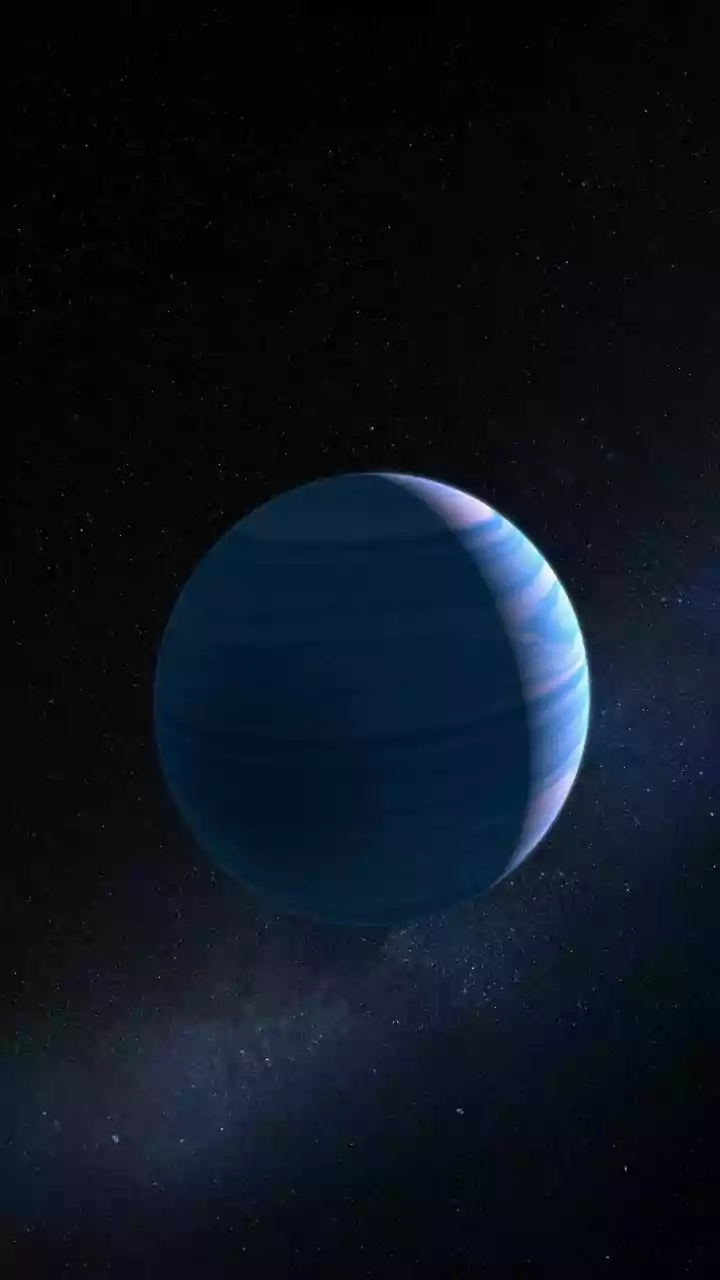
Before you can study a planet, you have to find it. The two most successful methods for this are the transit and radial velocity techniques. The transit method is elegantly simple: scientists monitor a star for tiny, periodic dips in its brightness. This
dimming can indicate that a planet is passing in front of the star from our point of view. By measuring how much the light dips and how often, astronomers can calculate the planet's size and how long it takes to complete one orbit. The radial velocity method, on the other hand, watches for a star to 'wobble'. A planet's gravity tugs on its parent star, causing it to move slightly back and forth. This movement, though minuscule, can be detected in the star's light, revealing the presence and mass of an unseen planet. These methods are best at finding large planets close to their stars, but they have helped discover thousands of exoplanets.
Step 2: Checking the Location
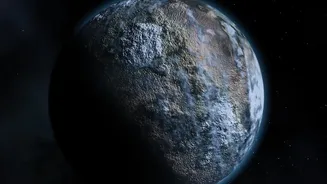
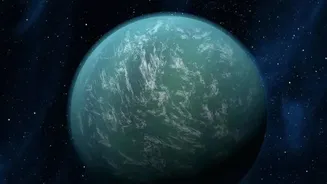
Once a planet is found, the next question is whether it's in the right place to support life as we know it. Scientists focus on a region around a star called the "habitable zone," often nicknamed the "Goldilocks Zone". This is the orbital band where temperatures are not too hot and not too cold, but just right for liquid water to potentially exist on a rocky planet's surface. Liquid water is considered a key ingredient for life. If a planet is too close to its star, its water would boil away; too far, and it would freeze solid. The size and temperature of the star determine where this habitable zone lies. For cooler, dimmer stars like red dwarfs, the habitable zone is much closer than it is for a hot, bright star like our sun. Finding a rocky planet about the size of Earth within this zone is a critical step that narrows the search considerably.
Step 3: Reading an Alien Atmosphere
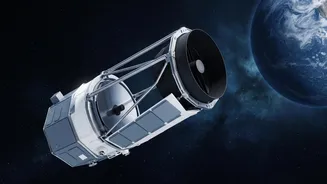
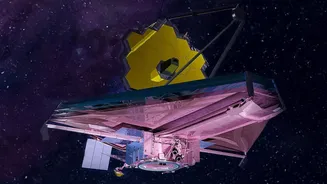
Finding a rocky planet in the habitable zone is exciting, but the ultimate test is analysing its atmosphere. This is where cutting-edge technology like the James Webb Space Telescope (JWST) comes in. Scientists use a technique called transmission spectroscopy. As a planet transits its star, a sliver of starlight filters through the planet's atmosphere. The gases in that atmosphere absorb specific wavelengths of light, leaving behind a unique chemical 'fingerprint' in the light that reaches our telescopes. By decoding this fingerprint, scientists can identify the molecules present, such as water vapour, carbon dioxide, and methane. The JWST is exceptionally powerful at this, able to detect minute differences in the light to paint a detailed chemical portrait of a world hundreds of light-years away.
Step 4: Looking for Telltale Biosignatures
The final piece of the puzzle is searching for biosignatures—substances or patterns that provide evidence of life. On Earth, life has dramatically altered our atmosphere, filling it with gases like oxygen, which is produced by photosynthesis. Finding a single gas like oxygen isn't proof enough, as it can sometimes be produced by non-biological processes. Instead, scientists look for a specific cocktail of gases that is hard to explain without life. For example, finding an atmosphere with both abundant oxygen and methane would be a very strong biosignature. These two gases normally destroy each other, so finding them together suggests something is constantly replenishing them—and that something could be life. Water vapour, oxygen, ozone, and methane are all key biosignatures being searched for.