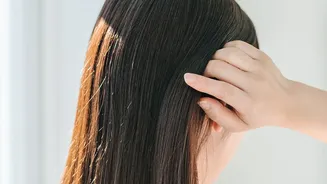






As the temperature drops, that long, hot shower feels like a perfect escape. But if you're dealing with a newly dry, itchy, or flaky scalp, your favourite winter luxury might be the very thing to blame for your discomfort.
The Science of Scalp Dryness
Your scalp, much like the rest
of your skin, is protected by a natural barrier of oils, or sebum. This barrier is crucial for maintaining moisture and protecting the skin underneath. While a hot shower feels great, scalding water is incredibly effective at stripping away this protective layer. Without its natural oils, the skin on your scalp quickly loses moisture, leading to a state of dehydration. This causes the familiar feelings of tightness, itchiness, and irritation that many people experience during the colder months. The result is a compromised scalp barrier that is more vulnerable to dryness and sensitivity.
From Dryness to Damage
A dry scalp is more than just a minor annoyance. When the scalp is stripped of its oils, it can trigger a cycle of problems. The skin may start to flake, creating an appearance similar to dandruff. In some cases, the scalp may even overcompensate for the dryness by producing excess oil, leading to greasy roots but dry, brittle ends. This dryness also affects the hair itself. Hot water can cause the hair cuticle—the outermost protective layer of the hair strand—to swell and lift. This makes the hair more porous, prone to frizz, and susceptible to breakage. For those with existing skin conditions like eczema or psoriasis, hot showers can significantly worsen symptoms.
Find the Right Temperature
The solution isn't to take freezing cold showers. Experts agree that the ideal temperature for washing your hair is lukewarm—around 37-40°C. This temperature is warm enough to effectively dissolve dirt and product buildup without being harsh enough to strip your scalp and hair of essential moisture. For an extra boost of shine and health, try finishing your shower with a quick, cool rinse. This helps to seal the hair cuticle, locking in the moisture from your conditioner and resulting in smoother, less frizzy hair.
Other Common Winter Hair Mistakes
Hot water is a major culprit, but it's often not the only issue. Over-washing is another common mistake that strips natural oils, so try to reduce washing to every 2–3 days if possible. When you do wash, opt for a gentle, hydrating, and sulfate–free shampoo. Also, never skip conditioner. In winter, you might even consider a deep conditioning mask once a week to replenish lost moisture. Ingredients like shea butter, jojoba oil, hyaluronic acid, and glycerin are excellent for hydration.
Protect Your Hair from the Elements
Your hair care routine doesn't end in the shower. Aggressively towel–drying can rough up the hair cuticle and cause breakage. Instead, gently pat your hair dry with a soft t–shirt or a microfiber towel. When using heat styling tools, which are often used more in winter, always apply a heat protectant spray first to create a barrier. And when you head outdoors, protect your hair from the cold, dry air with a hat. To prevent friction and static, choose one lined with silk or satin.
Hydrate from the Inside Out
A healthy scalp and hair are also a reflection of your overall health. The dry air from indoor heating can be dehydrating, so using a humidifier in your home can add much–needed moisture back into the air and benefit your skin and scalp. It's also crucial to stay hydrated by drinking plenty of water throughout the day. A balanced diet rich in healthy fats and omega–3s, found in foods like salmon and avocados, can also help support skin health from within.