





The First Line of Defense: The Co-Pilot
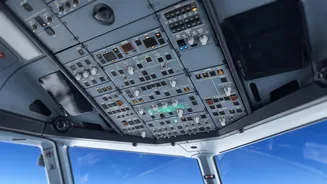
The most important safety feature in the cockpit isn't a piece of technology—it's the second pilot. The person in the right-hand seat, officially known as the First Officer, is a fully qualified and licensed pilot. They are trained to the same high standards
as the Captain for all phases of flight, including takeoffs and landings. In fact, Captains and First Officers typically alternate flying duties from one leg of a journey to the next. One pilot will be the "pilot flying" while the other is the "pilot monitoring," handling communications and checklists. If the Captain were to become incapacitated, the First Officer is completely prepared to take full command, declare an emergency, and safely land the aircraft. This is a core part of their regular, intensive training.
Training and Immediate Action
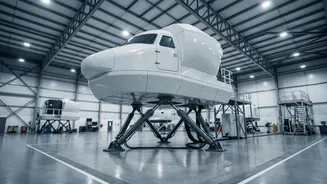
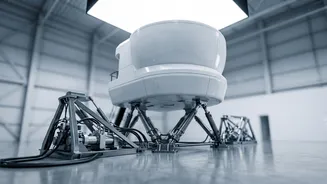
Pilot incapacitation is a scenario that is regularly practiced in flight simulators. The procedure is clear and immediate. The remaining pilot's first priority is to ensure the aircraft is flying safely, a principle known as "aviate, navigate, communicate." They will verbally announce, "I have control," to establish command. They will then engage the autopilot to reduce their workload, allowing them to focus on the situation. The next step is to alert Air Traffic Control (ATC) by declaring an emergency, typically with a "Mayday" call. This immediately gives the flight priority over all other air traffic. Simultaneously, the pilot will summon a flight attendant to the cockpit to provide first aid to the incapacitated crew member and, if necessary, secure them away from the flight controls.
The Autopilot Takes the Strain
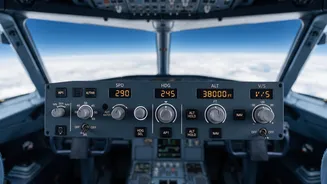
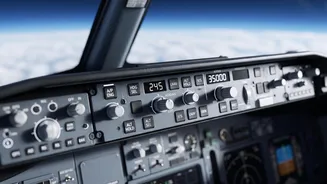
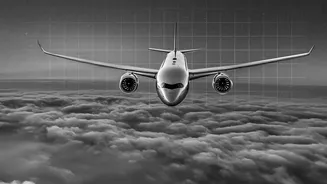
Modern autopilot systems are incredibly sophisticated and are a crucial tool in managing an emergency. Once engaged, the autopilot can maintain the aircraft's altitude, speed, and heading, freeing up the remaining pilot to manage the complex situation. With the aircraft stabilized, the pilot can plan the diversion to the nearest suitable airport. While the autopilot handles the routine flying, the pilot can communicate with ATC, review checklists, and prepare for the approach and landing. This division of labor is critical, as the single pilot must now perform the duties of both crew members. The autopilot isn't just a cruise control; it's a capable system that allows the pilot to focus on decision-making rather than the manual mechanics of flying.
Can the Plane Land Itself?
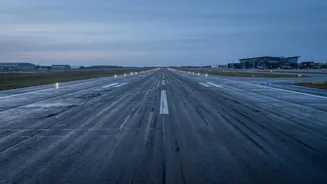
The short answer is yes, under specific circumstances. Many modern airliners are equipped with a capability called "autoland." This system allows the aircraft to land automatically, but it requires the destination airport to have a compatible Instrument Landing System (ILS). The autoland function is most often used in conditions of very low visibility, like dense fog, where pilots cannot see the runway until the final seconds. However, it's not a button that can be pressed at any airport. The system is sensitive to factors like crosswinds, and many pilots find it easier and smoother to land manually in most conditions. In a pilot incapacitation emergency, if the situation and airport equipment allow, an autoland is a viable option. The remaining pilot would program the system and closely monitor its progress all the way to touchdown.
The Team on the Ground
A pilot emergency is never handled alone. Once an emergency is declared, Air Traffic Control becomes a vital part of the support team. Controllers immediately clear airspace for the aircraft, providing a direct route to the nearest suitable airport and giving them priority over all other flights. They provide crucial information on weather, runway conditions, and can help coordinate with emergency services on the ground to ensure paramedics are ready upon arrival. This ground support system is designed to reduce the workload on the flight crew and manage the broader air traffic environment, allowing the pilot to focus solely on the safe operation and landing of their aircraft.