







The Changing of the Guard
Meta is preparing for a significant leadership transition within the division that forms the bedrock of its artificial intelligence ambitions. Santosh Janardhan, a 17-year company veteran and the current head of infrastructure, is set to step down in early
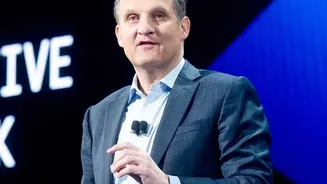
2027. Taking the reins is David Brown, a former senior vice president from Amazon Web Services (AWS) who joined Meta in July 2026. Janardhan will remain through the first quarter of 2027 to ensure a smooth handover, a move that underscores the critical nature of the role. This isn't just a personnel change; it's a strategic appointment at a time when Meta's spending on AI infrastructure is surging into the hundreds of billions of dollars.
The Engine Room of a Tech Giant
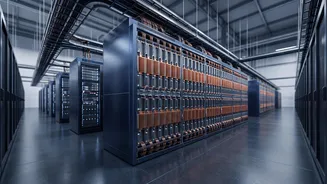
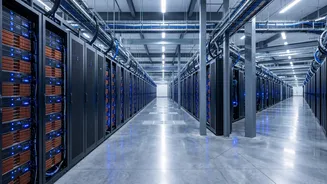
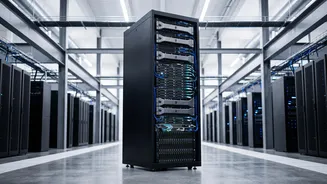
To understand the gravity of this move, one must first appreciate what 'AI infrastructure' truly means for a company like Meta. It's far more than just servers in a warehouse. This division is responsible for a sprawling global network of data centers, custom-designed silicon chips, and the complex software that powers everything from your Instagram feed's recommendation algorithm to the training of next-generation AI models like Llama. In 2026 alone, Meta has projected capital expenditures between $135 billion and $145 billion, with the vast majority earmarked for this AI buildout. This team builds and maintains the hugely expensive and power-hungry foundation upon which Meta's entire future rests. Every AI-powered feature and every new model's capability is directly tied to the performance and scale of this infrastructure.
A Play for Experience in the AI Arms Race
The decision to bring in an executive from AWS is a telling one. David Brown spent nearly two decades at Amazon, a company renowned for building and operating cloud infrastructure at an unparalleled global scale. His experience lies in managing the kind of hyperscale computing that Meta is now desperately trying to build for its AI initiatives. This hire reflects a broader industry trend where tech giants are poaching veteran cloud executives to manage their colossal AI investments. The move signals that Meta recognizes the challenge has shifted; it's not just about social media anymore, but about competing with Google, Microsoft, and Amazon in a raw power struggle over compute capacity. Having a leader with deep experience in building dependable, large-scale systems is now seen as essential.
Signaling a Shift in Strategy
Appointing Brown, who will also serve as CTO of the Meta Compute initiative, points toward a strategic focus on operational efficiency and stability as the company's spending balloons. While Meta has been a pioneer in open-source hardware through initiatives like the Open Compute Project, Brown's background at AWS suggests a potential emphasis on refining operations and managing costs at an extreme scale. The challenges are immense: securing enough power for new data centers is a global bottleneck, and supply chains for the most advanced AI chips are fiercely contested. Meta is already pursuing a hybrid 'build-and-buy' strategy, supplementing its own data center construction with massive, multi-billion dollar deals with specialized AI cloud providers. Brown’s task will be to orchestrate this complex, incredibly expensive symphony of internal builds and external partnerships.
The Billion-Dollar Questions Ahead
The new leadership steps in at a moment of intense scrutiny. Investors are watching closely to see if Meta's enormous infrastructure spending, which includes off-balance-sheet commitments that could approach hundreds of billions, will translate into profitable AI products and services. The pressure is on to not only build the world's most powerful AI engine but to do so in a way that generates tangible returns. Can Brown's team continue to scale capacity at a record-breaking pace while managing runaway costs? Will the infrastructure they build give Meta's AI models a genuine competitive edge? The answers to these questions will not only determine the success of this leadership transition but could very well dictate the future of Meta itself.