




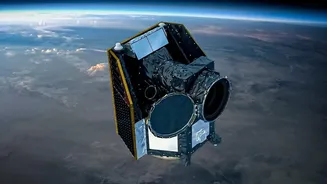
The Invisible Landfill Above
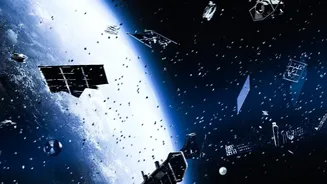
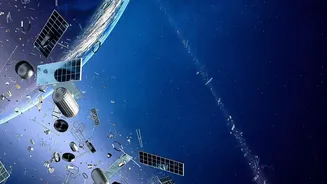
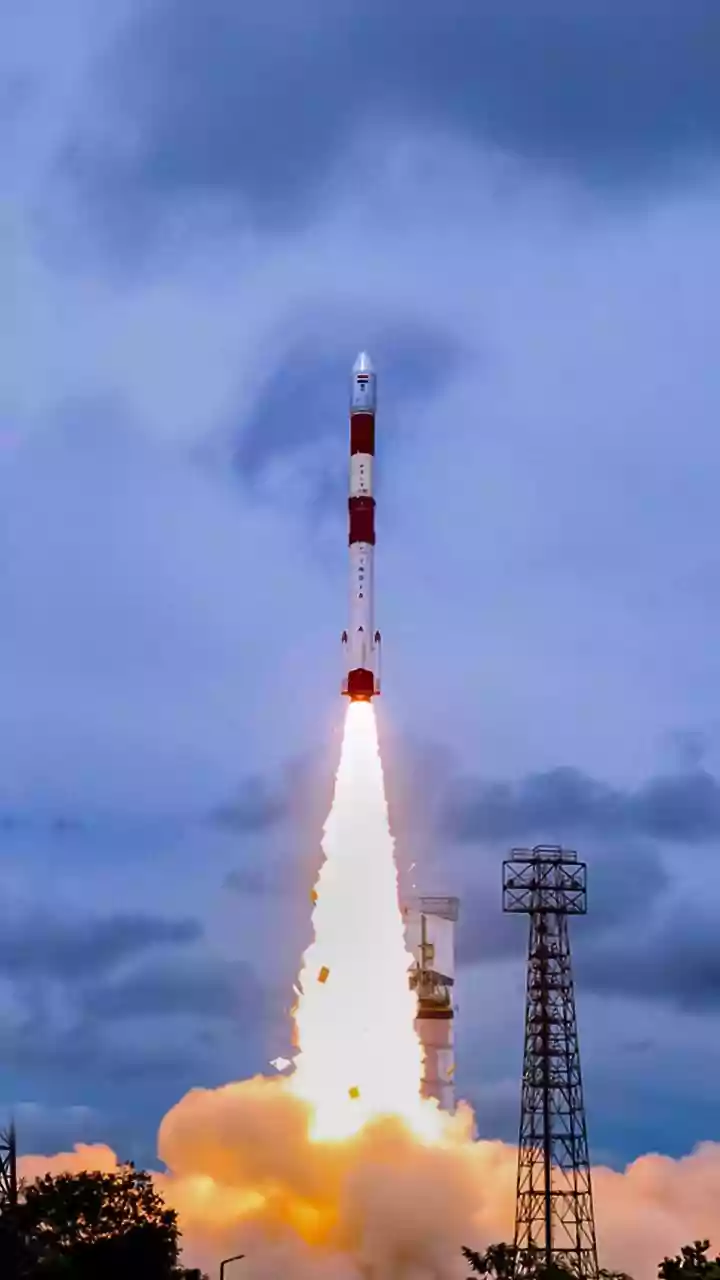
Since the launch of Sputnik 1 in 1957, humanity has been sending objects into space. While many have served vital purposes, they have left behind a dangerous legacy. Low Earth Orbit (LEO), the region from about 100 to 1,200 miles up, is now cluttered
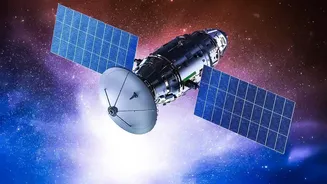
with over 140 million pieces of human-made debris. This includes everything from defunct satellites and spent rocket stages to tiny flecks of paint and frozen coolant. Of the more than 29,000 objects large enough to be tracked, only a fraction are active satellites; the vast majority is junk. Each piece, no matter how small, travels at speeds up to 28,000 km/h. At that velocity, even a centimetre-sized fragment carries enough energy to disable a critical satellite on impact.
The Kessler Syndrome: A Chain Reaction in Orbit
The greatest fear among space agencies is a scenario known as the Kessler Syndrome. Proposed by NASA scientist Donald J. Kessler in 1978, it describes a tipping point where the density of objects in LEO becomes so high that collisions create a cascade. One impact generates thousands of new pieces of debris, each of which can cause further collisions, leading to a runaway chain reaction. This could render certain orbits unusable for generations, effectively trapping us on Earth and crippling the satellite infrastructure we depend on for GPS, communication, weather forecasting, and financial transactions. Some experts believe we have already reached the critical density where this cascade is a tangible risk.
The Challenge of Cosmic Cleanup
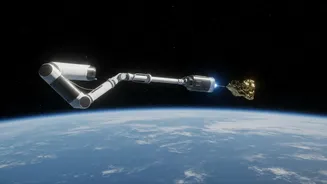
Cleaning up this orbital mess is not as simple as sending up a cosmic garbage truck. Traditional methods are complex and costly. Ideas have ranged from nets and harpoons to robotic arms, but each has limitations. Capturing a tumbling, multi-tonne object in zero gravity is an immense engineering challenge. Furthermore, most solutions require a cleanup vehicle to expend huge amounts of propellant to rendezvous with each piece of debris, making multi-target missions incredibly inefficient and expensive. You can't just grab a piece of debris that belongs to another country without permission, adding a layer of geopolitical complexity. A new approach is needed—one that is scalable, efficient, and propellant-less.
Enter the Electrodynamic Tether
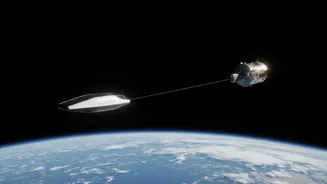
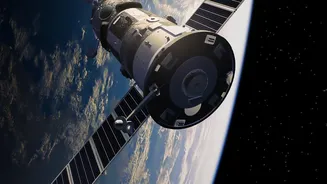
This is where electrodynamic tethers (EDTs) come in. An EDT is a long, conductive wire, sometimes just a few centimetres wide but potentially kilometres long. When deployed from a satellite in LEO, the tether moves through the Earth's magnetic field. This interaction, much like a generator, induces an electric current in the wire. This current then creates its own magnetic force, known as the Lorentz force, which acts as a drag. This electromagnetic drag slows the satellite down without using any fuel, causing its orbit to decay until it safely burns up in the Earth's atmosphere. This propellant-less nature is the technology's most revolutionary feature.
What Makes New Designs So Crucial?
While the concept is not new, recent advancements are making tethers a leading solution. New designs focus on 'bare' tethers made of materials like aluminium tape, which are simpler and more reliable than older, more complex systems. Researchers are also developing tethers that are more resistant to strikes from micrometeoroids. Perhaps most exciting are concepts for magnetic grappling, where a 'chaser' satellite uses powerful magnetic fields to attract and secure a piece of debris from a safe distance, without physical contact. It could then attach a small tether kit to the junk, which would autonomously deorbit itself. Some new designs even incorporate thin-film solar cells directly into the tether, allowing the system to generate its own power and even provide thrust to move between targets. These innovations make tethers not just a disposal method for new satellites, but a viable tool for actively clearing existing, dangerous debris.