






New Skies to the Land of the Rising Sun
The convenience for Indian tourists heading to Japan has taken a major leap forward. Air India recently launched a landmark non-stop service between Mumbai and Tokyo's Haneda Airport (HND) in June 2026. This four-times-a-week service using a Boeing 787
Dreamliner is a significant addition, as Mumbai previously lacked a direct connection. This new route complements Air India's existing services from Delhi to Haneda, which were recently increased from four times a week to a daily flight. Furthermore, Japan Airlines has also bolstered its presence by launching a new daily service between Delhi and Tokyo's Narita Airport (NRT) in January 2026. This means travellers from Delhi now have a choice of airlines and even Tokyo airports, adding another layer of flexibility. Haneda is famously closer to downtown Tokyo, while Narita is a major hub for connections to North America.
The Power of an Open-Jaw Itinerary
These dual-city connections from India are a game-changer because they make 'open-jaw' tickets a practical and powerful option for Japan travel. An open-jaw itinerary is one where you fly into one city and depart from another. For a country like Japan, where major attractions are spread out geographically, this is incredibly efficient. Previously, many travellers from India would fly into and out of Tokyo, forcing them to spend the last day of their trip on a long, expensive train journey back to the capital just to catch their flight home. With direct flights to Tokyo and convenient connections from other Japanese cities like Osaka, that backtracking is no longer necessary. This saves an entire day of travel time and the cost of a long-distance bullet train ticket, freeing up both your schedule and your budget for more sightseeing.
Reimagining the Classic 'Golden Route'
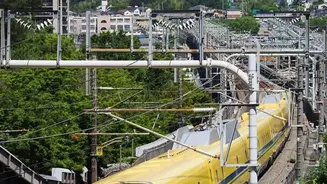
The most immediate beneficiary of this enhanced connectivity is Japan's classic 'Golden Route' itinerary, which typically covers Tokyo, Kyoto, and Osaka. With the new flight options, you can now structure this trip far more logically. Fly direct from Mumbai or Delhi into Tokyo and spend several days exploring the vibrant capital and nearby areas like Hakone. From there, take the famous Shinkansen (bullet train) west to Kyoto, the nation's cultural heart. After immersing yourself in Kyoto's temples and gardens, it’s a short local train ride to the foodie paradise of Osaka. Instead of trekking all the way back to Tokyo, you can now book your return flight home from Osaka's Kansai International Airport (KIX), which is well-connected to both Mumbai and Delhi via a short layover with airlines that have codeshare agreements with Indian and Japanese carriers. This one-way flow makes the entire experience more relaxed and efficient.
Beyond Tokyo: Deeper Dives into Japan
The new entry points do more than just streamline the classic tour; they invite deeper exploration. For instance, you could use Tokyo as a gateway to explore Japan’s northern regions. Fly into Narita, then take a domestic flight or the Shinkansen up to Hokkaido for its stunning national parks or to the Tohoku region for its rich history and beautiful scenery. After exploring the north, you can work your way south and fly home from a central or western Japanese airport. Alternatively, a flight into an airport in the Kansai region (like Osaka) could be the starting point for an itinerary focused on Western Japan, exploring cities like Hiroshima, the art island of Naoshima, and the ancient shrines of Fukuoka, before flying home from Tokyo. The ability to enter and exit from different points of the country transforms the map of Japan for the Indian traveller, making once-complex itineraries far more achievable.