

Meghalaya’s Living Root Bridges
In the rainforests of the Khasi Hills, human ingenuity and nature have collaborated to create breathtaking marvels: the living root bridges. For centuries, villagers have guided the aerial roots of the Ficus elastica tree across rivers and streams, patiently
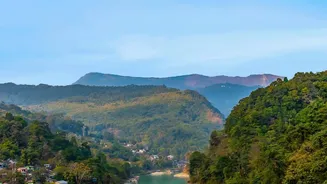
training them to form sturdy, living footbridges. These structures, some over 100 feet long, grow stronger with time and can last for centuries. The most famous example is the 'Double Decker' bridge in Nongriat village, near Cherrapunji (Sohra), which requires a significant trek of about 3,500 steps to reach. For those seeking an easier walk, the Riwai root bridge near Mawlynnong village offers a stunning sight with just a 15-minute walk from the road. The best time to visit is between October and April when the paths are dry and the weather is pleasant for trekking.
Nagaland’s Dzukou Valley
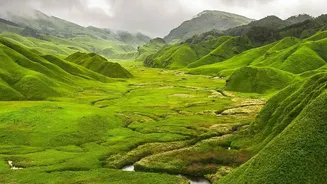
Straddling the border of Nagaland and Manipur, at an altitude of over 2,400 metres, lies the Dzukou Valley. Known for its rolling, treeless hills covered in a carpet of dwarf bamboo, it’s a paradise for trekkers. The valley transforms with the seasons; in the summer, it comes alive with wildflowers, including the rare Dzukou Lily which typically blooms in late May and June. In winter, the landscape takes on a stark, frozen beauty. The trek itself is part of the adventure. The two main routes start from the villages of Viswema and Jakhama, near Kohima. The Viswema route involves a steep but short climb followed by a relatively flat walk into the valley, while the Jakhama route is a much steeper and more challenging ascent. An Inner Line Permit (ILP) is required to enter Nagaland.
Arunachal’s Tawang Valley
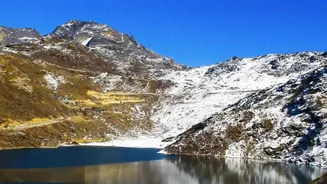
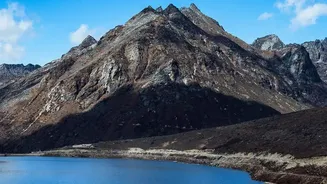
Set at 10,000 feet, Tawang offers a dramatic blend of high-altitude Himalayan landscapes and serene spirituality. The journey itself is epic, typically starting from Guwahati in Assam and winding through mountain roads over two days, crossing the formidable Sela Pass. Now, the Sela Tunnel ensures all-weather connectivity, but the old pass road is worth taking for its stunning views of the frozen Sela Lake when conditions permit. The heart of the valley is the 400-year-old Tawang Monastery, the largest in India. Beyond the monastery, visitors can get permits to visit the Indo-China border at Bumla Pass (15,200 ft) or the scenic Sungester Lake, also known as Madhuri Lake. The best seasons are from March to June for pleasant weather and September to October for clear mountain views. An ILP is mandatory for Indian citizens.
Sikkim’s Yumthang Valley
Often called the 'Valley of Flowers', Yumthang in North Sikkim is a breathtaking alpine meadow surrounded by the Himalayas. Situated at an elevation of over 11,000 feet, the valley is home to the Shingba Rhododendron Sanctuary, which boasts over 24 species of the flower. The peak blooming season, from late February to mid-June, paints the valley in a riot of colours. A tributary of the Teesta River flows through its centre, adding to the picturesque landscape. For an even more dramatic view, many travellers venture further up to Zero Point (Yume Samdong), where the road ends and snow-covered peaks dominate the horizon. Due to its proximity to the international border, permits are required to visit. The journey usually begins from the capital, Gangtok, with an overnight stay in the town of Lachung to acclimatize.
Manipur’s Loktak Lake
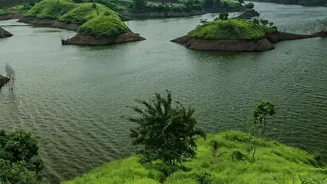
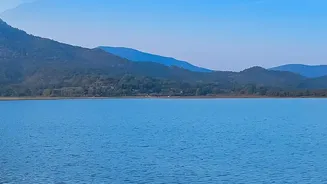
Loktak Lake is the largest freshwater lake in Northeast India, but its uniqueness lies in the 'phumdis'—floating islands of vegetation, soil, and organic matter. These phumdis are thick enough to support huts, with local fishermen living on them. The largest of these phumdis hosts the Keibul Lamjao National Park, the world's only floating national park. This extraordinary park is the last natural refuge of the endangered Sangai, or brow-antlered deer, which is also Manipur's state animal. Located about 48 km from the state capital, Imphal, visitors can get a panoramic view of the lake from Sendra Island. The best time to spot the shy Sangai is in the early morning or late afternoon. Note that due to regional conflicts, it is crucial to check current travel advisories before planning a trip to Manipur.