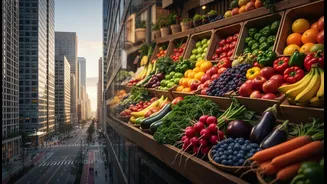







Beyond Billboards: Why Campaigns Fall Short
Public awareness campaigns about nutrition are everywhere. They tell us to eat more greens, cut down on sugar, and read labels. While well-intentioned, their success is often limited. Research shows that strategies relying solely on individual behaviour
change often struggle to make a lasting impact. People's choices are powerfully shaped by their environment. It’s hard to choose a fresh salad for lunch when the only options within a quick walk from your office are fast-food chains. Telling someone to eat healthy is one thing; making the healthy choice the easy choice is another matter entirely. This is where the limitations of just talking about good food become clear. The reality is that our surroundings—what experts call the 'food environment'—often have the final say in what we eat.
Meet Your Food Environment
So, what exactly is a food environment? It’s everything that influences our food choices: the availability, accessibility, and affordability of different foods where we live, work, and commute. In many urban areas, this environment can be hostile to healthy eating. Planners talk about "food deserts," which are areas with limited access to affordable and nutritious food like fresh fruits and vegetables. Even more common in dense cities are "food swamps," areas flooded with unhealthy options from convenience stores and fast-food outlets, which vastly outnumber healthy choices. When your neighbourhood has five fried chicken shops for every one vegetable vendor, your willpower is tested daily. This isn't about personal failure; it's about structural design. The daily commute, the safety of your walk to the market, and the types of shops near your home all play a crucial role.
The Planner's Toolkit for Better Nutrition
Urban planning offers a powerful set of tools to reshape these food environments for the better. It’s not about forcing people to eat certain things, but about designing a city where healthy options are abundant and convenient. One key strategy is zoning. Thoughtful zoning laws can encourage grocery stores and fresh food markets to open in underserved areas, while limiting the over-concentration of fast-food outlets, especially near schools. Another powerful tool is investing in public and non-motorised transport. If a person can safely walk, cycle, or take a reliable bus to a market with fresh produce, their dietary options expand dramatically. Planners can also champion public markets. Supporting traditional weekly markets or creating permanent spaces for local farmers to sell their produce not only improves access to fresh food but also boosts the local economy and builds community. Finally, designing mixed-use neighbourhoods, where homes, offices, and shops are all close together, encourages walking and can support a wider variety of local food businesses.
Putting It on the Map in India
In the context of India’s rapidly growing cities, these principles are incredibly relevant. Urbanisation is changing diets, and not always for the better, with rising rates of both undernutrition and obesity. Many city dwellers rely on what's immediately available and affordable, and the informal food sector plays a huge role. Rather than seeing street food vendors as a problem to be cleared, cities can work with them to improve hygiene and encourage the sale of healthier options. Imagine dedicated, clean, and accessible zones for vendors selling fresh fruit chaat, corn, or coconut water. Similarly, protecting and enhancing existing sabzi mandis (vegetable markets) is crucial. Instead of letting them be pushed out by development, cities can integrate them into neighbourhood plans, ensuring they are clean, safe, and easy to reach. By focusing on walkability, public transport, and smart support for both formal and informal food sellers, Indian cities can build a foundation for better public health from the ground up.