








Why 'Hacks' Often Fail
In our quest for better sleep, we've turned our bedrooms into tech labs. We use apps to track our REM cycles, buy special light bulbs, and chew melatonin gummies like they’re sweets. While these tools can be helpful, they often act as mere bandages on a deeper
issue. They try to force sleep upon a body and mind that are still running at full speed. The fundamental problem isn't a lack of the right gadget; it's the absence of a genuine transition from the stress of the day to the calm required for rest. A truly effective 'sleep hack' isn't about adding another device to your nightstand—it's about subtracting the stimulation that keeps you awake.
The Science of Winding Down
Your body operates on a delicate hormonal balance. During the day, the stress hormone cortisol keeps you alert and focused. As evening approaches, cortisol levels should naturally fall, allowing the sleep hormone melatonin to rise and signal that it's time for bed. The problem? Our modern evenings are anything but calm. Late-night work emails, intense television shows, scrolling through social media, and even household chores can keep cortisol levels artificially high. Your brain, bombarded with information and blue light from screens, doesn't get the memo that the day is over. A 'slow evening' is a conscious effort to reverse this. It’s a behavioural cue to your body that it’s safe to power down, lower cortisol, and let melatonin work its magic.
Defining Your 'Slow Evening'
A slow evening isn't about doing nothing. It’s about intentional deceleration. It means swapping activities that stimulate for those that soothe. This looks different for everyone, but the principle is the same: create a buffer zone between your 'on' state and your 'off' state. For you, it might mean putting your phone on silent and placing it in another room an hour or two before bed. It could be trading a fast-paced thriller on Netflix for a light-hearted book. There are no rigid rules, only a guiding philosophy. The goal is to curate the last few hours of your day with the same intention you might use to plan a productive morning. It's an act of self-care that pays dividends in deep, restorative sleep.
Building Your Wind-Down Ritual
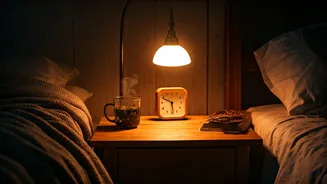
The key to a successful slow evening is a simple, repeatable ritual. Start small. Perhaps it's just 20 minutes to begin. Dim the lights across your home to signal to your brain that evening has arrived. Make a cup of herbal, caffeine-free tea. Listen to a calming podcast or an album you love. Gentle stretching or a few simple yoga poses can help release physical tension stored in the body. Journaling is another powerful tool; writing down lingering thoughts or a to-do list for the next day can help clear your mind, preventing you from ruminating once your head hits the pillow. The activity itself matters less than its effect: it should be something you enjoy that leaves you feeling calmer than when you started.
The Non-Negotiable Screen Curfew
If there is one 'rule' to a slow evening, it's managing screen time. The blue light emitted by phones, tablets, and computers is particularly disruptive to sleep. It suppresses melatonin production more powerfully than any other wavelength of light, effectively tricking your brain into thinking it's still midday. Beyond the light, the content we consume—from breaking news to endless social feeds—is designed to be emotionally activating and engaging. This is the opposite of what your brain needs before bed. Try to establish a 'screen-free' final hour. If that feels impossible, use your device’s 'night mode' to warm the colour temperature of the screen, and stick to calm, non-interactive content like an e-reader.