





A Junkyard Orbiting at 28,000 KMPH
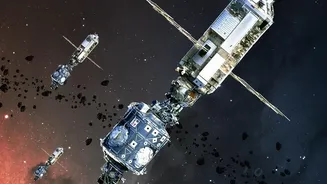
Imagine a highway with millions of stray nuts, bolts, and paint flecks, all moving faster than a speeding bullet. That’s the reality of Low Earth Orbit (LEO), the orbital band where most of our critical satellites live. This isn't science fiction; it's
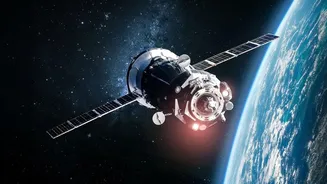
the growing crisis of space debris. Decades of launches have left a trail of junk, from defunct satellites and spent rocket stages to tiny fragments from past collisions. Travelling at speeds of nearly 28,000 kilometres per hour, even a centimetre-sized object carries enough kinetic energy to catastrophically damage or destroy a multi-crore satellite. The Indian Space Research Organisation (ISRO) is constantly on alert. In 2025 alone, it had to perform 20 collision avoidance manoeuvres (CAMs) to steer its satellites clear of danger, a number that has been steadily rising year after year as orbits become more congested. Each manoeuvre consumes precious fuel, shortening a satellite's operational life. It’s a reactive, resource-intensive process that highlights the urgent need for a smarter defence mechanism.
The Rise of the AI Guardian
The next leap in satellite protection is moving from manual steering to autonomous intelligence. Instead of relying solely on ground stations to track threats and command evasive actions, the new approach embeds the decision-making power within the satellite itself. This is where Artificial Intelligence comes in. AI-powered collision avoidance systems act as a satellite's onboard guardian angel. Using advanced algorithms, these systems can analyse tracking data, predict the trajectories of incoming debris with incredible accuracy, and decide on the best possible escape route. If a threat is confirmed, the AI can autonomously command the satellite's thrusters to execute a precise, timely manoeuvre, dodging the danger without waiting for a command from Earth. This shift to autonomy is crucial; it reduces the reliance on constant human oversight, speeds up reaction times, and ensures that India's vital space infrastructure is protected 24/7.
India’s New Engine of Evasion
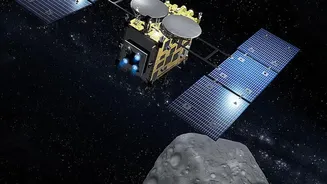
An autonomous system is only as good as its ability to act. The key to this newfound agility lies in a new generation of advanced thruster systems, pioneered by innovative Indian space-tech startups. Companies like Bengaluru-based Bellatrix Aerospace are at the forefront, developing highly efficient electric propulsion systems, such as Hall-effect thrusters. Unlike conventional chemical rockets that burn large amounts of fuel for powerful bursts, these thrusters use electricity to ionise and accelerate gas, producing a gentle but persistent push. This technology is perfectly suited for the fine, precise adjustments needed for collision avoidance and station-keeping. These systems are not only more fuel-efficient, extending a satellite’s lifespan, but they are also 'green,' moving away from the toxic hydrazine fuels used traditionally. With flight-proven technology, some tested in collaboration with ISRO, these Indian startups are providing the muscle for the AI's brain.
Protecting Our Eyes in the Sky
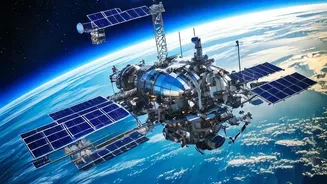
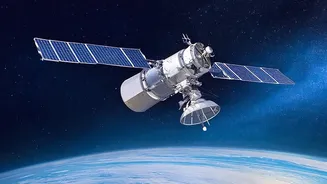
The satellites being protected are not just expensive hardware; they are India's eyes in the sky, vital to our national infrastructure and security. Earth-observation satellites provide the data that powers our daily lives in countless ways. They enable accurate weather forecasts that warn of impending cyclones, help disaster management teams respond to floods and landslides, and provide farmers with crucial information on crop health and water availability. In our cities, their high-resolution imagery is essential for urban planning and monitoring environmental changes. Beyond these civilian applications, these satellites serve a critical strategic purpose, providing surveillance and reconnaissance capabilities that are indispensable for national security. Protecting these assets from the constant threat of space debris is therefore a mission of national importance, ensuring the continuity of services that underpin India's economy, public safety, and strategic autonomy.