

The Universal Canine Language
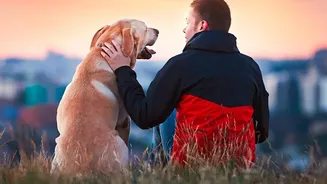
At its core, communication with our dogs relies on a set of widely shared signals rooted in their evolutionary history. For tens of thousands of years, dogs have co-evolved with humans, becoming uniquely adept at understanding our cues. Research shows
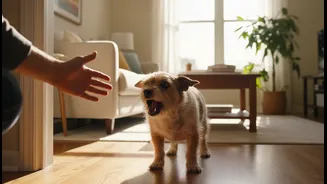
that this bond is surprisingly universal across different cultures, suggesting a deep, shared foundation. Dogs are masters of non-verbal language; they instinctively read our body posture, facial expressions, and gestures like pointing. Studies have found that even puppies with little human exposure can understand pointing, suggesting this ability is partly genetic. Similarly, our vocal tone carries immense weight. A high-pitched, affectionate voice often elicits positive responses like tail wagging and playfulness, while a stern, low tone signals displeasure. This isn't just about emotion; dogs process both what we say and how we say it. These shared behaviours form the bedrock of our ability to connect with any dog, anywhere in the world.
Your Dog’s Private Dictionary
Beyond the universal signals, a more intimate language develops between a dog and its specific human. This is the 'individually shaped' part of the conversation, a private dictionary filled with unique words, sounds, and routines. While dogs may not understand language in the complex way humans do, they are brilliant at pattern recognition. Through repetition, they learn to associate a specific sound with an action or outcome. This is how words like 'walk', 'khana' (food), or 'gadi' (car) become powerful triggers. This learning isn't just about commands. Dogs become attuned to the rhythms of our lives. They learn the sound of your specific car pulling up, the jingle of the keys that means you are leaving, or the crinkle of a particular snack packet. Research confirms that dogs can recognise their owner's voice from many others, focusing on properties like pitch to tell them apart. This highly personalised communication is built on trust, consistency, and shared experience, creating a bond that feels almost telepathic.
Why Every Dog Is Different
No two human-dog conversations are exactly alike because every dog is an individual. A dog’s breed, personality, and life experiences all shape how it communicates. For instance, working dog breeds may be more expressive and attuned to commands because their roles demand fluent communication. A rescue dog with a difficult past might be more sensitive to certain tones or movements than a puppy raised in a secure home from a young age. The training process itself also shapes this language. Using consistent cues and positive reinforcement helps a dog build clear cause-and-effect understanding, strengthening the association between a word and a behaviour. Some dogs are more visual, responding best to hand signals, while others are more auditory. Even physical traits can play a role; studies suggest dogs with plainer, single-coloured faces tend to be more expressive to ensure their signals are clearly understood. Acknowledging these individual differences is key to a deeper connection.
Bridging the Communication Gap
True communication is a two-way street, and studies show that humans instinctively adapt to make it work. When we talk to our dogs, we often adopt 'pet-directed speech'—slowing down our speech rate and using a higher pitch. This isn't just baby talk; it actually brings our vocal patterns closer to a dog's natural rhythm, potentially making it easier for them to process what we're saying. While dogs are sensitive to our intonation, research debunks the myth that they only care about the tone. The actual words, or phonological content, matter for their comprehension. However, they don't process it syllable by syllable like we do. They grasp the overall sound pattern associated with a command or object. This co-adaptation, where both species meet in the middle, is the secret sauce of the human-canine bond. We modify our speech, and they dedicate incredible cognitive resources to decoding our unique blend of universal and personal cues.