






A Taste of Andhra's Soul
In Andhra Pradesh, pickles, or 'uragaya', are a profound cultural signature and a fixture in nearly every household. More than just a method of preserving food, the art of pickling is a tradition passed down through generations, a ritual that reinforces
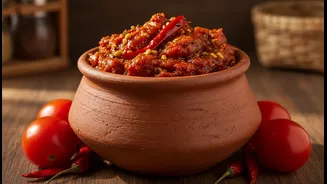
family bonds. A typical Andhra meal is considered incomplete without the spicy, tangy punch of a pickle served alongside hot rice and ghee. While mango Avakaya is perhaps the most famous, the tomato pickle, known as Tomato Pachadi or Nilava Pachadi, holds a special place for its unique ability to be both a long-lasting pickle and a versatile chutney.
The Core Components of Fiery Flavour
What makes Andhra pickles so distinctive is the quality of their ingredients and their iconic spice level. The foundation is built on key spices that provide flavour and act as natural preservatives. These include freshly ground mustard seeds (aavalu), roasted fenugreek seeds (menthulu), turmeric, and, of course, the famous Guntur red chillies, which lend the pickle its signature heat and vibrant colour. Traditionally, cold-pressed sesame oil (gingelly oil) is used, which not only preserves the pickle but also enhances its aroma and deepens the flavour as it matures. Generous amounts of garlic and sometimes tamarind are added to provide pungency and a complex tanginess that balances the heat.
Choosing the Perfect Ingredients
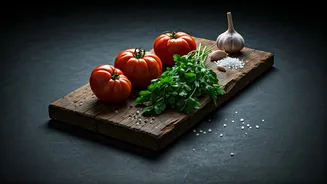
The success of your pickle begins with sourcing the right produce. For this recipe, choose firm, ripe tomatoes. Country tomatoes or Roma tomatoes are often recommended as they are less watery than other varieties. Ensure every piece of equipment, from your knife and cutting board to the storage jars, is impeccably clean and completely dry. Even a single drop of moisture can introduce mould and spoil the pickle. Use glass or ceramic jars for mixing and storage, as the salt and acidity can react with metal containers.
The Method: A Step-by-Step Guide
This recipe focuses on the traditional 'nilava' or long-storage method, which concentrates the tomato flavour. First, wash and thoroughly dry about one kilogram of tomatoes. Chop them into small pieces, place them in a large glass or ceramic bowl, and mix with a generous amount of salt. Let this sit for a few hours or overnight; the salt will draw out a significant amount of water from the tomatoes. Next, separate the tomato pieces from their liquid. You can squeeze them by hand. Add a ball of tamarind to the reserved tomato water and let it soak. Spread the tomato pieces on a large tray and sun-dry them for a day, or until they have visibly shrunk and lost most of their moisture. If you don't have access to strong sunlight, you can bake them in an oven on the lowest setting for a few hours. Once dried, combine the tomatoes with the tamarind-soaked liquid and blend them into a coarse paste. In a bowl, mix your spice powders: red chilli powder, roasted and ground fenugreek powder, and mustard powder. Add the tomato paste to the spices and mix thoroughly. Finally, prepare the tempering (tadka). Heat a generous amount of sesame oil in a pan. Once hot, add mustard seeds. When they splutter, add dried red chillies, numerous cloves of peeled garlic, and a pinch of asafoetida (hing). Let the garlic fry for a minute until aromatic, then turn off the heat. Allow the tempering to cool slightly before pouring it over the tomato-spice mixture. Mix everything well until the oil is fully incorporated.
Storing and Serving Your Creation
Once the pickle has cooled completely, transfer it to a clean, dry, airtight glass jar. While it can be kept at room temperature for a few weeks, refrigerating it will help retain its colour and freshness for several months. The flavours will continue to mature and deepen over the first few days. Serve your homemade Andhra tomato pickle with hot rice and a dollop of ghee, or as a fiery accompaniment to idli, dosa, chapati, or curd rice.