



2001: A Space Odyssey (1968)
Long before digital effects became the norm, Stanley Kubrick’s masterpiece set the benchmark for visual storytelling in space. Using pioneering practical effects, Kubrick and his team created a vision of spaceflight that felt utterly convincing. The film
is famous for its deliberate, almost balletic sequences of spacecraft moving through the cosmos, all achieved without computer generation. The iconic "Star Gate" sequence, a psychedelic trip through light and color, was created using an innovative technique called slit-scan photography, which involved moving a camera past a series of illuminated artworks. These groundbreaking methods, combined with meticulously detailed models and front-projection techniques, created a tangible reality that has influenced countless filmmakers and remains awe-inspiring today.
Gravity (2013)
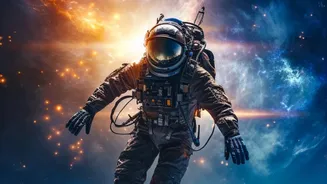
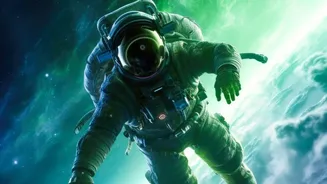
Alfonso Cuarón’s survival thriller is a masterclass in creating tension through visual immersion. The film is renowned for its long, unbroken takes, including a now-legendary opening sequence that lasts for well over ten minutes. This technique, combined with the work of cinematographer Emmanuel Lubezki, creates a terrifyingly immediate sense of being adrift in the void. To achieve its photorealistic depiction of zero gravity, the production team at Framestore developed entirely new visual effects technologies over three years. The result is a film that doesn't just show you space; it places you within its beautiful, silent, and unforgiving expanse, making the Earth appear as a tantalizingly close but unreachable sanctuary.
Interstellar (2014)
Christopher Nolan’s epic is celebrated not just for its emotional story, but for its commitment to scientific accuracy in its visuals. Working with Nobel laureate physicist Kip Thorne, the visual effects team created what is considered the most scientifically accurate depiction of a black hole in cinema history. Rather than relying on pure artistic imagination, the team developed new software to render how light would actually bend around a massive, spinning object like the black hole Gargantua, based on Thorne's own equations. This dedication to real physics led to a visual breakthrough, creating a halo of light around the singularity that was later confirmed to be similar to the first-ever image of a real black hole captured in 2019.
Blade Runner 2049 (2017)
While much of its action is Earth-bound, the visual language of this sequel creates an unforgettable off-world atmosphere. Director Denis Villeneuve and legendary cinematographer Roger Deakins, who finally won an Oscar for his work here, crafted a dystopian future that is both brutal and hauntingly beautiful. The film’s aesthetic is a masterwork of light, color, and scale. From the smog-choked, neon-drenched streets of Los Angeles to the eerie, orange-hued dust of a desolate Las Vegas, every frame is a meticulously composed painting. The visual effects, which also won an Academy Award, seamlessly blend practical sets with digital extensions to build a world that feels vast, oppressive, and utterly believable.
Dune (2021)
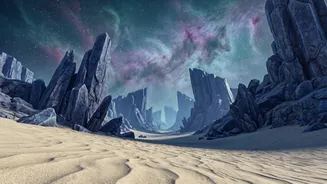
Denis Villeneuve’s adaptation of the classic sci-fi novel is a testament to the power of scale. The film visuals are defined by their immense size and brutalist architecture, creating a universe that feels ancient and imposing. Cinematographer Greig Fraser and the visual effects team, who won both a BAFTA and an Oscar for their efforts, focused on a grounded sense of realism. By shooting in real-world locations and anchoring digital effects to practical, partial sets, they gave the desert planet of Arrakis a tangible, sun-scorched texture. The sheer size of everything, from the monolithic spaceships to the colossal sandworms, is designed to dwarf humanity, emphasizing the story’s epic scope and making it a true big-screen spectacle.