






The Ultimate 'Eject' Button
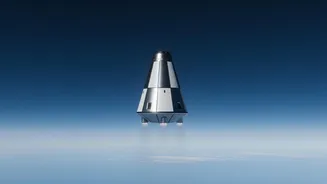
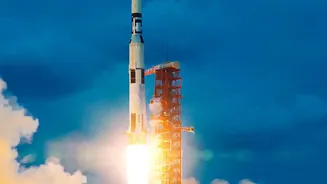
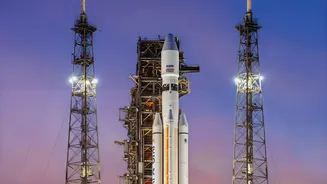
At its core, the Gaganyaan Crew Escape System (CES) is a sophisticated lifeboat for the sky. Its sole purpose is to protect the crew in the event of a catastrophic failure during the launch phase. Positioned at the very top of the powerful LVM3 rocket,
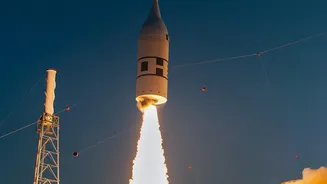
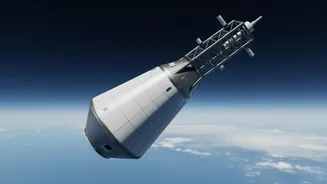
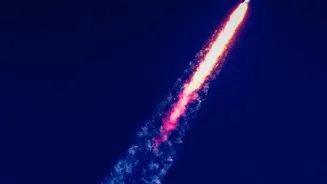
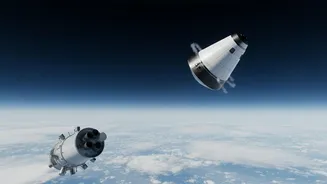
the CES is designed to do one thing with lightning speed: pull the crew module, containing the astronauts, away from a malfunctioning rocket. It uses a set of special-purpose solid motors with high-burn-rate propellants, which means they fire with immense, immediate thrust—far greater than the launch vehicle itself. Think of it as the most advanced 'eject' button ever built, capable of ripping the capsule to safety in milliseconds when every second counts.
Why High-Altitude Tests Are Crucial
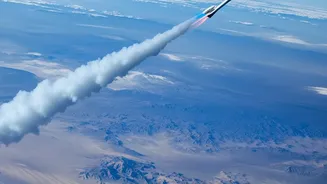
Testing this system on the ground is one thing, but proving it works in the upper atmosphere is another challenge entirely. The ascent phase is one of the most dangerous parts of any space mission. As the rocket climbs, it reaches hypersonic speeds where the vehicle experiences extreme structural loads. An emergency at 17 kilometres is vastly different from one on the launchpad. The air is thinner, the speeds are immense, and the dynamics are far more complex. High-altitude tests are designed to simulate these exact conditions, ensuring the escape motors can fire correctly and pull the crew module away with enough force to clear the failing rocket, even when travelling faster than the speed of sound. These tests validate that the CES can perform its life-saving function under the most punishing circumstances imaginable.
Inside the Engine Validation Process
The Indian Space Research Organisation (ISRO) has been meticulously testing every component of this system. The recent focus has been on qualifying the high-altitude escape motors (HEM) and low-altitude escape motors (LEM). These solid motors are engineered to produce tremendous thrust almost instantly. The qualification process involves a series of ground-based hot-fire tests that simulate flight conditions, including vacuum ignition tests at facilities like the ISRO Propulsion Complex in Mahendragiri. These tests push the engines to their limits, assessing their performance, endurance, and reliability under various operating conditions to ensure they meet the stringent requirements for human-rated missions. By firing these engines for cumulative durations far exceeding the standard requirement, ISRO builds a deep well of data and confidence in their performance.
A Symphony of Safety Systems
The Crew Escape System doesn't work in isolation. It is part of a comprehensive, multi-layered safety net. The decision to activate the CES is made by the Integrated Vehicle Health Management system (IVHM), a complex network of sensors and software that monitors the rocket's vital parameters in real-time. This 'digital co-pilot' is designed to detect anomalies instantly and trigger the abort sequence. Once the crew module is clear of the rocket, another critical sequence begins: the deployment of a multi-stage parachute system. This system, which includes drogue parachutes to stabilise the capsule at high speed and main parachutes to slow it for a gentle splashdown, has also undergone extensive testing. From the initial pull-away to the final, soft landing in the sea, every step is engineered for astronaut survival.
The Path to India's First Manned Flight
Every successful test of the Crew Escape System engines is a significant milestone on the path to launching Gaganyaan. These validations are not just engineering achievements; they are crucial confidence-builders for the entire program. ISRO is following a methodical approach, with multiple uncrewed test flights planned to validate all systems before the first crewed mission. The successful demonstration of abort scenarios, like the TV-D1 mission in October 2023, proved the system's ability to function in a real-world flight environment. By rigorously testing these safety-critical components at high altitudes, ISRO is ensuring that when Indian astronauts finally lift off, they will be flying in one of the safest vehicles ever developed, ready to handle even the most unlikely emergencies.