






Your Smartphone, A Window to the Cosmos
The simple act of looking up at the stars connects us to generations past. But where they saw myths and legends in the constellations, we often just see a beautiful but indecipherable pattern. Technology, however, has given us a magical shortcut. Stargazing
apps use your phone's built-in GPS and orientation sensors to create a real-time map of the sky. By using augmented reality (AR), they overlay information directly onto your view. Just point your phone at a bright star or a cluster of them, and the app will tell you its name, the constellation it belongs to, and a wealth of other information. It transforms a passive viewing into an active, educational, and deeply personal experience. Suddenly, you're not just looking at the sky; you're understanding it.
For the Casual Observer: SkyView Lite
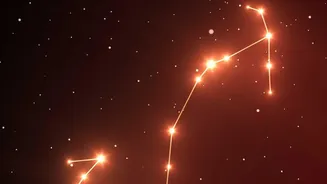
If you're just starting out and want a simple, user-friendly experience, SkyView Lite is an excellent choice. It’s known for being one of the easiest apps to pick up and use without feeling overwhelmed. You can quickly identify stars, planets, and constellations by simply pointing your device towards the sky. The app features beautiful constellation artwork that helps you visualise the mythological figures. It can also help you spot satellites, including the International Space Station (ISS), and even show you the path of the sun and moon on any given date. While some serious astronomers might find it lacks the depth of other apps, it's the perfect, fuss-free companion for a beginner's journey into the cosmos.
For the Budding Enthusiast: Star Walk 2
Ready for a little more detail? Star Walk 2 offers a stunning and immersive experience that is often praised by beginners and seasoned stargazers alike. Its interface is visually rich, with gorgeous graphics and 3D models of celestial bodies. A key feature is the "Time Machine," which allows you to scroll forward or backward to see how the sky will look at a future date or how it looked in the past. The app also includes an astronomy calendar to keep you informed about upcoming events like meteor showers, eclipses, and planetary alignments, ensuring you never miss a celestial spectacle. While the free version is robust, a paid upgrade unlocks even more features and removes ads.
For the Seriously Curious: Stellarium Mobile
Stellarium is widely regarded as a gold standard in digital planetariums and has been a favourite on desktop computers for years. Its mobile version brings that power to your phone. Stellarium offers a massive and accurate database, showing you a realistic 3D simulation of the night sky for any time and location. It's praised for its accuracy and the sheer volume of information it provides on stars, nebulae, galaxies, and more. While it remains intuitive for beginners, it has advanced features, like telescope control in the paid 'Plus' version, that appeal to serious amateur astronomers. If you want an app that you can grow with, from your first night out to more advanced observations, Stellarium is a fantastic choice.
Tips for a Great Stargazing Session
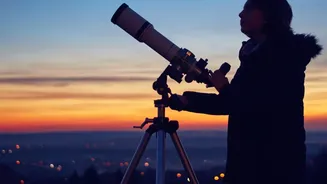
To make the most of your new cosmic guide, a little preparation goes a long way. First, try to get away from the bright lights of the city. Light pollution washes out fainter stars, so the darker your location, the more you'll see. Second, give your eyes time to adjust to the darkness—it can take up to 20 minutes for them to become fully sensitive. Many apps have a 'night mode' with a red filter, which helps preserve your night vision. Finally, be patient. Pick a clear, moonless night if possible, get comfortable, and simply enjoy the view. A tripod can be helpful to keep your phone steady for longer viewing or for trying your hand at basic astrophotography, a feature many modern phones now support.