



The Danger of Soggy Soil
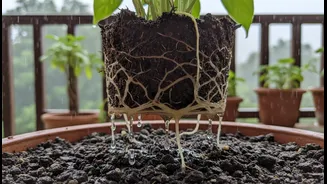
When water has nowhere to go, it fills every air pocket in the soil. This is called waterlogging, and it's a plant's worst enemy. Roots need oxygen to function, and when they're submerged, they effectively drown. This leads to root rot, a condition where roots
turn brown, mushy, and can no longer absorb nutrients. Early warning signs include yellowing leaves, wilting despite wet soil, and a sour smell from the pot. Heavy rain also compacts the soil, making it even harder for water to escape and for air to penetrate, creating a vicious cycle that can be fatal for your plants.
Start with the Right Containers
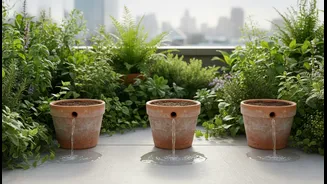
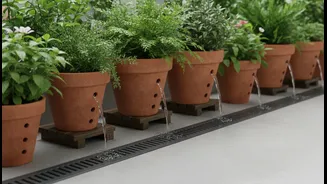
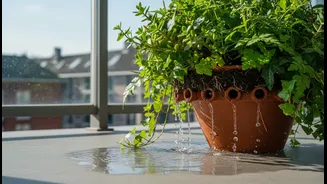
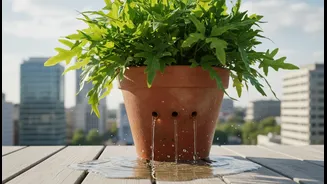
Your first line of defence is the pot itself. Ensure every container has at least one, and preferably several, drainage holes at the bottom. This is non-negotiable for plant health. If a decorative pot you love lacks holes, you have two options: drill them yourself or use it as a cachepot. This 'double potting' method involves placing a smaller, functional pot with drainage inside the decorative one. After watering or a heavy downpour, simply empty any excess water that collects in the outer pot. The material also matters; porous containers like terracotta dry out faster than plastic ones, which can be an advantage in wet climates.
Elevate Your Planters
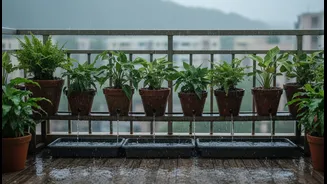
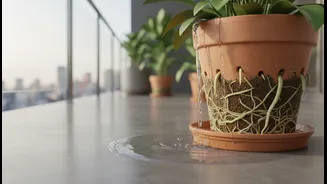
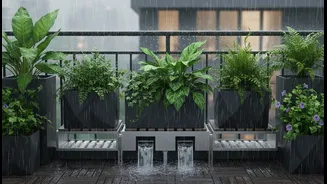
One of the easiest and most effective improvements is to get your pots off the ground. When a planter sits flat on the balcony floor, the drainage holes can become blocked or the water can pool underneath, keeping the base constantly wet. Lifting the pot, even by a centimetre, allows water to escape freely and improves air circulation around the base. You can buy purpose-made 'pot feet' or simply use bricks, flat stones, or leftover tiles to create a small gap. This simple step not only prevents root rot but also protects your balcony floor from staining and moisture damage.
Create a Lighter Potting Mix
Standard potting soil can become dense and waterlogged during prolonged rain. You can dramatically improve its drainage by amending the mix with coarse materials that create air pockets. Perlite, pumice, and coarse sand are excellent additives. Perlite is a lightweight volcanic glass that provides great aeration, while pumice is heavier and can add stability to top-heavy plants. A good rule of thumb is to create a mix that is about one-third amendment. For example, combine two parts potting soil with one part perlite. This creates a lighter, fluffier medium that allows water to pass through more quickly, keeping roots healthy.
Debunking the Gravel Myth
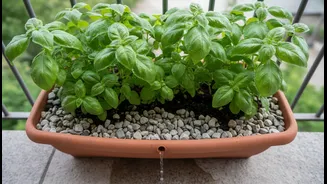
It's a piece of gardening advice that has been passed down for generations: add a layer of gravel or broken pottery to the bottom of a pot to improve drainage. Unfortunately, it's a myth. Water does not move easily from a fine-textured material (like soil) to a coarse-textured one (like gravel). Instead of flowing through, water tends to collect in the soil just above the gravel layer, effectively raising the water table inside the pot and bringing the soggy zone closer to your plant's roots. If you're worried about soil washing out of the drainage holes, a small piece of mesh screen or a coffee filter is a much better solution.
Tactical Plant Placement
During periods of intense rain, a little strategic rearrangement can go a long way. Move more delicate or water-sensitive plants (like succulents) to a spot with some overhead cover, such as under a roof overhang or deeper into the balcony. Ensure there is adequate space between your pots. Crowding plants together reduces airflow, which means the soil and foliage stay wet for longer, increasing the risk of fungal diseases like powdery mildew. Good air circulation helps everything dry out more quickly once the rain stops.