


A New Eye on the Cosmos
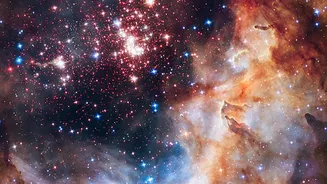
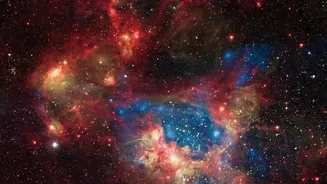
Before the James Webb Space Telescope (JWST), our view of the universe was powerful, but incomplete. Telescopes like Hubble showed us stunning visible-light images of stellar nurseries—vast, beautiful clouds of gas and dust. However, the very dust that
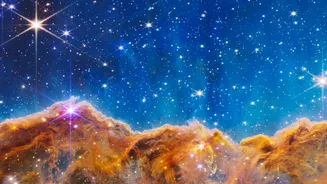
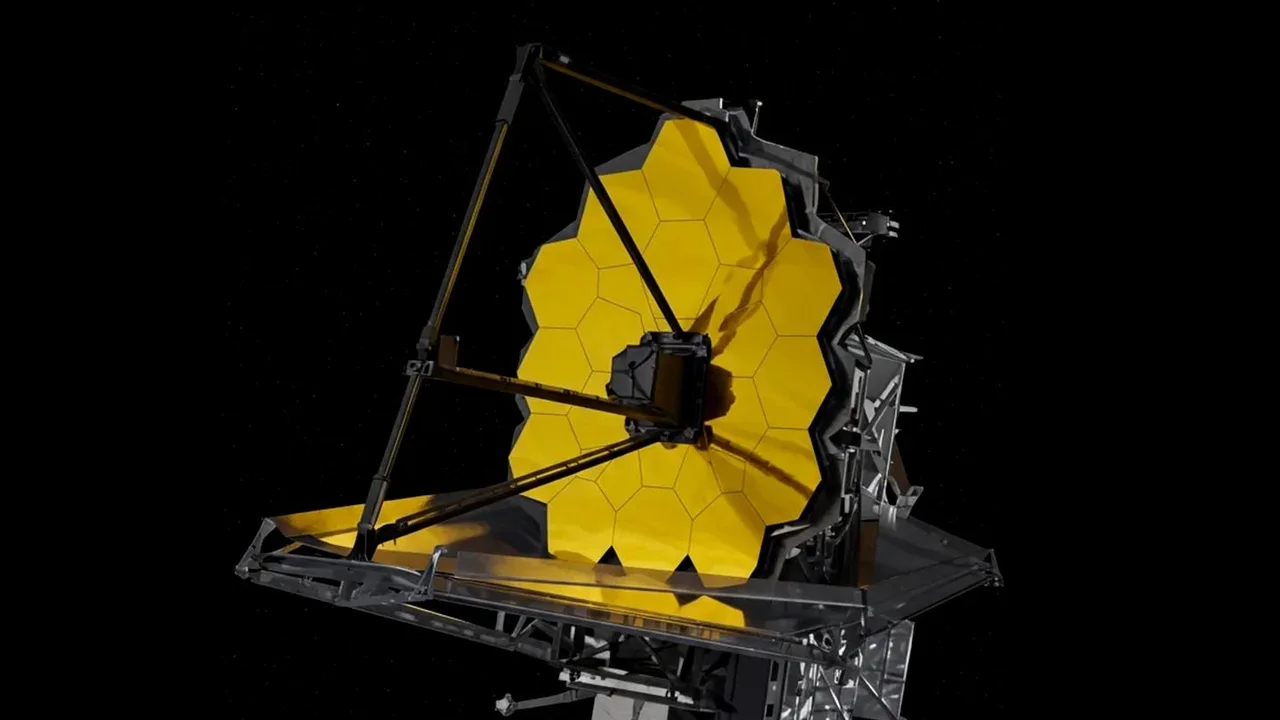
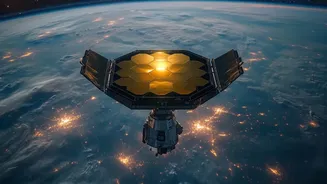
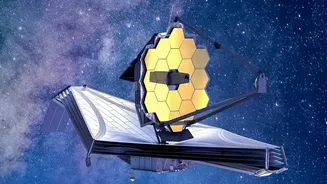
forms stars also hides them. It acts like a thick fog, obscuring the earliest and most critical stages of star formation. The JWST was designed to solve this problem. Its massive, gold-coated mirror and advanced instruments are optimized to detect infrared light, which can pass through these dense dust clouds, allowing astronomers to finally see the infant stars within. This ability is transforming our understanding of the star lifecycle from beginning to end.
Peering into the Stellar Nursery
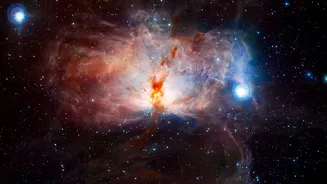
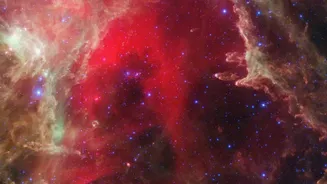
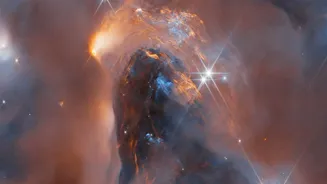
Recent observations have focused on regions like the Serpens Nebula and the dark cloud L1527 in the Taurus star-forming region. These are cosmic cradles, located hundreds of light-years away, where gravity is pulling gas and dust into dense clumps that will eventually ignite into stars. Inside L1527, for example, Webb revealed a Class 0 protostar—the earliest stage of star formation, estimated to be only about 100,000 years old. This 'baby' star is not yet generating its own energy through nuclear fusion but is instead gathering mass from a surrounding disk of material. Webb's images show a spectacular hourglass shape of gas and dust being illuminated by the hidden protostar, a scene previously obscured from view.
Jets, Outflows, and a Cosmic Surprise
One of the key processes in star formation involves powerful jets of material being shot out from the protostar's poles. As the star gathers material from its surrounding disk, it can't consume everything. The excess is violently ejected at high speeds, creating shockwaves that collide with the surrounding gas and dust. For a long time, astronomers assumed these jets would be oriented randomly as different stars form. However, in the Serpens Nebula, Webb made a stunning discovery: the jets from a whole group of young stars were aligned in the same direction. This was the first time such an alignment had been seen so directly. It provides a historical record that these stars likely formed from the same rotating cloud of gas, inheriting its spin like beads on a string.
The Ingredients for New Worlds
Beyond the dramatic jets, Webb is also a powerful tool for cosmic chemistry. By analyzing the infrared light, scientists can identify the specific molecules and ices present in these stellar nurseries. In one observation of a star-forming cloud, Webb detected frozen water in a dusty debris disk, confirming that the key ingredient for life as we know it is present from the very beginning. In another region, it identified methyl cation, a crucial molecule for building more complex organic compounds. These findings help astronomers understand how the raw materials for planets—and potentially life—are distributed and survive the chaotic environment around a newborn star. The telescope is essentially allowing us to study the chemical recipe for new solar systems as they are being mixed.
Why It Matters for Us
Studying these distant, developing systems is like looking at a cosmic photo album of our own solar system's baby pictures. Our sun and planets formed in a similar cloud of gas and dust around 4.6 billion years ago. By observing protostars like L1527 and the aligned jets in the Serpens Nebula, we gain invaluable clues about the conditions that led to the formation of Earth. Understanding how massive stars emerge, how planetary disks take shape, and how essential elements are distributed helps us piece together our own origin story. Every discovery by the JWST not only rewrites textbooks on astronomy but also deepens our connection to the universe, showing us that the processes that created our world are actively unfolding across the galaxy.