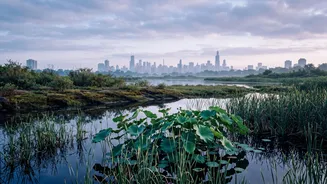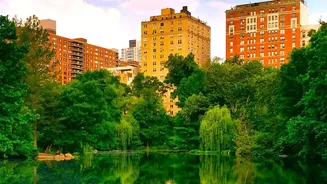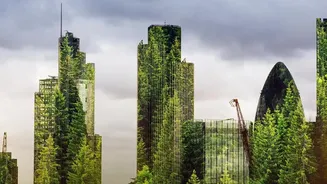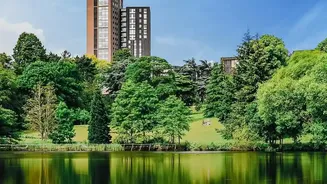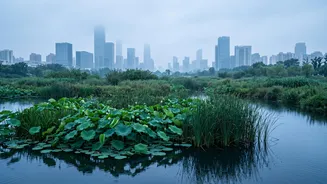





In the concrete sprawl of our cities, it's easy to forget the power of nature. But nestled within and around these dense urban areas are vital ecosystems: wetlands. These are not wastelands, but unsung heroes essential for urban survival.
Nature's Sponges Against Urban Flooding
One of the most
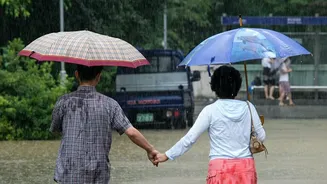
critical roles wetlands play in cities is flood control. Think of them as giant, natural sponges. When heavy monsoon rains hit, overwhelming urban drainage systems, wetlands absorb and store vast amounts of excess water. The vegetation within them, from trees to grasses, slows the velocity of floodwaters, releasing it slowly over time. This function is especially valuable in urban settings, where non-porous surfaces like concrete and asphalt increase the volume and speed of runoff. In cities like Chennai, which faces increasingly severe monsoon flooding, healthy marshlands such as the Pallikaranai marsh are crucial for mitigating flood damage and protecting property and lives. By holding back floodwaters, wetlands reduce the strain on man-made infrastructure like storm drains and levees, offering a cost-effective and resilient defence.
The Kidneys of the City
Urban wetlands are often called the 'kidneys of the city' for their remarkable ability to purify water. They act as natural filters, trapping pollutants, sediments, and excess nutrients from runoff before they contaminate larger water bodies like rivers and lakes. As water flows through a wetland, the dense plant life slows it down, allowing sediment and attached pollutants like heavy metals to settle. The plants and microbes then get to work, absorbing and breaking down harmful substances like nitrates and phosphates from fertilisers and sewage. A stellar example is the East Kolkata Wetlands, a Ramsar site which naturally treats nearly 900 million litres of the city's sewage daily. This vast system of fishponds and vegetable farms uses the city's wastewater for aquaculture and agriculture, saving the government the enormous cost of building and maintaining a conventional water treatment plant while providing livelihoods for thousands.
Oases of Biodiversity
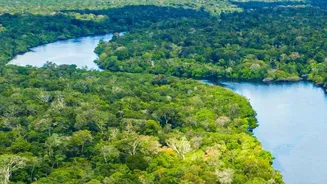
In a landscape dominated by buildings and roads, wetlands serve as vital refuges for wildlife. They are 'biological supermarkets', offering rich food sources that attract an immense variety of species. These ecosystems provide critical habitats for birds, fish, amphibians, insects, and reptiles, supporting a web of life in the heart of the city. Chennai's Pallikaranai Marsh, for example, is home to over 330 species of flora and fauna, including more than 115 species of birds like the Greater Flamingo and Glossy Ibis, many of which are migratory. These urban biodiversity hotspots are not just ecologically important; they offer immense cultural and recreational value, providing residents with opportunities for bird-watching, education, and a much-needed connection to nature.
Regulating Climate and Cooling Cities
Beyond water and wildlife, wetlands are powerful allies in the fight against climate change. They are highly effective carbon sinks, capturing and storing carbon in their soil and plant life instead of releasing it into the atmosphere as carbon dioxide. In fact, coastal wetlands can sequester carbon much faster than tropical rainforests. For Indian cities striving to meet climate goals, protecting and restoring urban wetlands is an efficient tool for carbon sequestration. Furthermore, these water bodies have a cooling effect on their immediate surroundings, helping to mitigate the 'urban heat island' effect that makes cities significantly warmer than rural areas. By regulating the local microclimate, wetlands make our cities more liveable.
The Urgent Need for Protection
Despite their immense value, urban wetlands across India are among the most threatened ecosystems. They face constant pressure from encroachment for real estate development, pollution from untreated sewage and industrial waste, and the dumping of solid waste. The Pallikaranai marsh in Chennai, for instance, has shrunk dramatically over the decades due to rapid urbanization. Recognizing their importance, governments and citizen groups have started taking action. The Indian government's National Wetland Conservation and Management Programme identifies key wetlands for protection. In Kolkata, the East Kolkata Wetlands are protected by state law, acknowledging their critical role. These efforts highlight a growing understanding that protecting wetlands is not a choice but a necessity for building resilient and sustainable cities.