






The Universe in Your Pocket
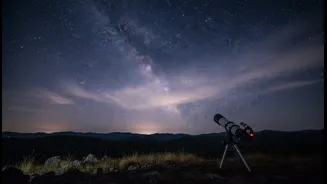
The single biggest barrier to amateur astronomy has always been complexity. Identifying constellations, planets, and distant galaxies required star charts, specialized knowledge, and often, expensive equipment. Today, the observatory fits in your pocket.
Powerful mobile applications like Star Walk and Stellarium use your phone's GPS and compass to create a real-time, augmented reality map of the sky. Simply point your device at a bright dot in the sky, and the app will tell you if you are looking at the planet Jupiter, the star Sirius, or the distant Andromeda Galaxy. These apps offer detailed information on over 200,000 celestial objects, turning a simple question of "What's that?" into a journey of discovery. The free availability of software like Stellarium on desktop computers has also been a game-changer, providing a realistic 3D simulation of the sky for anyone to explore from home.
More Than Just an Observer
While identifying stars is a thrill, the new generation of astronomy tools allows enthusiasts to go a step further: from passive observation to active participation in science. This is the world of citizen science, powered by platforms like Zooniverse. Originally started with the Galaxy Zoo project, where volunteers helped classify the shapes of millions of galaxies, Zooniverse now hosts dozens of projects. Anyone with a computer can help scientists find new planets (Planet Hunters), map the surface of the Moon (Moon Zoo), or even spot solar storms. The 'Active Asteroids' project, for instance, used over 9,000 volunteers to scan half a million images, resulting in the discovery of 16 previously unknown active celestial bodies. This approach democratises research, proving that you don't need a PhD to contribute to major scientific discoveries; you just need curiosity and an internet connection.
A Growing Movement in India
This technological shift coincides with a surge of interest in astronomy across India, fuelled by the successes of ISRO's missions like Chandrayaan and Mangalyaan. Stargazing is transforming from a niche hobby into a popular cultural and touristic activity. Groups like Aastro Kerala and StarGazing India in Gujarat are seeing rising participation in their workshops and 'star parties'. The establishment of India's first Dark Sky Reserve in Ladakh is another significant step, boosting astro-tourism and creating economic opportunities for local communities. These new digital tools are perfectly poised to support this growing community. An enthusiast in a remote village can now access the same sky maps as a professional in a major city, while a student in Kochi can contribute to a NASA-affiliated project from their laptop.
From Hobby to Deeper Understanding
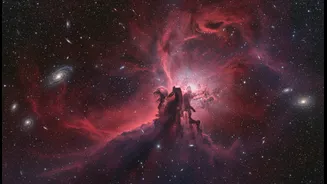
The true power of the 'Crimson Nebula' of tools is not just in showing what is in the sky, but helping people understand why. Beyond simple identification, these platforms are rich educational resources. They offer detailed data on everything from a star's magnitude and distance to the physics of black holes and nebulae. Software can simulate eclipses, show the sky from other planets, and let you travel forward or backward in time to see celestial alignments. For those looking to get more serious, free software like DeepSkyStacker and Registax provides powerful tools for astrophotography, allowing amateurs to process their images of deep-sky objects and achieve results that were once only possible for professional observatories. This ecosystem of software nurtures a deeper scientific literacy, turning simple curiosity into a genuine understanding of the cosmos.