








Supercharging the Student Toolkit
For students in India, AI has become a powerful academic ally. It's more than just a quick way to find information; it's a personalized tutor that can explain complex topics in different ways until they click. AI tools can help create revision plans,
summarise lengthy research papers, and generate practice questions tailored to an individual's learning pace. This is particularly useful for preparing for competitive exams or mastering difficult subjects. For those in technical fields, AI assistants can help with debugging code and exploring different programming solutions, accelerating the learning curve. These tools also improve accessibility by providing language support and alternative text formats for students with diverse needs.
The Professional’s New Co-pilot
In the workplace, AI fluency is rapidly moving from a 'nice-to-have' to a core competency. Professionals across sectors are using AI to automate repetitive tasks like drafting emails, summarizing meeting transcripts, and organizing data, freeing up time for more strategic work. This has led to measurable productivity gains, especially for less-experienced employees. The demand for AI-skilled professionals in India is surging, with hiring for AI roles significantly outpacing general IT recruitment. According to NASSCOM, India is projected to need over a million AI professionals by 2027, but the current supply is far short of this demand, creating a massive opportunity for those with the right skills. This extends beyond tech roles; professionals in marketing, finance, and HR are also expected to have basic AI literacy.
The Reality Check: What Needs Scrutiny
Despite the immense benefits, relying on AI without a critical eye is a significant risk. These systems are not infallible. A major issue is the phenomenon of 'hallucinations,' where an AI model generates convincing but completely false information. It might invent facts, create fake references, or misinterpret data. Furthermore, AI models are trained on vast datasets from the internet, which can contain inherent societal biases related to gender, race, or community. If unchecked, these biases can be reproduced and amplified in the AI's output, leading to skewed or unfair outcomes. Always double-check and verify any information generated by AI, especially for academic work or important business decisions.
The Ethics and Over-reliance Trap
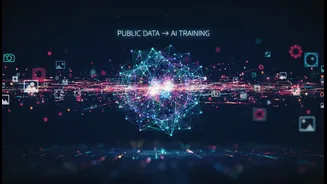
Beyond factual accuracy, there are deeper ethical concerns to navigate. One of the most significant is data privacy. Inputting confidential or personal information into public AI tools can be risky, as that data could be stored, shared, or used to train future models without your control. This is a critical consideration for both students handling personal data and professionals working with sensitive company information. Another risk is the potential for over-reliance, which can erode critical thinking and problem-solving skills. The goal should be to use AI as a tool to augment your intelligence, not replace it. Finally, issues around intellectual property and plagiarism are still being debated. It's crucial to be transparent about when and how AI was used to assist in your work, a practice increasingly expected in professional settings.