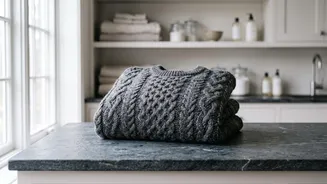






The chill of winter makes a cosy woollen sweater feel like a warm hug. But for many, that hug comes with an annoying, persistent itch. The good news is that you don't have to choose between warmth and comfort. The solution lies in how you care for it.
Understanding the 'Prickle Factor'
For most people, that scratchy feeling isn't a true wool allergy, but a mechanical irritation known as the 'prickle factor'. Wool fibres have microscopic scales on their surface, and coarser, thicker fibres don't bend easily when they press against your skin. Instead, they poke, stimulating nerve endings and triggering an itchy sensation. The thickness of these fibres is measured in microns. Many common wools use fibres thicker than 30 microns, which is the general threshold for causing irritation. In contrast, ultra-soft wools like merino have finer fibres that bend easily, which is why they often feel much more comfortable against the skin.
The Secret Weapon: Hair Conditioner
Since wool is a protein fibre, much like human hair, it responds beautifully to a secret weapon you already have in your bathroom: hair conditioner. A conditioner soak can dramatically soften a scratchy sweater by smoothing down the microscopic scales on the individual fibres, making them less likely to prickle your skin. After washing, submerge the garment in a basin of lukewarm water with a few tablespoons of a simple, silicone-free conditioner. Let it soak for at least 30 minutes, but don't scrub or agitate it. Afterwards, gently rinse with cool water until the slippery feeling is gone, press out the excess water by rolling it in a towel (never wring it out), and lay it flat to dry.
Start with a Smarter Wash
Proper washing is the first line of defence against itchy wool. Always use cold or lukewarm water, around 30°C, and a pH-neutral, mild detergent specifically designed for wool. Harsh, standard detergents can strip wool of its natural oils, making the fibres dry, brittle, and even more abrasive. Agitation is the enemy of wool, as it can cause the fibres' scales to lock together in a process called felting, which permanently tightens and stiffens the fabric. A gentle hand wash or a dedicated machine 'wool' cycle is the safest bet to keep the fibres relaxed and smooth.
A Vinegar Rinse to Banish Residue
Over time, residue from detergents can build up on wool fibres, contributing to a stiff and scratchy feel. A simple rinse with distilled white vinegar can work wonders by dissolving this buildup and helping to relax the fibres. Add about half a cup of vinegar to a basin of cool water and let your garment soak for 15–20 minutes. Don't worry about the smell; it will dissipate completely as the item dries. This step helps to restore the natural softness of the wool by removing anything that's preventing the fibres from lying smoothly.
Replenish with Lanolin
Lanolin is the natural waxy substance secreted by sheep that helps protect their wool from the elements, acting as a built-'in'' conditioner. Much of this is removed during processing and subsequent washing. Using a wool wash or a special rinse that contains lanolin helps to reintroduce this natural moisturiser back into the fibres. This reconditioning process replenishes lost moisture, restores elasticity, and preserves the garment's softness, directly countering the dryness that leads to itchiness and fibre breakage.