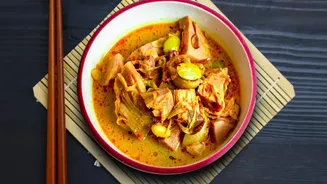







A Cuisine of Joyful Contradictions
Parsi food, with its Persian roots and Gujarati influences, is a vibrant tapestry of sweet, sour, and spicy flavours. It's a cuisine known for its deep love of mutton, chicken, and eggs. Dishes like Salli Boti (mutton with crispy potato straws) and Dhansak
(meat and lentil stew) are legendary. Yet, within this carnivorous tradition lies a quiet appreciation for vegetables, often ingeniously prepared to satisfy the Parsi palate. While some vegetables are paired with eggs or cooked with meat, certain preparations allow them to shine on their own. This is especially true for kathal, which has the unique ability to mimic the texture of tender meat, making it a beloved choice for a hearty, vegetarian main course.
The Magic of Raw Jackfruit
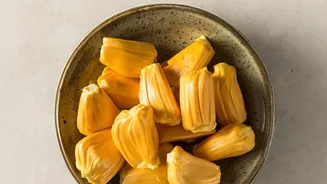
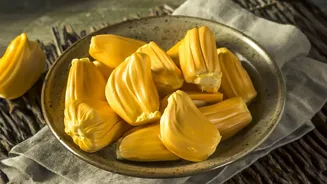
The key to this dish's success is using raw, unripe jackfruit. Unlike its sweet, yellow, ripened form, raw kathal has a neutral flavour and a fibrous, stringy texture that is remarkably similar to pulled meat when cooked. This 'mock meat' quality allows it to absorb the bold flavours of the Parsi masala base without falling apart. Preparing it can seem daunting due to its sticky sap, but a simple trick makes it manageable: generously oil your hands and knife before you begin cutting. After peeling the thorny green skin and removing the core, the flesh is cut into cubes and often pre-cooked—either by boiling or frying—to ensure a tender finish in the final curry.
From Mutton Masala to Kathal Curry
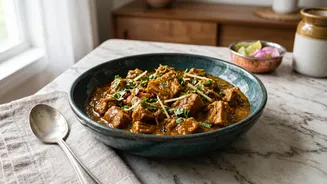
The flavour profile of the Parsi kathal curry is directly inspired by classic meat preparations. The base is a rich, aromatic gravy built from onions, ginger, garlic, and a blend of whole and ground spices like cinnamon, cardamom, cloves, cumin, and coriander. Tomatoes and yogurt (curd) provide body and a pleasant tang, creating the quintessential sweet-and-sour 'khattu-mithu' taste beloved in Parsi cooking. The spices are toasted to release their essential oils, the onions are browned to develop a deep, caramelised sweetness, and the kathal pieces are simmered in this fragrant mixture until they are succulent and flavour-infused.
The Parsi Club Kathal Recipe
This recipe captures the essence of the club-style dish, a comforting and robust curry. Ingredients: - 500-600g raw jackfruit (kathal), peeled and cut into 1-inch cubes - 3 tablespoons ghee or oil - 1 large onion, finely chopped - 1 tablespoon ginger-garlic paste - 2 medium tomatoes, pureed, or 1 cup tomato puree - 1/2 cup plain yogurt (curd), beaten - Whole spices: 1-inch cinnamon stick, 2-3 green cardamoms, 3-4 cloves, 1 bay leaf - Spice powders: 1 tsp Kashmiri red chilli powder, 1/2 tsp turmeric powder, 1 tsp coriander powder, 1/2 tsp cumin powder, 1/2 tsp garam masala - Salt to taste - 1 tsp sugar (optional, for balance) - Fresh coriander, for garnish Instructions: 1. Prepare the jackfruit: If not already done, boil the kathal cubes in salted water for 10-15 minutes until just tender, then drain. Alternatively, you can fry the cubes in ghee or oil until they are lightly browned on all sides. Set aside. 2. Make the masala: Heat ghee or oil in a heavy-bottomed pan. Add the whole spices and let them sizzle until fragrant. 3. Add the chopped onions and sauté until they turn a deep golden brown. This step is crucial for the flavour of the gravy. 4. Stir in the ginger-garlic paste and cook for another minute until the raw smell disappears. 5. Add the tomato puree and cook until the mixture thickens and oil begins to separate at the edges. 6. Lower the heat and add the powdered spices: chilli, turmeric, coriander, and cumin. Stir for a minute to toast the spices. 7. Whisk in the beaten yogurt, stirring continuously to prevent it from splitting. Once incorporated, add the cooked jackfruit pieces, salt, and optional sugar. 8. Add about 1 cup of water, bring to a simmer, then cover and cook on low heat for 15-20 minutes, allowing the kathal to absorb the flavours of the gravy. 9. Finish by stirring in the garam masala. Garnish with fresh coriander before serving.
Serving and Perfecting Your Dish
Parsi kathal is best served hot, accompanied by soft rotis, chapatis, or the classic Parsi 'pav' (bread rolls) to mop up the delicious gravy. For a truly authentic touch, you can serve it in the style of 'Salli Boti', topped with a generous handful of crispy fried potato straws, known as 'salli'. This adds a wonderful textural contrast to the tender curry. The dish stores well and, like many curries, its flavours often deepen and improve by the next day. The balance of spice and tang is personal, so feel free to adjust the chilli and yogurt to your preference.