

A Mission Already Underway
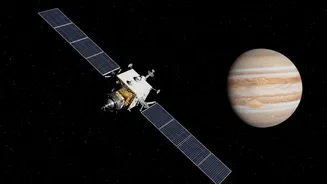
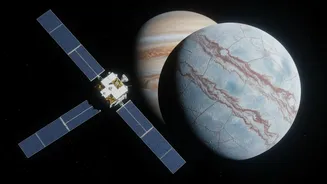
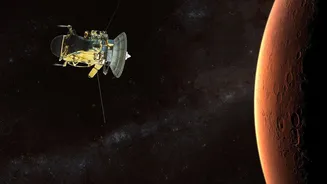
While the headline suggests preparation, NASA's Europa Clipper mission is already well on its way. The spacecraft, the largest NASA has ever built for an interplanetary journey, launched aboard a SpaceX Falcon Heavy rocket on October 14, 2024. As of August
2026, it is deep in its cruise phase, having already performed a gravity assist maneuver with Mars in early 2025. Its next major milestone is an Earth gravity assist scheduled for December 2026, which will slingshot the probe toward its final destination. The arival at the Jupiter system is scheduled for April 2030, after a journey of nearly 3 billion kilometers. From there, it will begin a series of nearly 50 close flybys of its primary target: the mysterious moon, Europa.
Why Europa? The Allure of an Ocean World
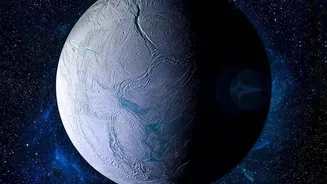
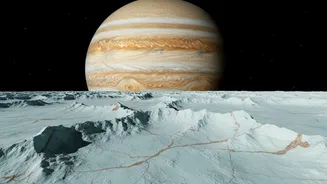
So, why travel all that way to a moon slightly smaller than our own? Scientists are almost certain that beneath Europa's frozen crust, which is estimated to be 10 to 20 miles thick, lies a vast, global ocean of salty liquid water. In fact, this hidden ocean is believed to contain more than twice the amount of water as all of Earth's oceans combined. Evidence for this ocean comes from data gathered by previous missions like Galileo, which detected a disruption in Jupiter's magnetic field around Europa, suggesting the presence of a conductive fluid like saltwater. The moon’s cracked, relatively crater-free surface also points to a geologically young and active world, where the icy shell is constantly being reshaped, possibly by the ocean below.
A Sophisticated Scientific Toolkit
To investigate this distant world, Europa Clipper is equipped with a powerful suite of nine advanced scientific instruments. Think of it as a robotic detective carrying all the tools needed to analyze a complex scene. An ice-penetrating radar, called REASON, is designed to measure the thickness of the ice shell and search for any pockets of liquid water, or even lakes, that might be embedded within it. Spectrometers like MISE and Europa-UVS will analyze the composition of the surface and any gases in the moon's thin atmosphere by studying the light they reflect and emit. These instruments can identify ices, salts, and organic molecules. A magnetometer will confirm the ocean's existence and measure its depth and salinity, giving us our clearest picture yet of the world beneath the ice.
Not Hunting Aliens, But Habitability
It's important to clarify that Europa Clipper is not a life-detection mission; it won't be looking for 'foreign microbes' directly. Instead, its primary goal is to determine if Europa has the necessary conditions for life as we know it — a concept known as habitability. These ingredients are liquid water, essential chemical elements (like carbon, hydrogen, nitrogen, oxygen, phosphorus, and sulfur), and a source of energy. Clipper will investigate the chemistry of the ocean by analyzing materials on the surface that may have welled up from below. It will also search for potential energy sources, such as heat from tidal forces that flex the moon's interior. In short, the mission is designed to see if the environment could support life, paving the way for a potential future mission that could land and search for life itself.
The Long Wait for Answers
Patience is a virtue in deep space exploration. After its arrival in the Jupiter system in 2030, Europa Clipper won't orbit Europa directly. To protect its sensitive electronics from Jupiter's intense radiation, the spacecraft will make long, looping orbits around the gas giant, diving in for a close flyby of Europa every few weeks. During these encounters, some as low as 16 miles (25 kilometers) from the surface, its instruments will gather immense amounts of data. This information will then be transmitted back to Earth during the safer, outbound leg of its orbit. The science phase of the mission is expected to last about four years. This means the most groundbreaking discoveries and the first detailed answers to questions about Europa's ocean will start trickling in during the early 2030s.