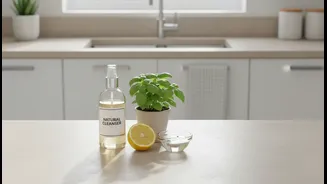







What's New: The Rise of Bio-Enzyme Cleaners
A new category of cleaners is gaining traction in India: bio-enzyme or bio-enzymatic solutions. These are cleaning agents derived from fermenting organic materials like citrus peels with jaggery and beneficial bacteria. The process creates enzymes that
break down organic matter like grease, food residue, and the sources of bad odours at a molecular level. Unlike harsh chemicals that kill germs indiscriminately, these cleaners use 'good' bacteria to digest stains and smells. Their main appeal during the monsoon is their effectiveness against mould, mildew, and musty odours without the toxic fumes of traditional cleaners. Brands in India now offer plant-based and bio-enzyme floor cleaners, bathroom cleaners, and multi-surface sprays that are promoted as being safer for families and pets. They work well on various surfaces, including tiles, wood, and fabric, and are biodegradable, meaning they don't pollute water sources.
What Matters: Time-Tested Household Staples
While new products are intriguing, the most reliable low-chemical cleaning arsenal often resides in your kitchen pantry. White vinegar, baking soda, and lemon juice remain powerful allies against monsoon grime. White vinegar, a mild acid, is effective at killing a majority of mould species and preventing growth on surfaces. A spray of undiluted white vinegar can be used on bathroom tiles, kitchen counters, and even to wipe down musty wooden furniture after a spot test. Baking soda is a gentle abrasive and a natural deodorizer. It can be made into a paste with water to scrub surfaces or left in an open bowl inside cupboards to absorb excess moisture and odours. For an extra cleaning punch, especially on stubborn grout, spraying vinegar over a baking soda paste creates a fizzing action that helps lift grime. Neem is another traditional powerhouse, with its natural antifungal and insect-repellent properties making it ideal for monsoon use. Boiling neem leaves in water creates a natural disinfectant for mopping floors.
Tackling Mould and Mildew Safely
Mould and mildew are the primary villains of the rainy season, thriving in damp, poorly ventilated spaces. For small surface-level patches on tiles or walls, a spray of undiluted white vinegar left to sit for an hour before scrubbing is highly effective. Another non-toxic option is a 3% solution of hydrogen peroxide, which can kill mould on various surfaces. A paste of baking soda and water is also useful for scrubbing mould from grout lines. For fabrics and upholstery with a musty smell, adding half a cup of lemon juice or vinegar to a laundry load can help, though it's best to test for colourfastness first. Traditional Indian methods like placing neem leaves or silica gel packets in wardrobes are excellent for absorbing moisture and preventing fungal growth in stored clothes.
What Remains Unclear: The Limits of 'Natural' Cleaning
While low-chemical methods are effective for maintenance and minor issues, it is crucial to understand their limitations. Not all 'natural' solutions are universally effective. For example, studies have shown that while vinegar is effective against many common household moulds, it does not kill every type. Its acidity can also damage certain surfaces like marble or stone. Furthermore, while essential oils like tea tree oil have antifungal properties and can help manage small mould spots, they are not a substitute for remediation of a large-scale mould problem. If mould covers an area larger than 10 square feet or repeatedly returns after cleaning, it signals a deeper issue like a leak or severe dampness that requires professional help. Natural cleaners are for managing symptoms; they cannot fix the root cause of excessive moisture.
The Foundation: Ventilation and Moisture Control
No amount of cleaning, whether with chemicals or natural solutions, will win the war against monsoon dampness without proper moisture control. This is the most critical, non-negotiable step. Ensure your home has adequate air circulation by opening windows during dry spells and using exhaust fans in kitchens and bathrooms. Placing moisture absorbers like silica gel or open containers of baking soda or charcoal in closets and damp corners can significantly reduce humidity. Before the rains begin, check for and repair any leaks in roofs, walls, or pipes. Always ensure clothes are completely dry before storing them, using a fan if necessary. Preventing moisture buildup is far more effective than constantly cleaning up the mould and mildew it causes.