








The Enduring Legend of a Lost City
The magnificent Shore Temple at Mahabalipuram, a UNESCO World Heritage site, has stood against the sea for over a thousand years. But folklore, passed down through generations of fishermen and recorded by early European travelers, insists it was not alone.
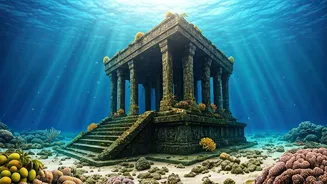
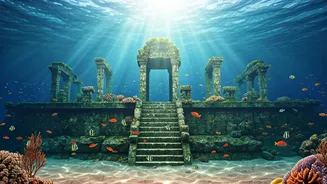
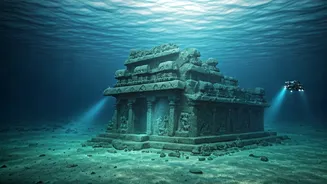
The legend speaks of a grand complex of seven temples, six of which were claimed by the ocean in a great storm, a story that has long hovered between myth and history. For many, it was just a captivating tale. However, after the 2004 tsunami temporarily pulled the waters back, eyewitnesses reported seeing long rows of large stones and other structures, reigniting scientific and popular interest in the lost pagodas. This event provided a dramatic clue that the legends might be grounded in a tangible, submerged reality.
A Renewed Quest with Advanced Tools
Building on earlier explorations, India's top scientific bodies are now leading a renewed charge to map the seabed off the Tamil Nadu coast. The Archaeological Survey of India's (ASI) Underwater Archaeology Wing (UAW) has resumed its studies after nearly two decades, armed with sophisticated new technology. This initiative, in collaboration with institutions like the National Institute of Ocean Technology (NIOT), aims to move beyond anecdotal evidence and create a definitive record of any submerged heritage. The goal is to solve the riddle of this Pallava-dynasty marvel that once served as a landmark for ancient sailors. These missions are not just about finding old stones; they are about connecting the dots between myth, historical records, and scientific proof.
The Eyes and Ears Beneath the Waves
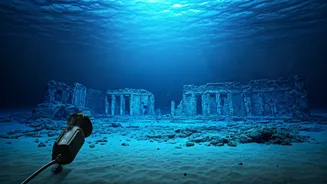
So, how exactly do you find a lost city underwater? The primary tools are far more advanced than just scuba gear. Scientists employ side-scan sonar, which paints an acoustic picture of the seafloor, revealing shapes and objects that don't belong to the natural landscape. Think of it as an underwater ultrasound, capable of detecting linear features that could be man-made walls. This is complemented by research vessels like 'Sagar Tara' and 'Sagar Anveshika', which are floating laboratories equipped for marine surveys. The latest addition to the archaeologist's toolkit is the Remotely Operated Vehicle (ROV), a submersible robot that can capture high-resolution video and images in deep or challenging environments without disturbing the fragile remains. This technology allows for safer, more precise documentation of potential ruins.
What Have They Found So Far?
Previous explorations have already yielded tantalizing results. Surveys conducted by the ASI and NIOT have identified submerged walls, scattered dressed stone blocks, and even steps leading to what might have been a platform, all lying in water between 5 to 8 meters deep. Some discoveries include walls over 10 meters long and man-made structures with clear architectural elements, though heavy marine growth often obscures details. Divers have found remains that suggest a large complex once existed, with radiocarbon dating on some samples indicating submergence events ranging from the 1st century to the 14th century CE. These findings confirm that significant man-made structures, consistent with Pallava-era construction, are indeed resting on the seabed, slowly offering up their secrets.
Piecing Together an Ancient Puzzle
The current mission is about more than just finding structures; it's about interpretation. The evidence of submerged walls and carved blocks strongly suggests that a portion of the ancient port city was lost to the sea, likely due to coastal erosion or past geological events like tsunamis. Archaeologists are now trying to understand the layout and purpose of these underwater ruins. Are they temples, as the legend suggests, or are they part of the old port's infrastructure? By combining the sonar data, ROV footage, and physical analysis of artifacts, researchers hope to reconstruct a map of what Mahabalipuram looked like in its prime. This scientific investigation is slowly but surely turning the fabled 'Seven Pagodas' from a mariner's tale into a documented archaeological site.