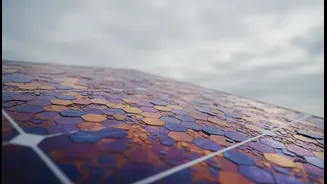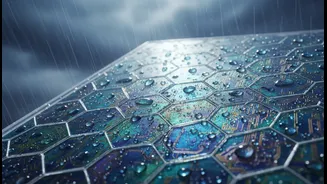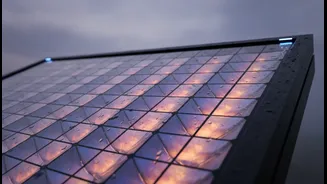





The Persistent Problem with Clouds
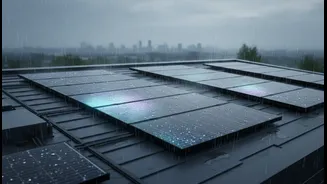
Solar energy has always come with a big 'if'—it works brilliantly when the sun is shining, but its output drops significantly on cloudy or overcast days. Traditional solar panels rely on direct sunlight to excite the electrons in their photovoltaic (PV)
cells and generate electricity. When clouds block the sun, the intensity of light reaching the panels can fall drastically. On a heavily overcast day, a standard solar panel might only produce 10% to 25% of its rated capacity. This intermittency is a major hurdle for households, especially in regions like India with a long and heavy monsoon season, making it difficult to rely on solar power year-round. This drop in efficiency means homeowners often have to switch back to the grid, undermining both their energy independence and their savings.
A New Generation of Solar Tech
The good news is that the industry is tackling this problem head-on. The term “cloud-resistant” doesn’t refer to a single invention, but rather a collection of advanced technologies designed to work more efficiently in low-light conditions. These innovations are changing the fundamental way panels convert light into energy. Technologies like Back Contact (BC) cells, Tunnel Oxide Passivated Contact (TOPCon) panels, and advanced materials like perovskites are leading the charge. These aren’t just minor tweaks; they represent significant leaps in how solar cells are designed and what they can achieve when the sun isn't perfectly bright.
How Does It Actually Work?
Different technologies achieve low-light performance in different ways. Back Contact (BC) panels, for instance, move all the metal contacts to the rear of the cell. This creates an unobstructed front surface that can capture more of the available scattered light on a cloudy day. TOPCon panels use ultra-thin layers that help electrons move more freely, even when energized by weak light. Meanwhile, perovskite solar cells, a newer material, are naturally better at converting a wider spectrum of light into electricity and have shown record-breaking efficiencies in indoor and low-light environments. Another clever design is the bifacial panel, which can capture sunlight from both its front and back sides. On an overcast day, it absorbs diffused light from the sky and reflected light from the ground or rooftop, boosting its overall output.
The Practical Benefits for Your Home
For a homeowner, this all translates to more consistent and reliable power. A system built with these newer technologies won’t just shut down when clouds roll in. It will continue to generate a more significant portion of your household's energy needs. This means greater savings on your electricity bill over the entire year, not just during the sunniest months. High-efficiency panels designed for better low-light response can make a solar investment viable even in areas known for gloomy weather. Furthermore, a more dependable energy supply increases a household's resilience, reducing reliance on an often-strained grid, particularly during India's monsoon season. The rain that once hindered performance can also help by naturally washing away dust and dirt, which improves efficiency once the sun returns.
When Can You Get This Technology?
Many of these technologies are already entering the mainstream market. High-efficiency monocrystalline panels, which perform better in low light than older polycrystalline types, are widely available. Bifacial panels are also a common option offered by many installers today. Some of the more advanced technologies, like TOPCon and Back Contact cells, are being mass-produced by major solar manufacturers, which means they are becoming increasingly accessible and affordable for residential installations. Perovskite cells, while incredibly promising and setting efficiency records in labs, are still in the earlier stages of commercialisation for large-scale use but are already appearing in low-power indoor devices. As manufacturing scales up, the cost of these next-generation panels is expected to continue falling, putting them within reach of more households.