





The Search for a Safe Haven
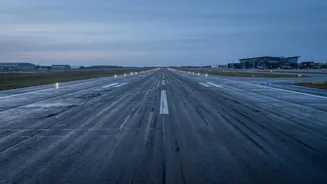
In an emergency, the first question pilots and air traffic control address is: where is the nearest suitable airport? Not just any strip of land will do. A “suitable” airport must have a runway long enough for the specific aircraft type, the necessary
emergency services like fire and rescue, and weather conditions that permit a safe landing. Pilots are trained to always have a plan and continuously evaluate their options. The decision to divert is a high-workload task, but it is a core part of a pilot's training to quickly identify a safe place to land. This could mean diverting to an airport where the airline doesn't normally operate, but safety is always the priority over convenience.
Navigating Oceans and Remote Regions
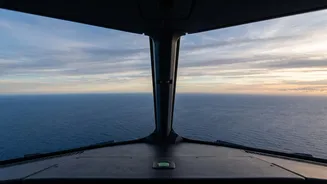
Flying over vast stretches of water or remote, uninhabited land like deserts and polar regions presents a unique challenge. In these areas, diversion airports are few and far between. This is where a crucial set of rules known as ETOPS (Extended-range Twin-engine Operations Performance Standards) comes into play. ETOPS certification ensures that a twin-engine aircraft can fly safely for a specific amount of time on just one engine to reach the nearest suitable airport. Flight paths over these regions are carefully planned to always remain within a designated ETOPS circle of safety, ensuring that even if an engine fails, a safe landing site is always within reach. This meticulous planning is what makes long-haul flights over oceans possible and safe.
The Challenge of Terrain and Weather
The geography directly below the aircraft heavily influences a pilot's choices. Flying over a flat plain offers more potential landing options than flying over a mountain range or a dense forest. In a dire emergency, pilots are trained to select the best possible off-airport site with survivability as the key factor, favouring open fields over hazardous options like roads with traffic or dense woods. Furthermore, localised weather plays a huge role. An otherwise perfect diversion airport might be unusable if it is experiencing severe thunderstorms, fog, or heavy winds. Pilots receive detailed weather briefings before and during their flight to make real-time adjustments and navigate around severe weather systems.
The Unseen Network: Air Traffic Control
During an emergency, pilots are not alone. They are in constant communication with Air Traffic Control (ATC), which plays a vital role in coordinating a safe outcome. As soon as an emergency is declared, the flight becomes the top priority. ATC clears the surrounding airspace, provides pilots with crucial information on the nearest suitable airports, weather conditions, and terrain, and coordinates with ground services at the diversion airport. This unseen network on the ground is essential for managing the complex logistics of an emergency landing, ensuring the aircraft has a clear and supported path to safety. In some cases, this may even involve coordinating with military airfields if they are the closest and safest option.