

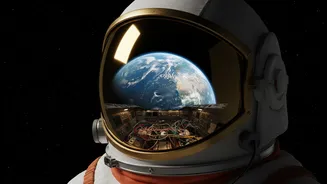


Who is Dr. Anil Menon?
Before becoming a NASA astronaut, Anil Menon's career was already a highlight reel of high-stakes service. Born in Minneapolis, Minnesota, to Indian and Ukrainian immigrants, Menon is a US Space Force colonel and an emergency medicine physician. His extensive
experience includes serving as a first responder in the aftermath of earthquakes in Haiti and Nepal, supporting US Air Force missions in Afghanistan, and even providing medical care to climbers at Mount Everest. Menon also spent a year in India as a Rotary Ambassadorial Scholar supporting polio vaccination efforts. His journey into spaceflight began as a NASA flight surgeon in 2014 and later as SpaceX's first flight surgeon, where he helped launch the company's first astronauts and developed its medical program. Selected by NASA in 2021, he is now poised for his first spaceflight.
The Mission to the Space Station
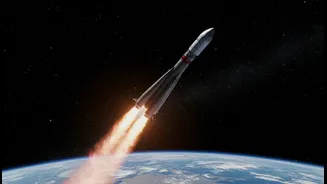
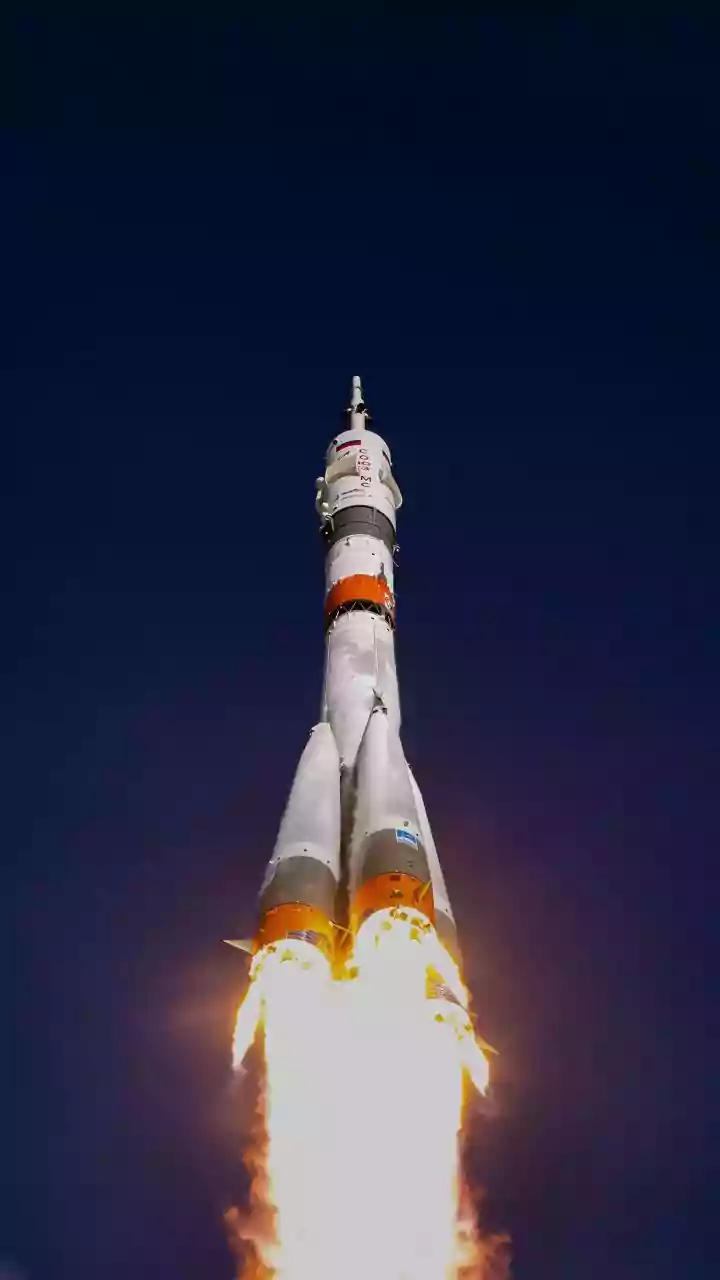
On July 14, Menon is scheduled to launch aboard a Roscosmos Soyuz spacecraft from Kazakhstan, beginning an eight-month stay on the International Space Station (ISS) as a flight engineer for Expeditions 74 and 75. This is not a solo journey; he will be accompanied by Russian cosmonauts Pyotr Dubrov and Anna Kikina. His mission is packed with a demanding schedule of scientific research. A key focus will be on human physiology, studying the effects of microgravity on astronauts' blood flow and vein structure to better protect future space travelers on long-duration missions to the Moon and Mars. Menon’s medical expertise will be crucial as he also tests technologies to produce IV fluids from the station's drinking water—a critical capability for deep space exploration where resupply is impossible.
More Than a Milestone
Menon follows in the footsteps of pioneering Indian-origin astronauts like Kalpana Chawla, Sunita Williams, and Raja Chari, who have made immense contributions to space exploration. However, his mission's impact extends beyond representation. His unique background as a physician-astronaut highlights the growing importance of medical and life sciences in space. As humanity sets its sights on longer and more distant voyages, understanding and mitigating the health risks of space is a top priority. Furthermore, Menon will conduct research on manufacturing semiconductor crystals in space, which could lead to breakthroughs in high-performance computing and medical devices back on Earth. This blend of human health and advanced materials science makes his mission particularly significant.
A Boost for India-US Space Cooperation
Menon's flight comes at a time of deepening ties between NASA and the Indian Space Research Organisation (ISRO). This collaboration is a cornerstone of the India-US strategic partnership. With India having signed the Artemis Accords, which sets principles for cooperation in the civil exploration of space, the relationship is stronger than ever. Menon's mission serves as a visible symbol of this partnership. It runs parallel to India's own ambitious human spaceflight program, Gaganyaan, which aims to send Indian astronauts into orbit. The shared knowledge, training, and potential future collaborations, such as docking an uncrewed Gaganyaan module with the ISS, underscore a new, cooperative chapter in space exploration. Menon's presence on the ISS reinforces the collaborative spirit needed to push the boundaries of what's possible.